
Spray Polyurethane Foam Roofing in Staten Island, NY
Spray polyurethane foam roofing, recoating and repair for Staten Island marinas, irregular roofs and insulated buildings. Request a written roof inspection.
A core cut that comes up dry on top and damp at the bottom is the finding an inspector hopes never to write on a foam roof, because spray polyurethane foam hides its moisture under a coating that can look sound for years. The foam does two jobs at once, insulating and waterproofing in a single sprayed layer, and the coating over it is the only thing standing between the foam and the sun.
Commercial Roofing Staten Island installs, recoats and repairs spray foam roofs on the island. The proposal states whether a recoat will carry the roof or the foam beneath it is beyond saving.
What a foam roof is
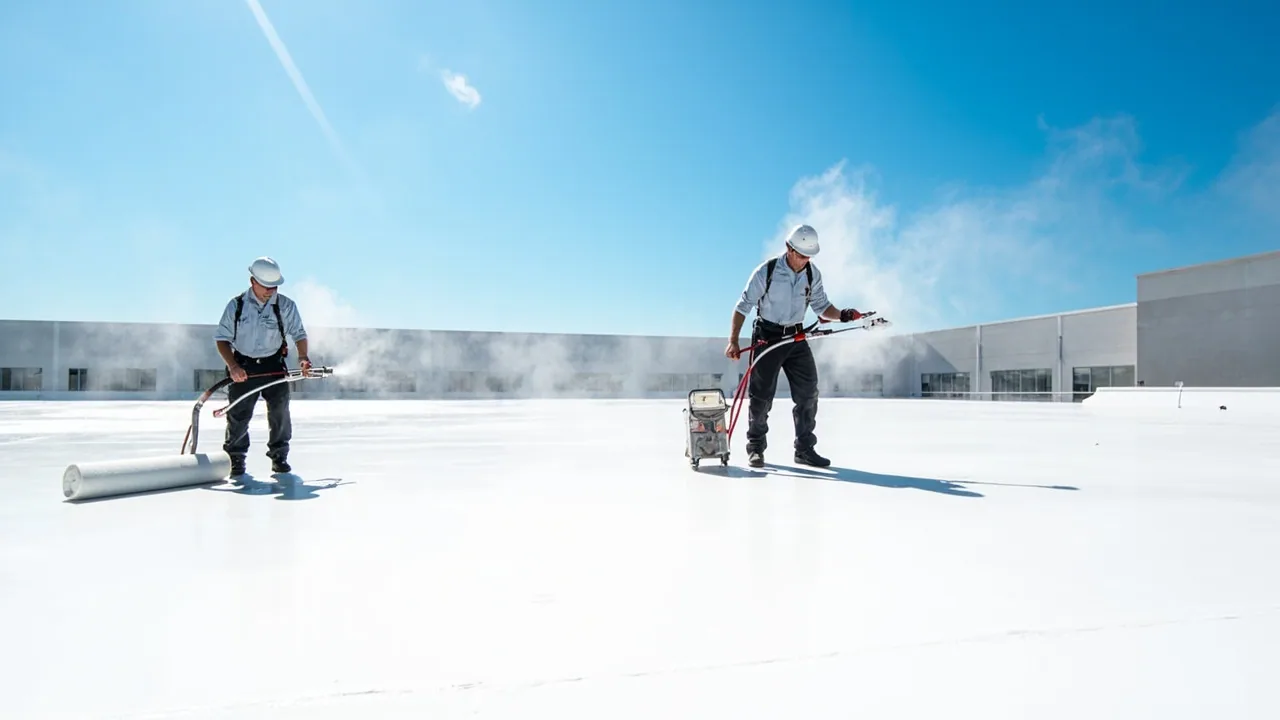
Spray polyurethane foam, or SPF, is made on the roof. Two liquid components are sprayed through a gun and expand into a rigid foam that bonds to the substrate and cures into a continuous, monolithic layer. The foam fills low spots, wraps around pipes and curbs and adheres without fasteners, and it goes down in passes to a thickness set by the insulation value wanted.
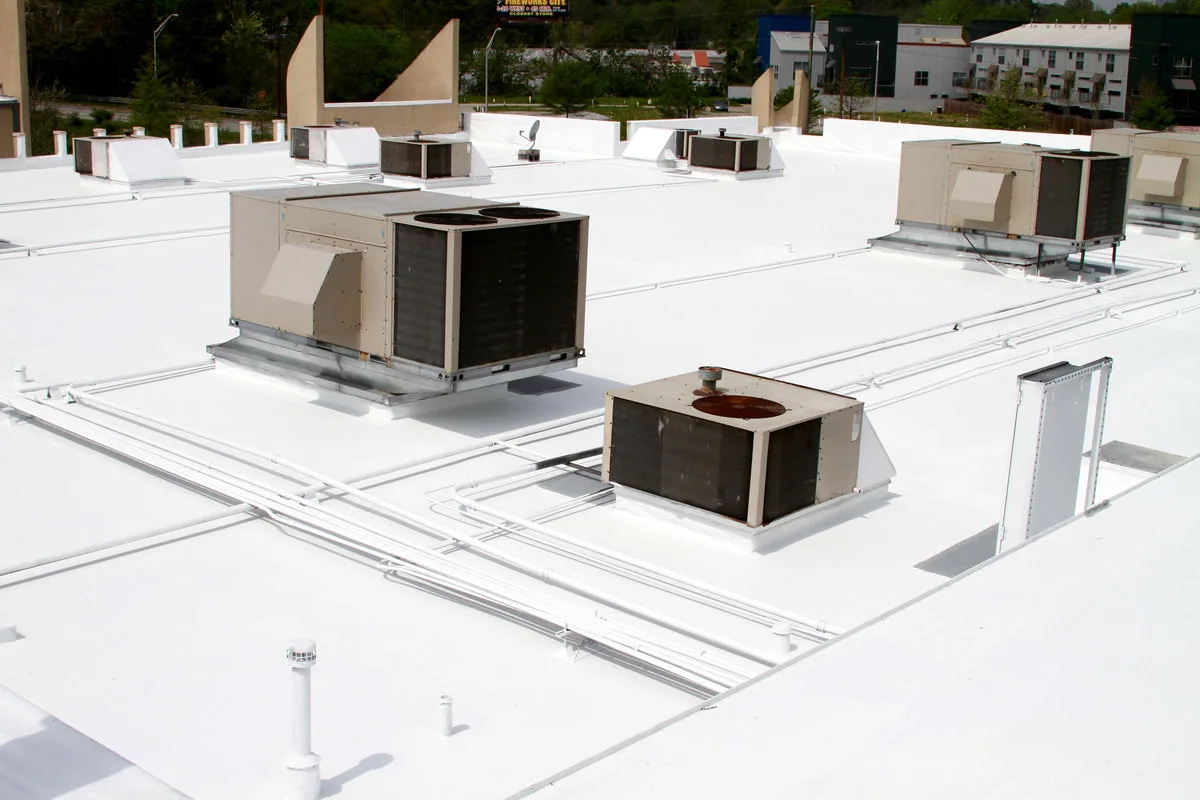
The foam is then covered with a protective coating, usually silicone or acrylic, sometimes with granules for traffic. The coating is the weather layer, blocking ultraviolet light and shedding water. Foam without coating breaks down in the sun, and coating without sound foam has nothing to protect. The system adds little weight, which helps on older buildings, and it can go over many existing roofs if the substrate is clean and dry.
Thickness matters more than most owners are told. A thin pass of foam gives little insulation and little protection against punctures, while a thick one costs more and takes longer to cure. We state the thickness and the density in the proposal, and we check both with cores after the spray so the roof matches the paper.
Where foam roofs fail first
The coating wears first. Ultraviolet light, foot traffic and ponding water erode the surface, and a foam roof with bare orange or tan patches has lost its protection. Penetrations and edges follow, where the coating is thin and movement concentrates, and birds and hail can puncture the foam, letting water travel under the coating.
Ponding is the long-term enemy. Water that sits over a recoat cycle softens coatings and finds pinholes, and a foam roof with low spots keeps rain from storms like Ida's September 2021 flash flood emergency longer than a sloped one would. Marine buildings with irregular rooflines and many penetrations are the kind of roof where foam gets considered, and Great Kills Harbor, with its private marinas, and the Nichols Marina in Great Kills Park put that building type in the picture on the South Shore.
Bloomfield and Travis on the West Shore sit at the other end of the scale. The Matrix Global Logistics Park opened in Bloomfield in fall 2018 as a distribution center, and the Teleport industrial park sits at the eastern edge of Travis. For a large conditioned building the insulation side of foam is the draw, and the same coating cycle applies to a distribution roof as to a marina shed.
What goes in the inspection log
We walk the roof looking at the coating: color, chalk, cracks and blisters. We press the surface, because foam should feel firm and not spongy. We cut small test cores to see the foam thickness, density and moisture, and we check the bond to the substrate.
- Coating thickness, since thin coating shows the foam texture through it.
- Foam condition, where soft, wet or crumbling foam must come out.
- Ponding, where low spots that hold water need slope or drainage fixes.
- Edges and penetrations, where movement and thin coating make the first leaks.
A foam roof can hold water inside the foam and look dry on top, and only a core cut shows it, so wet areas are mapped before any recoat is priced.
Insulation value is part of the check too. Thin or compressed spots show up as cold stripes in a thermal scan, and an infrared moisture survey finds wet foam and thin spots without cutting the roof, with cores used only to confirm what the scan suggests.
Recoat, repair or replace
If the foam is dry and firm and the coating has worn, we clean, repair and recoat. The coating choice is between silicone, which tolerates ponding, and acrylic, which suits a roof that drains well. If sections of foam are wet, we cut them out, spray new foam and blend the coating. If the foam is broadly saturated or crumbling, we recommend a commercial roof replacement.
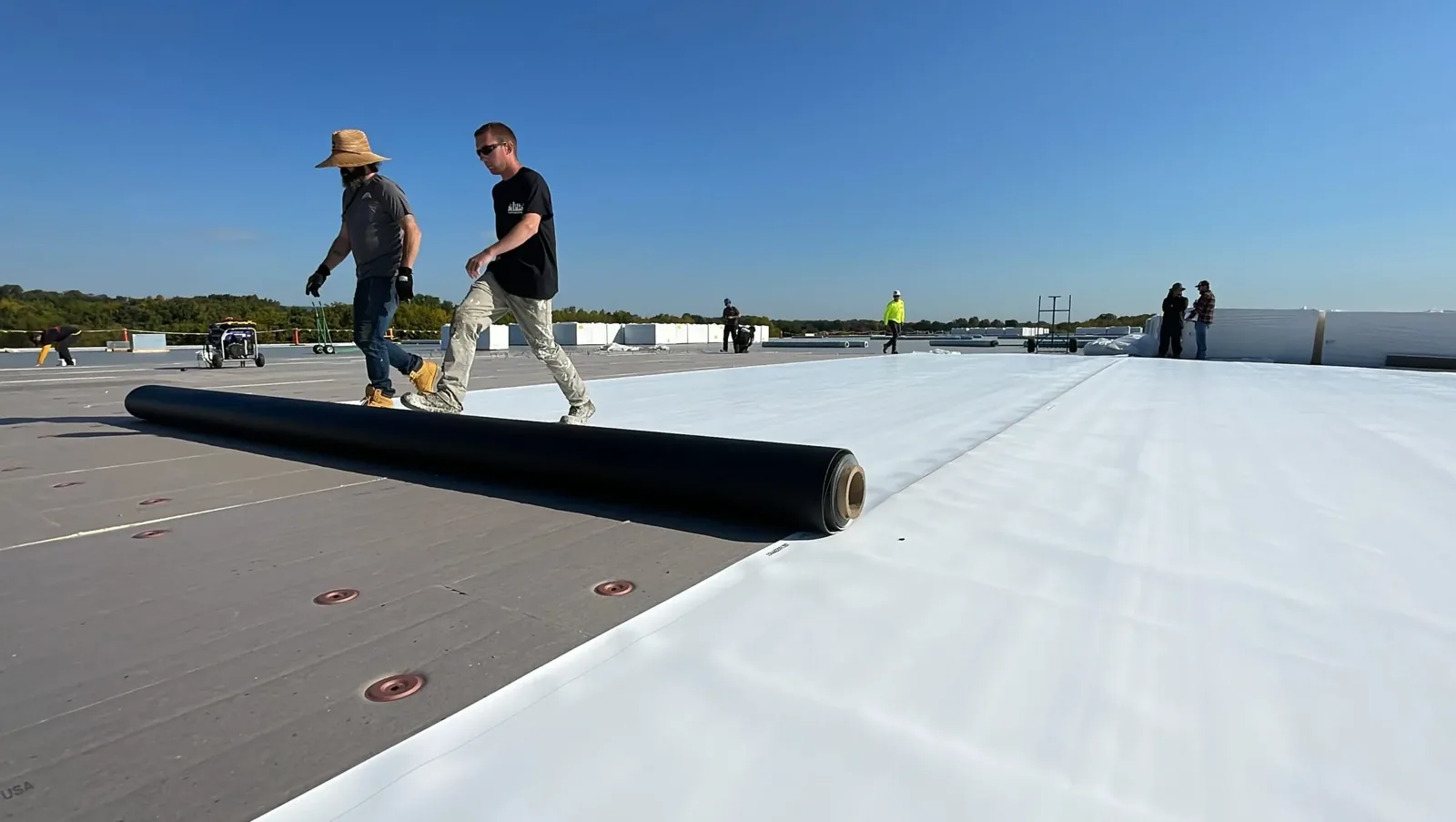
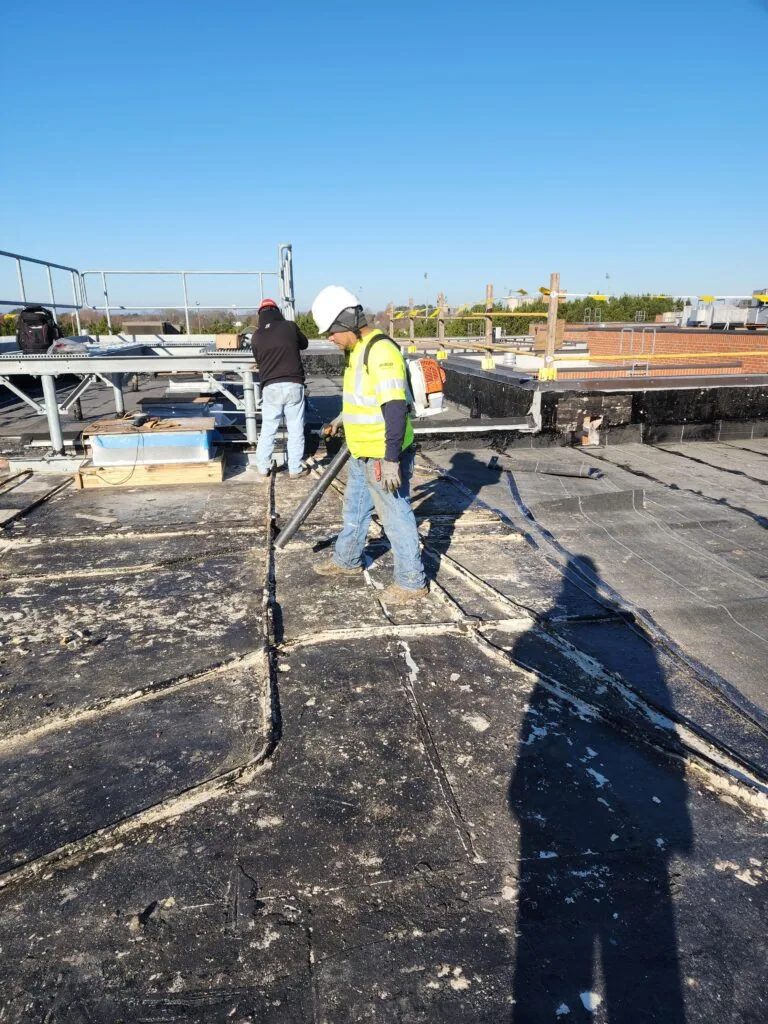
Foam competes with single-ply sheets and modified bitumen. It wins on irregular roofs, on tight budgets for added insulation and where tear-off is not welcome, and it loses on roofs with heavy foot traffic and where the owner cannot commit to recoating on schedule. We say which case applies.
Cost drivers are plain: roof area, foam thickness, coating type, the number of penetrations and the repairs that come first. Foam over an existing roof avoids tear-off, and that saving is largest where the roof is irregular and the old layers are heavy.
Overspray, wind and weather
Spray foam brings a risk that other systems do not: overspray. Wind carries mist onto cars, windows and nearby roofs, and cured foam is hard to remove. We watch wind speed, set up barriers and cover vehicles and rooftop equipment, and work stops if the wind rises. Wind matters before and after the spray: Sandy's October 2012 gusts reached 80 mph.
Foam wants dry, mild weather: the substrate must be dry, the temperature above a minimum and the wind calm. That limits spraying to the warmer months, while the other season brings loads like the 27.3 inches of snow New York City logged on January 23, 2016.
Adjacent lots get a heads-up, since parked cars and rooftop units in the overspray path all need protection, so we tell the managers next door the date and the wind limit.
Fumes, intakes and the next job
Fumes during spraying can reach air intakes, so intakes are covered and the facility director is told the spray windows in advance. Only trained applicators spray foam, and occupants keep out of the area until the foam cures. Cure time is short, and the coating follows once the foam is firm, usually the same day if the weather holds.
A short preventive maintenance visit each year checks coating wear, clears drains and patches small punctures, which is the cheapest way to extend a foam roof. Owners around Great Kills can hand us the roof plan, the last coating date and any wet spots.
At closeout we record foam thickness, coating thickness and batch numbers, so the next recoat matches the system already on the roof.
Related Roofing Work
More roofing work that comes up alongside Spray Polyurethane Foam Roofing.

Commercial Roofing Questions
How often does a foam roof need recoating?
The coating renews on a cycle of years, with the interval set by the coating type, thickness and exposure. We measure coating on the walk and tell you how much life is left.
Can foam be sprayed over an old roof?
Yes, when the existing roof is dry, clean and sound. We scan for moisture first, remove wet sections and prime the surface.
What does hail or a bird do to foam?
Either can puncture the coating and dent the foam. A small hole is a quick repair, but an ignored hole lets water travel under the coating.
Is foam good for a roof with many penetrations?
Often, because it wraps around pipes and curbs without seams. The edges and penetrations still need thick coating.
Why is overspray a concern?
Wind carries spray mist onto cars and glass, and cured foam is hard to remove. We watch wind, set barriers and stop work when gusts rise.