Commercial Roofing in Rossville, Staten Island, NY
Commercial roofing in Rossville, Staten Island, NY for marine and yard buildings and a neighborhood shopping center, with metal, drain and edge repair.
Rust running down a corrugated panel below a fastener row, grit from a yard drifting into a roof drain, a small shopping center roof with a ponded seam beside the rooftop unit: the inspector's notebook on a Rossville roof mixes heavy industry with neighborhood retail. The Witte Marine Scrapyard on Arthur Kill Road has operated since 1964 and is described as one of the largest marine scrapyards on the East Coast, and the West Shore Expressway's 1976 completion sparked growth that stayed mostly residential.
Industrial, marine and retail buildings in Rossville, Staten Island, NY, turn to Commercial Roofing Staten Island for roof repair and replacement, and the owner is asked first whether the roof is metal or membrane.
Industrial yards beside neighborhood retail
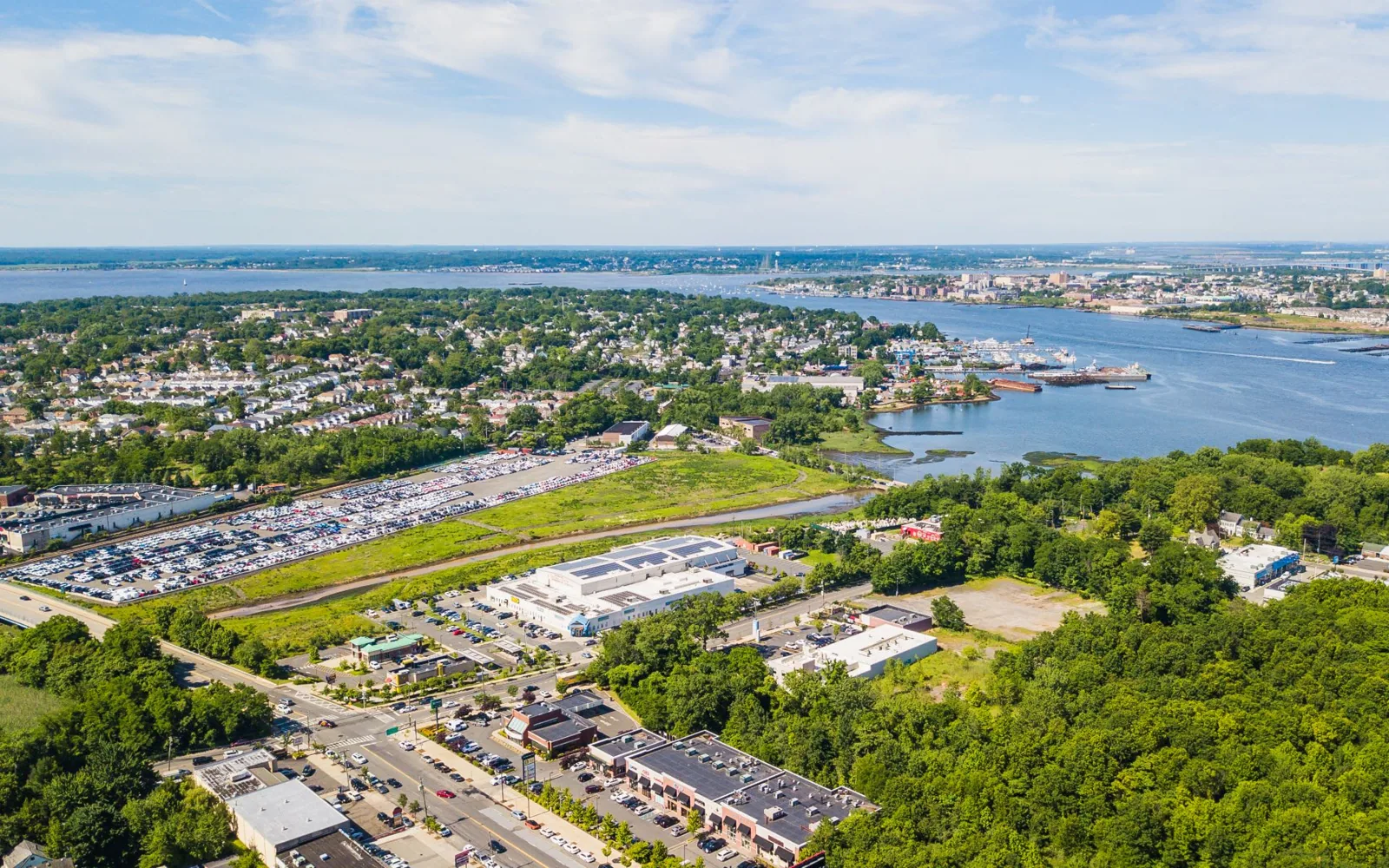
A marine scrapyard that has operated since 1964 sits on the same stretch of Arthur Kill Road as the neighborhood's other uses, and a 26,000-square-foot shopping center opened in 1992 to serve the neighborhood. The West Shore Expressway's completion in 1976 sparked growth in Rossville, though mostly residential. The roofs follow the uses.
Industrial and yard buildings have metal or membrane roofs under heavy exposure to dust, grit and weather. Retail buildings have low-slope roofs with rooftop equipment. The shopping center is a small building, and each roof, its own included, gets walked on its own terms. We rate every roof separately and give the owner a ranked list.
Roofs over marine and yard operations
Yard buildings, shops and offices serve heavy operations. Dust and fine particles settle on roofs, wear membranes and clog drains, and any metal dust that lodges in a lap can corrode the panel it touches. Equipment moving near a building can strike edge metal or a downspout, and cranes, loaders and trucks work close to walls.
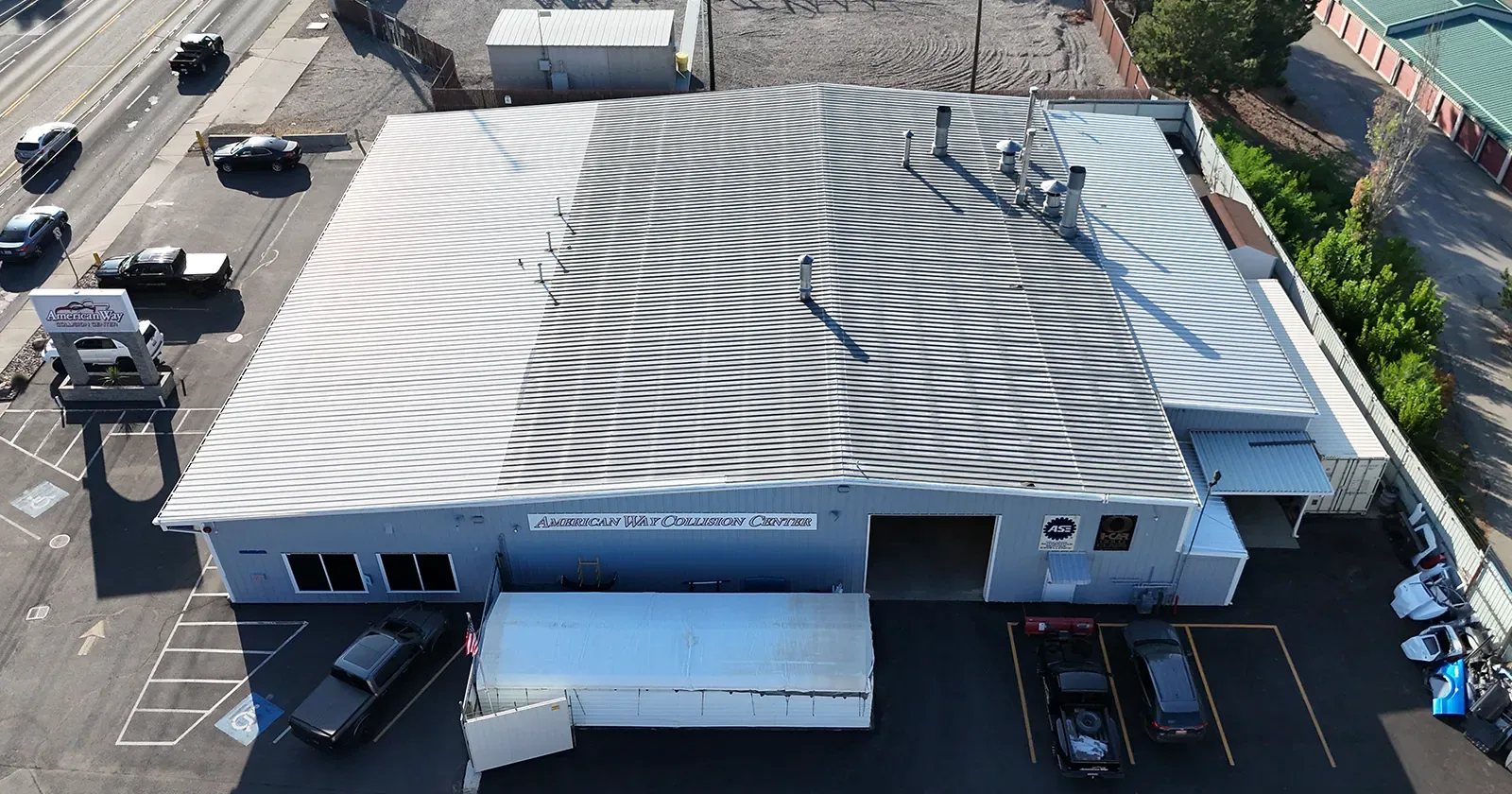
We check metal roofs at fasteners, laps and ridge caps, and flat roofs at drains, seams and curbs. A metal roof retrofit goes over old panels where the framing can bear it, and a coating prolongs sound panels once the rust is treated. Corrosion-resistant fasteners are standard for repairs, and sealants are chosen for exposure to dust and moisture.
The first walk on a yard building follows its own order. We start at the edge where equipment passes, since impact damage shows there first, then check the drains and gutters, then the fasteners and laps across the field, then penetrations for stacks, vents and exhaust. A moisture scan after sunset helps on membrane roofs, and a hand probe on metal roofs finds the soft spots around corroded fasteners. The report ranks each building by what sits below it, so a leak over a shop with powered equipment outranks one over an open storage bay.
Wind and weather off the Arthur Kill
Buildings on Arthur Kill Road meet wind from the water. Wind off the water reaches Rossville much as it reached the whole island in Sandy, whose gusts topped out at 80 mph in October 2012, and open exposure makes the perimeter the first check. Coping and drip edge are tried by hand, laps are probed for failing sealant and corner fastener spacing is measured. Storm damage roof repair includes dated photographs and a written report for insurance. A walk before each season and a second after a storm keeps the list short, with temporary protection staged for roofs that cannot take water.
The small shopping center and its tenants
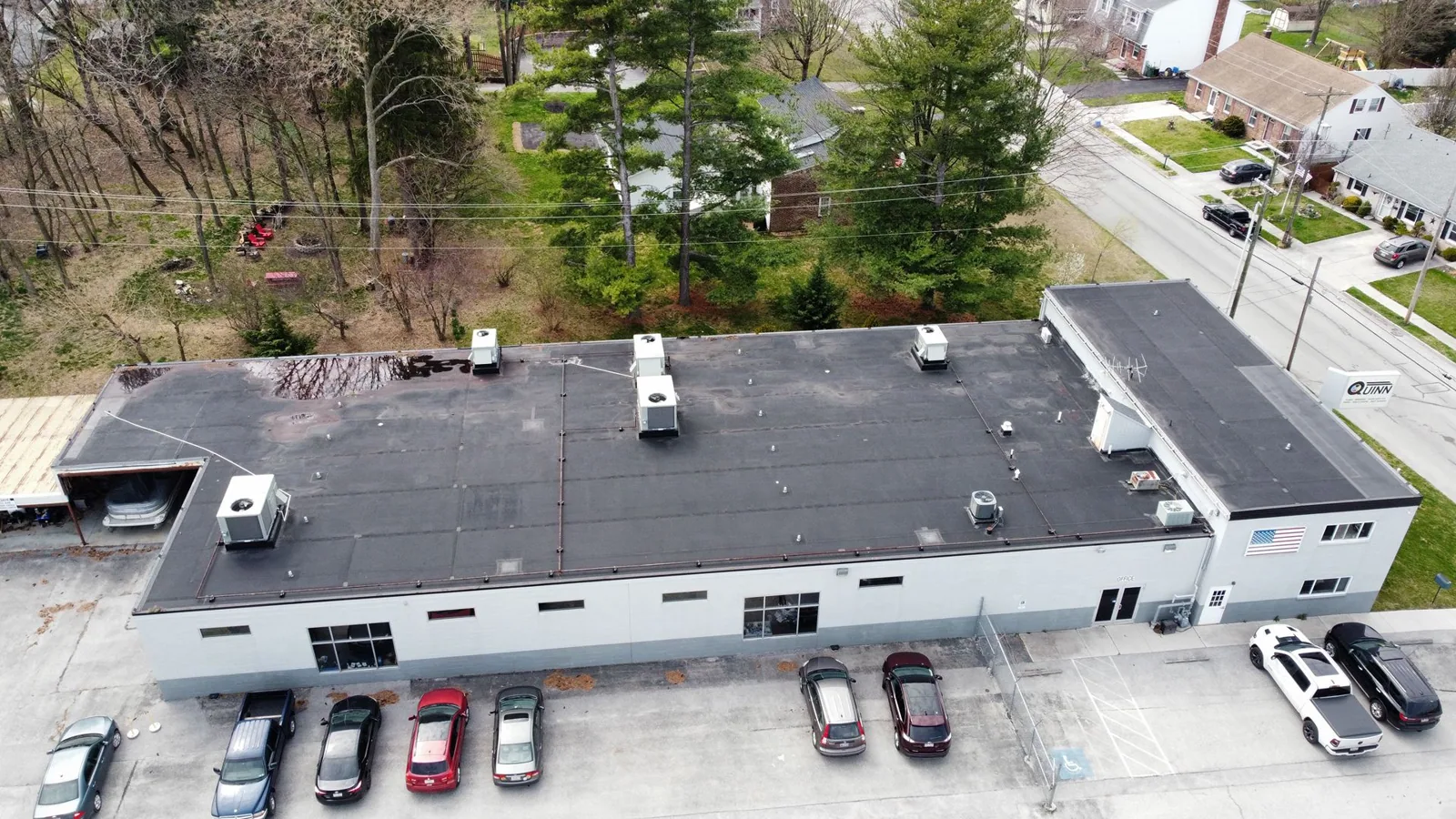
A neighborhood center has a grocery, some service tenants and a parking lot. Its roof is shared, with drains that serve everyone and curbs that serve single tenants. Refrigeration equipment, exhaust fans and small units sit on the roof, and each is a flashing detail.
We map penetrations to tenants, photograph each and rate the flashing. Repairs to penetration flashing are priced item by item. Drains get cleared and photographed, overflow scuppers go in where the parapet allows, and walk pads protect the membrane along service routes. The landlord's list keeps the roof's own items apart from the tenants'. On a small center the price turns on bays, curbs, wet insulation and access, and a repair is quoted first, a coating or recover second and a replacement last, each with its evidence. The center's 1992 opening gives a rough age for the building, not for the roof, which may have been repaired or recovered since, so we confirm the roof's actual history with cores before recommending anything.
Grit, drains and ponding
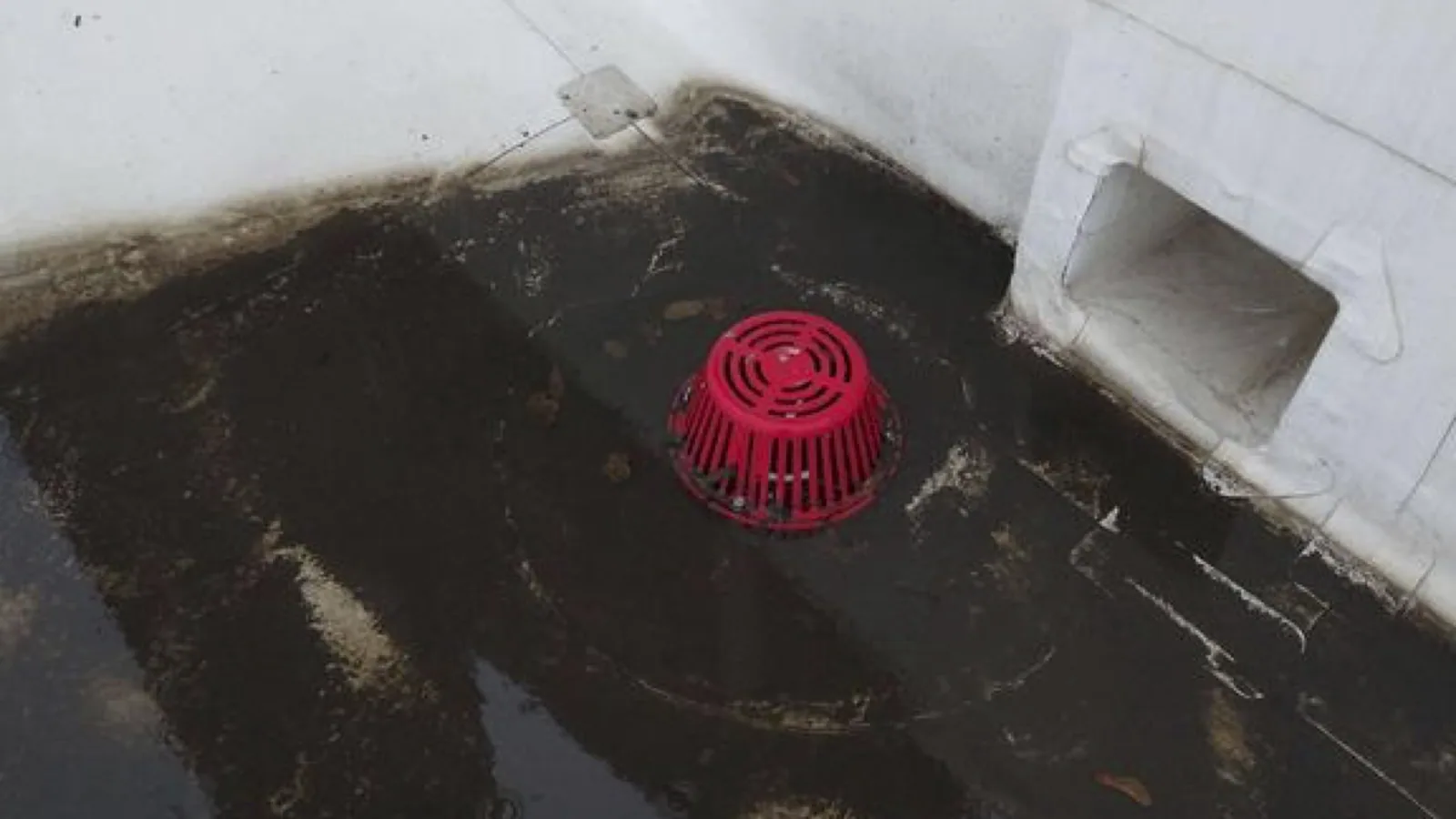
Grit is a constant. Roofs near yards and roads collect fine dust that packs into strainers and leaders, so drains need more visits than the average. A pond that outlasts two dry days means a drain, a leader or a settled deck is at fault, and a roof with a packed strainer cannot move the rain that came with Ida's flash flood emergency in September 2021.
We clear, photograph and flush every outlet, measure slope and recommend tapered insulation, crickets behind curbs or an overflow scupper where needed. On a flat roof here drain and scupper work costs the least and most often prevents the next call. Spring is the wettest season, in a city that totals about 49.5 inches of precipitation a year.
Snow, ice and winter work
Winter in the city brings 29.8 inches of snow in a typical year, and one day, January 23, 2016, delivered 27.3 inches. Snow load on long spans, ice at drains and frozen sealants all show up in the cold months. Drains and edges are cleared each fall, and the spring walk finds what winter did. A January leak gets a temporary seal at the entry, and the lasting fix is planned for spring. Large replacements belong in late spring through early fall, scheduled around the operation's busy and quiet periods.
Programs, neighbors and the log
Each roof gets a page of photographs, a rating, scan results and a ranked list with prices, and a summary ranks the buildings by risk. Owners with property in nearby Charleston and Arden Heights get one calendar and one format.
Each visit adds a dated entry, so the next decision starts from facts. Insurance reviews and lender requests draw on the log, and it stays with the building when it is sold or changes tenants.
Yard owners with several buildings receive a single table in place of a stack of reports. Each row names a roof, its condition, the next repair and the cost, and the rows are sorted by the risk to what sits below. Photographs sit beside the rows that need action. The crew updates the table after every walk, so the owner can see across a season which roofs held and which are drifting toward replacement.
Related Roofing Work
More roofing work that comes up alongside Rossville.
Commercial Roofing Questions
Why do roofs near a scrap yard need more drain visits?
Dust and fine particles pack into strainers and leaders faster than ordinary debris. We clear them more often and photograph what comes out.
Is a rusty metal roof finished?
Not necessarily. If the panels are sound, we treat rust, replace fasteners, reseal laps and coat. If panels are failing, a retrofit or replacement is better.
Can a small shopping center roof be repaired without closing stores?
Yes. We work in sections, dry in daily and schedule loud steps outside trading hours.
What does open exposure to the Arthur Kill change?
Edge metal and fasteners get checked first, and repairs use heavier gauge metal and closer spacing at corners where wind load demands it.
What should an owner send first?
The site plan, the roof types and the recent leak history; the roofs get walked and a ranked list comes back.