
Commercial Roofing in Perth Amboy, NJ
Commercial roof inspection, repair and replacement in Perth Amboy, NJ, over the Outerbridge Crossing from Staten Island, for waterfront and industrial roofs.
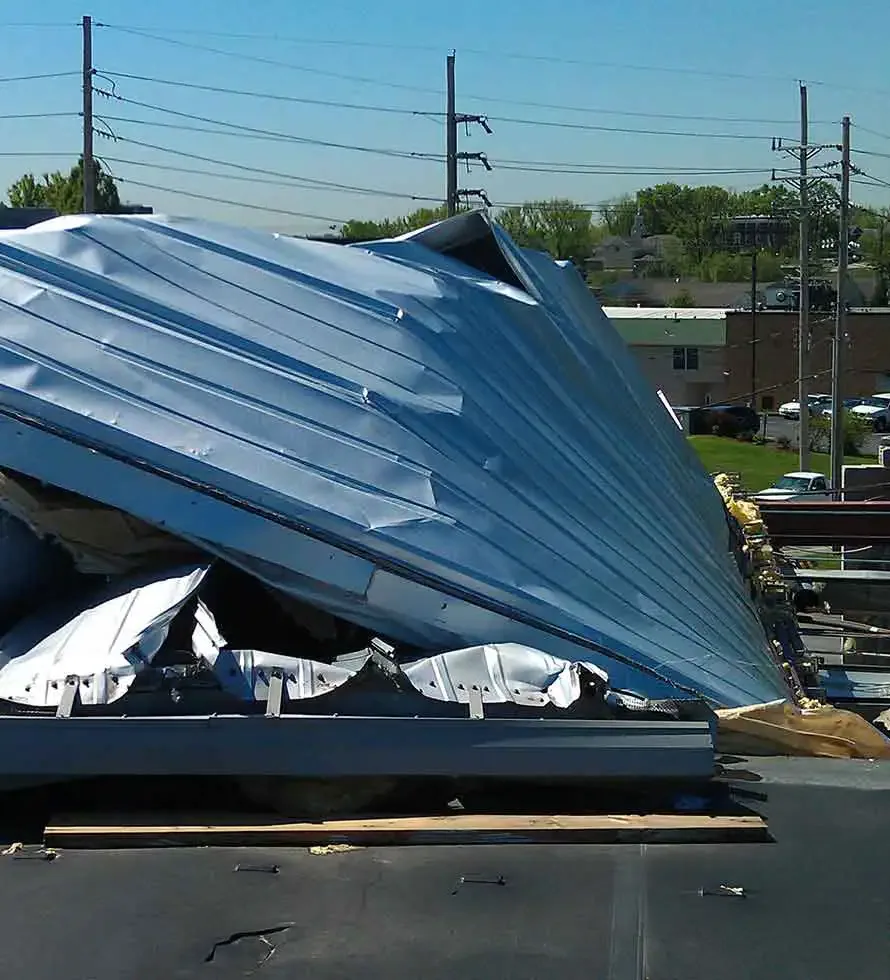
A coping cap lifted at the corner by bay wind, with a dark tongue of water stain on the brick beneath it, is the kind of finding that fills a Perth Amboy, NJ inspection notebook, because this is a waterfront city and its shoreline buildings face the weather from Raritan Bay and the Arthur Kill. Commercial Roofing Staten Island handles inspection, repair and replacement of the commercial roofs here, and the Outerbridge Crossing, open since 1928, is the span our crews use to get from the island to the city.
Perth Amboy is a Middlesex County city of 55,436 residents at the 2020 census. Its long industrial history and the waterfront redevelopment that has drawn hundreds of millions of dollars of investment as of 2023 mean a Perth Amboy roof can be old or new, and each gets read on its own terms.
Bay weather on the shoreline
The city borders Raritan Bay and the Arthur Kill, so buildings on the shoreline face bay weather. Wind, rain and winter ice all reach exposed edges first. For a roofer, that sets the order of the first walk: edges and perimeter fasteners first, drains and overflow routes second, seams third.
On the New York side of the water, precipitation runs about 49.5 inches a year with spring the wettest season, snow averages near 29.8 inches, and January 23, 2016 dropped 27.3 inches in a day, while Hurricane Sandy's gusts reached 80 mph in October 2012. The wind damage repair routine starts at the edge and moves inward.
Damp bay weather is hard on exposed metal. Fasteners rust at their heads, sealant dries and cracks, and unpainted edge metal pits at the cut ends. We check fastener heads by hand, replace the ones that spin and reseal the joints that have opened, and a coastal roof gets that attention every spring, since rust shows its work slowly and then all at once.
What the inspector writes down
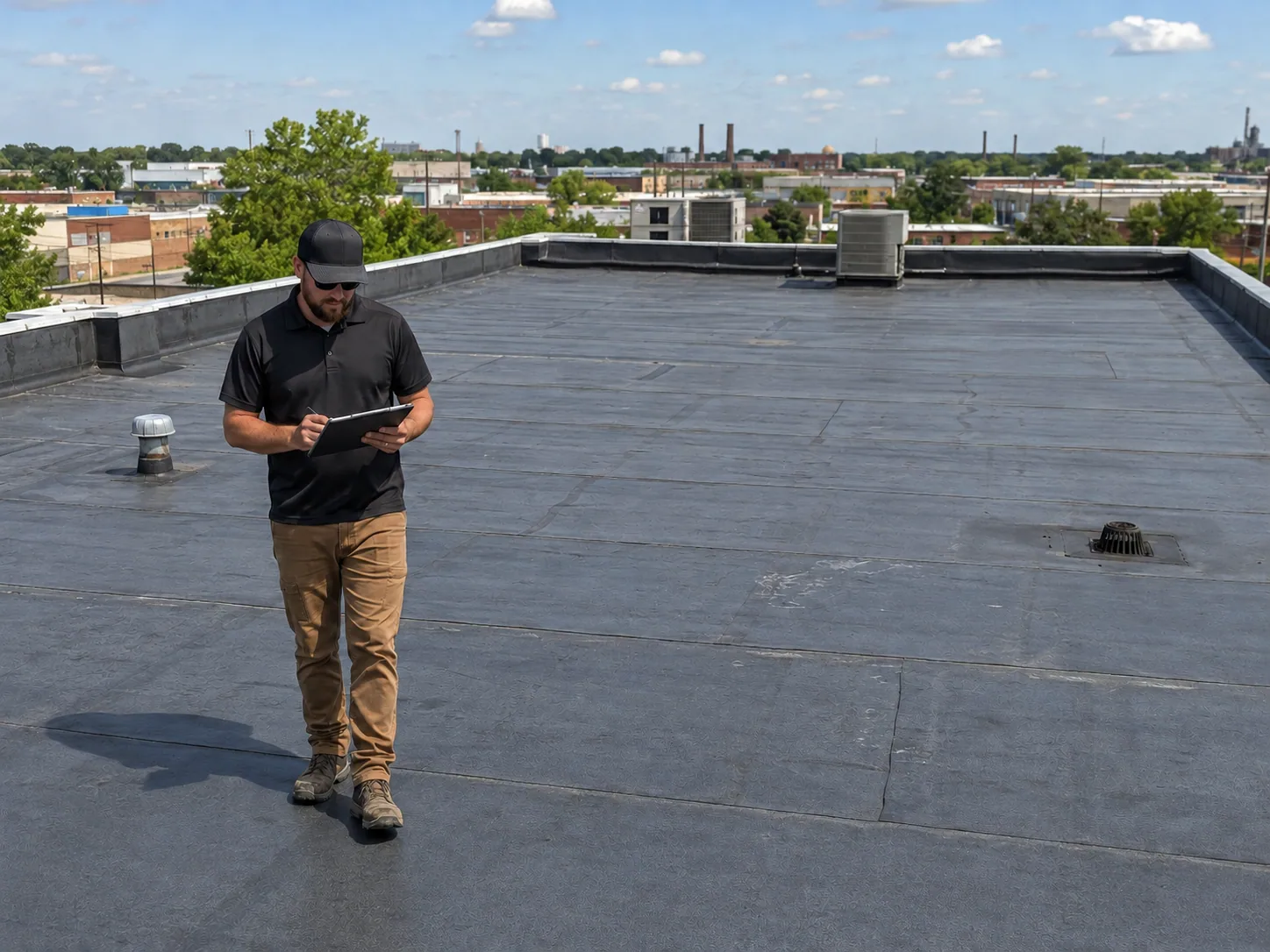
On a shoreline roof the notes tend to run in a familiar order. Coping with an open joint, edge metal with a lifted corner, a counterflashing that has dropped from its reglet. Then the drains: a strainer loose in its sump, a scupper packed with debris. Then the seams, probed along their length, and the walk pads, checked for the groove that forms along routes to rooftop units.
Where a building is older, there is usually a fourth set of notes about layers. A core cut counts them, and the count matters because a third roof laid over two wet ones is an expensive way to hold water. Our commercial roof inspection includes the cores that make that count.
The second pass follows water inside the building. A stain on a ceiling tile, a damp patch at the head of a window or a bloom of efflorescence on a brick face can all trace to a failed detail on the roof. We follow the stain upward and sideways, confirm with a moisture meter and photograph the trail, so the owner sees the path from the roof to the room.
Older industrial buildings
A city with a long industrial history has buildings that have been through several uses. A former mill or workshop may now hold storage, offices or light manufacturing, and each change leaves something on the roof: a new exhaust fan, an abandoned pipe, a skylight covered over. What any given roof holds is for a walk with cores to show. The thing to look for is what the changes left behind.
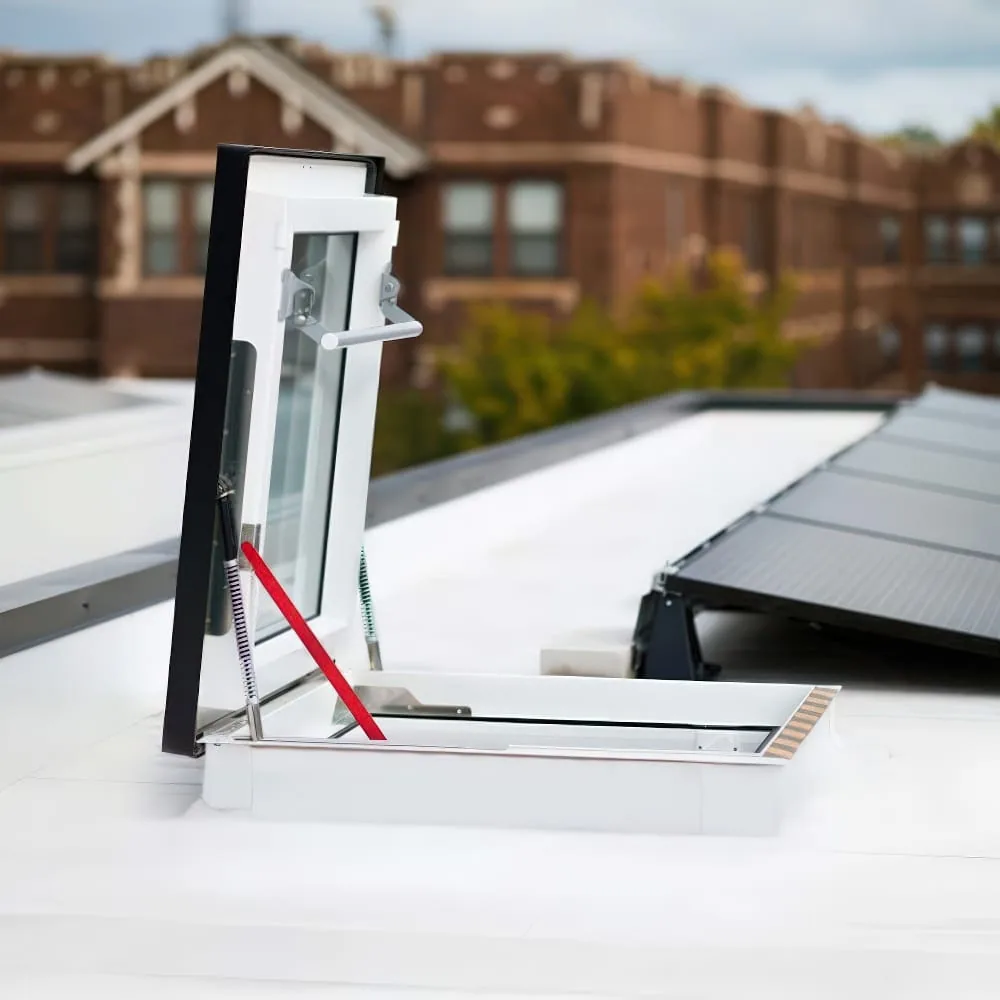
Abandoned penetrations are a common leak path. A pipe that no longer serves anything still has a hole around it, and the flashing on that hole ages even though nothing uses it. We log each one, and the repair is either a proper cap and flashing or a full removal and patch. The skylight and penetration flashing work handles both.
Roof loads matter too. A building that once carried heavy machinery may have a deck built for it, while one converted from another use may not, and a recover adds weight. The core cut shows the deck, and an engineer's note goes in the file when the owner plans to add a layer or equipment.
Waterfront redevelopment and new roofs
Redevelopment brings new construction to the shoreline, and new roofs deserve a baseline. The first walk records seam condition, drain function, edge attachment and curb flashing, and each later walk compares to it. Early leaks on new roofs usually come from details, not membranes, and a walk within the first year catches them while repair is cheap.
Shoreline roofs also benefit from a preventive maintenance routine of two visits a year, one in spring and one in fall, plus a look after any named storm. The routine costs little beside the leak it prevents.
Repair, restore or replace
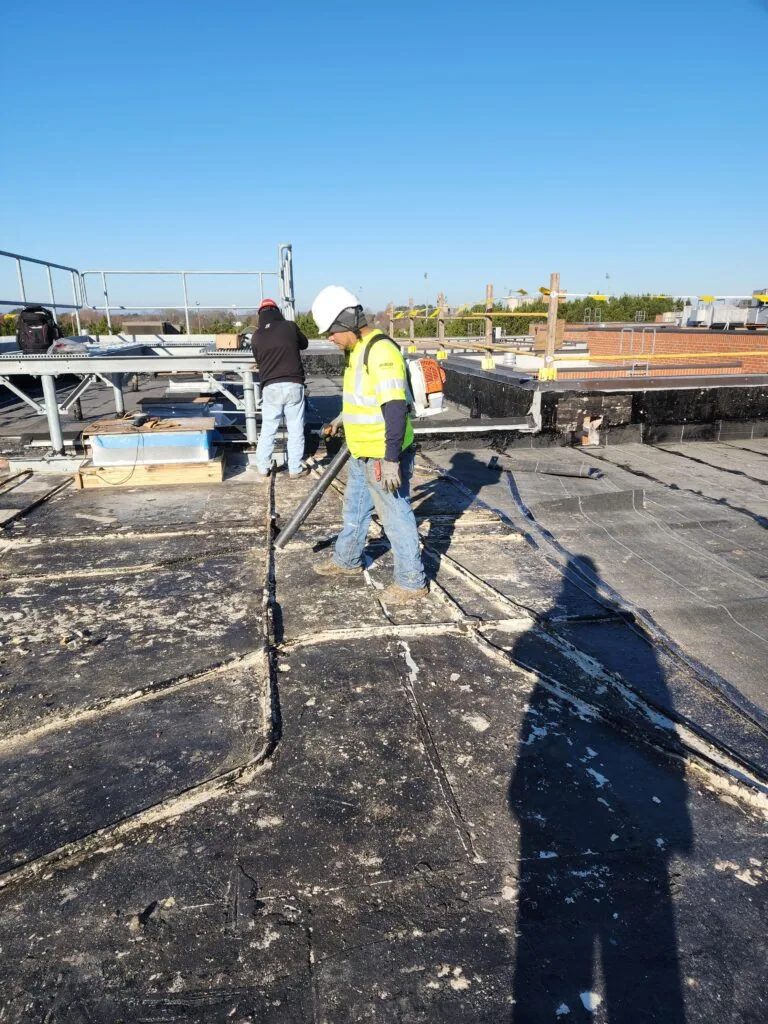
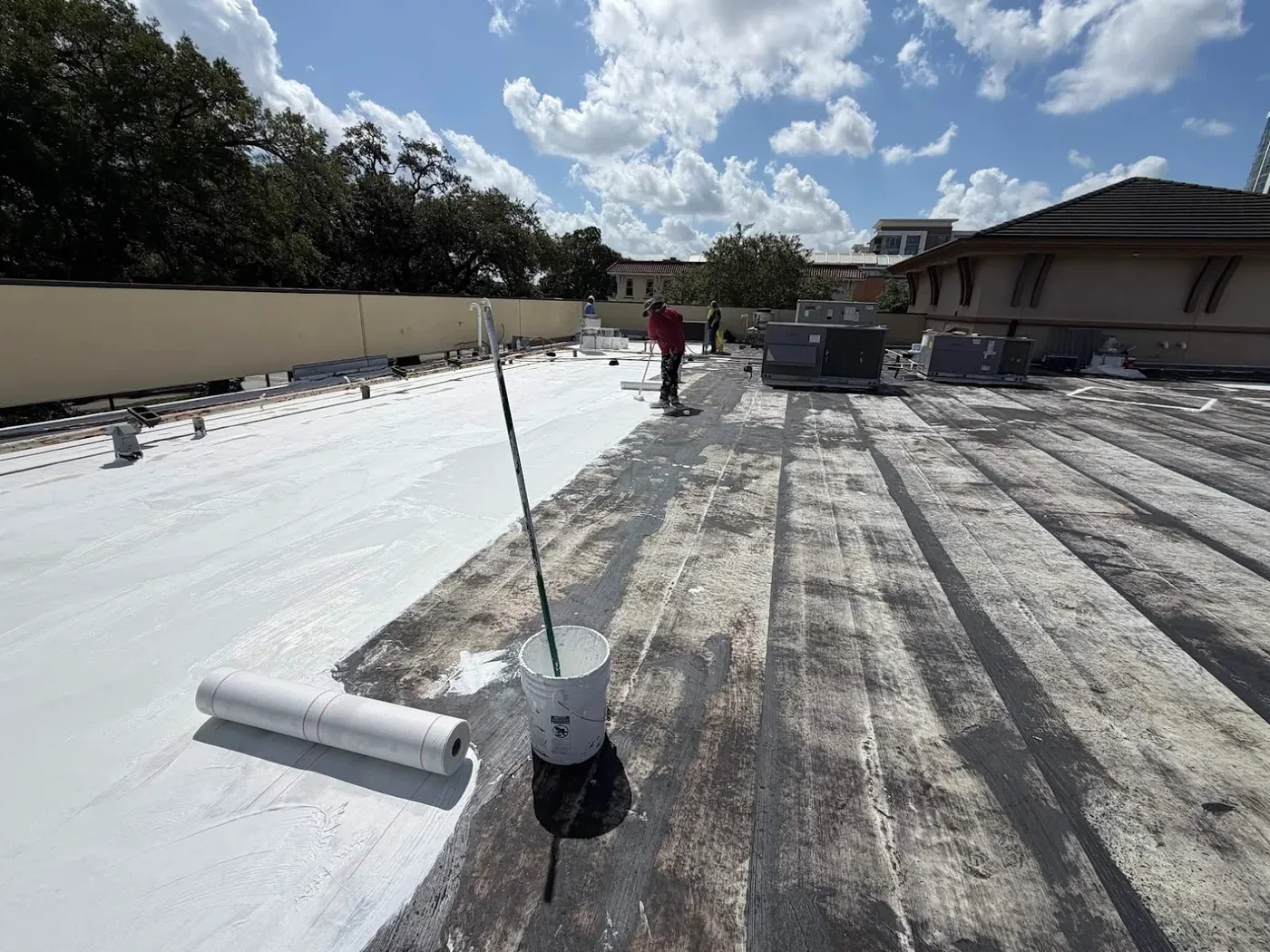
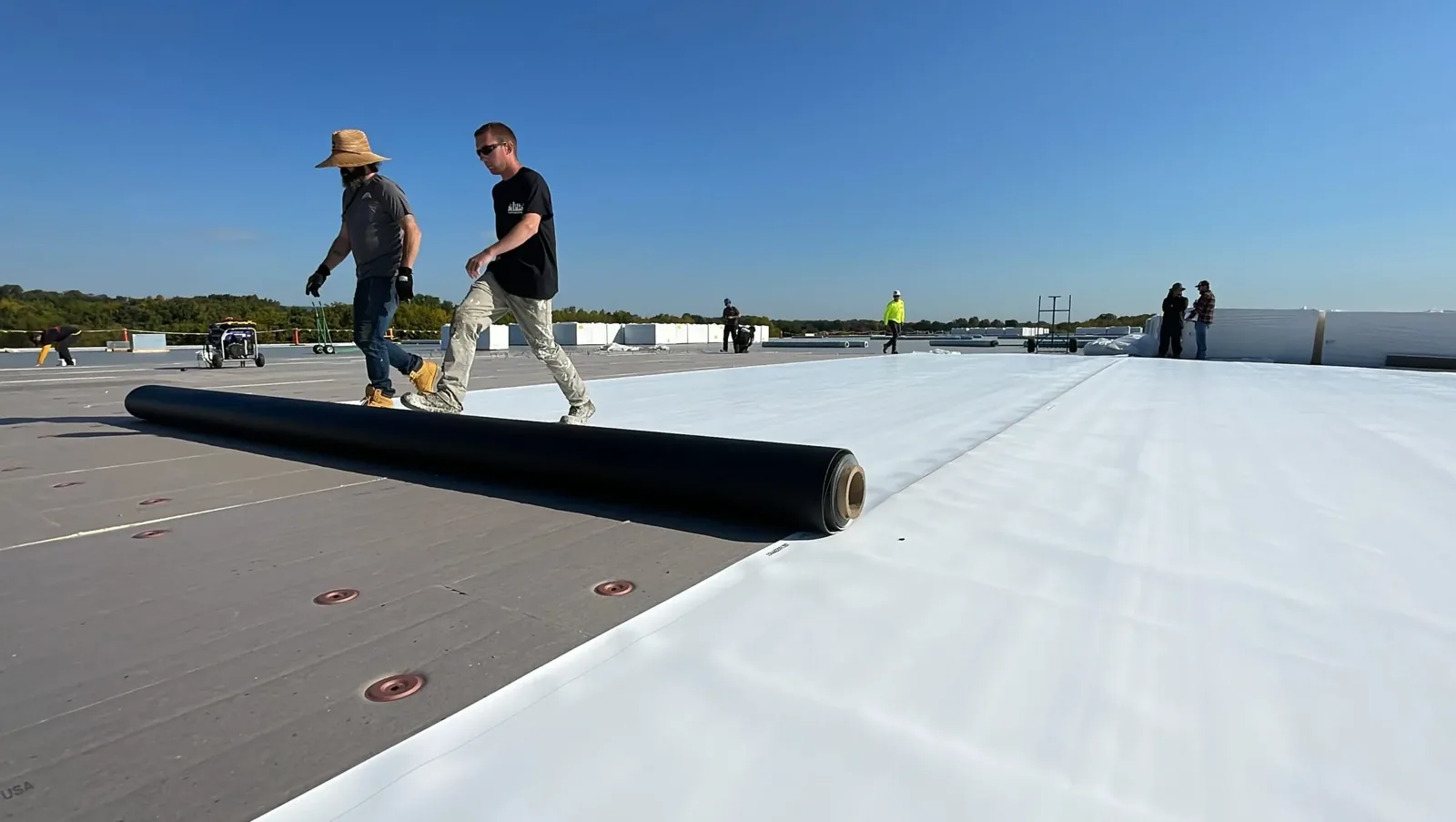
The scan and the cores decide. One damaged corner or seam is repaired in the same material. A dry membrane worn at the surface may take a coating restoration, and a roof with wet insulation over a wide area needs replacement. On an older building the tear-off often exposes deck repairs, and those go into the price as separate lines.
Cost follows details more than area: edge length, penetration count, the state of the deck and how a hoist or crane reaches the roof. Phasing is common, with the worst section replaced first and the rest logged for a later date.
Owners ask whether repairing now saves a replacement later. Sometimes it does: a roof with dry insulation and a sound deck rewards a good repair, and the log shows what was done. A roof with wet board does not, and money spent on patches there delays the larger spend while the water keeps working.
Over the Outerbridge Crossing
Material comes over the Outerbridge Crossing, and a late delivery on the span is a roof left open. Trucks are booked early, loads are staged so the opening work has what it needs and every section is dried in before the crew leaves. Anyone below the work hears about it the day before the loud steps.
Owners with buildings on both shores keep a single log format. Neighboring New Jersey work in Carteret and Woodbridge follows the same sequence, and the Staten Island district of Tottenville sits at the other end of the bridge.
What goes in the log
The log is built from a zoned roof plan, photographs of every finding, the scan results and a ranked repair list, with each rank with its reason, and it passes from one owner to the next with the building.
Related Roofing Work
More roofing work that comes up alongside Perth Amboy.
Commercial Roofing Questions
What changes for a roof on a bay shoreline?
The order of the checks: edges and drains first, since wind and rain arrive with nothing to slow them. Seams and walk pads follow.
A building has had several uses. How does that affect the roof?
Each use leaves penetrations, curbs and equipment behind. We map them all, mark which are active and which are abandoned, and repair or remove the failed ones.
Is Perth Amboy within easy reach of the island?
Yes, over the Outerbridge Crossing, which connects the two shores. Crews and material use it, and deliveries are booked early to miss peak traffic.
Should a new waterfront building have its roof inspected?
Yes. A baseline walk records seams, drains, edges and curbs, and every later walk compares against it. Early details are cheap to correct.
Can an older building keep its existing roof layers?
Only after a scan and cores. Dry insulation and a sound deck may carry one more layer, while wet board or several layers already on the deck mean a tear-off to the structure.