
Versico Roofing Systems in Staten Island, NY
Inspection, repair and replacement of Versico single-ply EPDM, TPO and PVC roofs on Staten Island, NY retail, office and industrial buildings.
Wrinkles that run in parallel lines toward a drain are the first thing an inspector notices on a fully adhered single-ply roof from across the parking lot, and on a Versico roof in Staten Island, NY they usually mean the sheet has let go of the board beneath it or the board has shifted. Versico is a single-ply roofing maker whose commercial systems cover EPDM, TPO and PVC membranes, with insulation and accessories that go with them.
Commercial Roofing Staten Island inspects, repairs and replaces these roofs, beginning at the wrinkle, the drain and the edge, since those three show how the sheet is attached and where the water is going.
How the sheet is held down
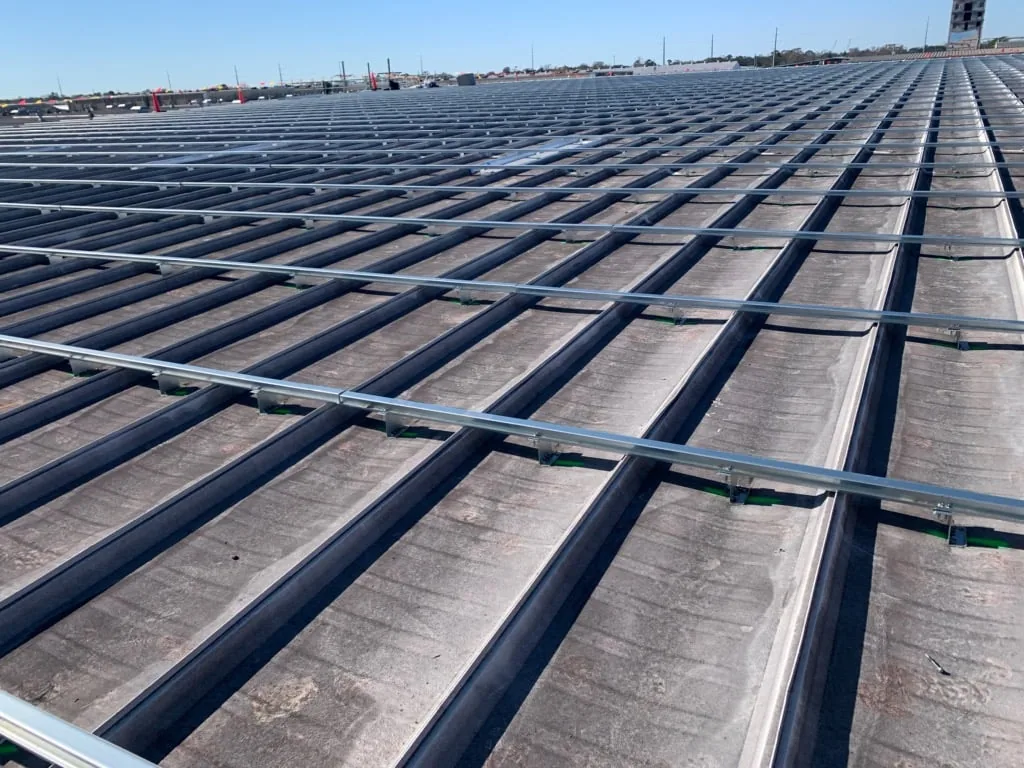
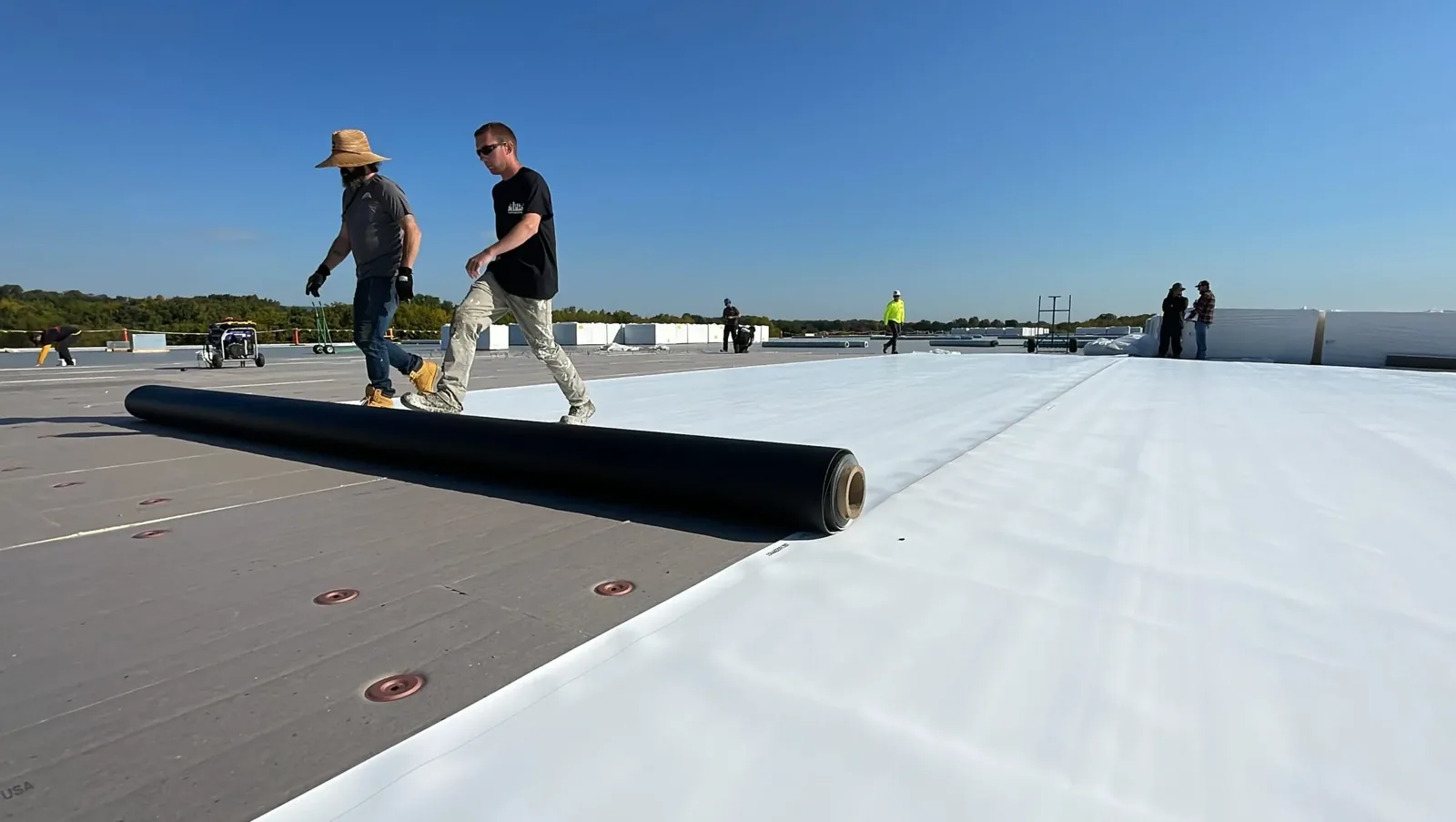
A single-ply sheet stays on a roof in one of three ways. It can be glued to the insulation, which gives a smooth look and quiet behavior in wind. It can be fastened through plates in the seams or in the field, which is quick to install but lets the sheet flutter. Or it can be held down by ballast, stone or pavers, which depends on the structure carrying the weight. The attachment determines where the roof fails.
A glued sheet fails with blisters and tented seams. A fastened sheet fails at the plates, where a fastener backs out or the sheet wears through. A ballasted sheet fails when the stone moves and exposes the membrane to the sun. We read the attachment first, since every repair decision hangs on it.
Curbs, pipes and penetrations
On a crowded roof the sheet is the quiet part and the penetrations are the loud part. Every pipe, curb and conduit is a spot where the sheet has been cut, and every one needs a boot or a formed flashing, a termination at the top and sealant that has not dried out. Inspectors find the same set of failures over and over: a boot cracked by the sun, a clamp ring that has slipped, a sealant bead that has pulled away from the metal.
We repair these with a formed flashing set into a clean sheet, not another bead of sealant. The penetration flashing work we do aims to remove the weak point entirely, so the next walk finds a detail that is intact instead of a patch that is aging.
Ballast and walk pads matter here too. A service route from the stair to the condenser wears a path into the sheet, and the cure is a pad along that route plus a note in the log for the next crew.
Retail strips and long roofs
Richmond Avenue is the main commercial strip of Graniteville, with some of the heaviest car traffic on the island. Charleston has the open-air Bricktown Centre, in a neighborhood where a 2002 broker estimate put roughly a third of the land in commercial and industrial use. Arden Heights added a shopping center beside the Village Greens development. What a retail roof of this kind asks of a sheet is the same everywhere.
That is a long run, many rooftop units, drains placed at intervals and walk routes for service crews. Where the sheet is white, dirt ponds show up as rings, and where it is black, the surface is warmer and the seams work harder. Our big box retail roofing and shopping center roofing walks cover the run end to end.
Perimeter and wind
Wind lifts a roof from the edge, and the single-ply sheet is only as secure as the metal and the attachment that hold it. The 80 mph gusts of Sandy in October 2012 tested every perimeter on the island. We check coping caps for loose fasteners, edge metal for lift and the first rows of fasteners for backing out. Where the edge has loosened, resetting it comes before any field repair, because a lifted edge is how the next storm takes a whole section.
Our edge metal and coping work follows the same order on every building: cap, metal, termination, sheet.
Snow, ice and the thaw
Annual snow in the city runs about 29.8 inches, and January 2016's single day of 27.3 inches showed how a drain can disappear under a drift. Ice at a drain turns the first thaw into a pond on the sheet, and ponded seams are the next findings in the log. In September 2021, Ida brought a flash flood emergency to New York City, which tested every scupper and overflow on a flat roof. Both storms taught the same lesson: the drain is the first place to look.
The fix in order
Walk, probe and log come first. Then we clear the drains, reset terminations, replace failed boots and weld or tape open seams. A bubble in a glued sheet is cut open and checked: if the board under it is dry, it can be patched; if it is wet, the wet section comes out. When the damage is broad, a recover or full replacement goes into the proposal beside the repair, with a price for each.
Comparing makers is rarely useful, since Carlisle SynTec and Holcim Elevate sell the same three families of sheet, and the tests we run are the same.
Tenants and access
Retail roofs have tenants under them with opening hours, and loud work belongs before the doors open. Material is hoisted in the early morning, sections are dried in by afternoon, and any open area is covered before we leave. We keep fire lanes and entrances clear, and we tell tenants one day ahead of loud work.
Bridge crossings shape the delivery calendar. The Verrazzano-Narrows, Outerbridge, Goethals and Bayonne bridges are the island's only road links to Brooklyn and New Jersey, so rolls and board are scheduled for early arrival and staged where they will not block a lane. A job at a Charleston retail center needs a different staging plan from a tight street in Port Richmond, and the plan is written before the first truck rolls.
Tenant roofs on a long strip share one membrane and many owners. The crew prices each repair by roof section, notes which tenant sits below, and gives the landlord a single page that shows all open items, so the work can be scheduled by area and not tenant by tenant.
Related Roofing Work
More roofing work that comes up alongside Versico Roofing Systems.
Commercial Roofing Questions
Why do pitch pans fail so often?
A pitch pan is a pocket of sealant poured around a pipe, and sealant shrinks and cracks over time. We replace it with a formed boot or a flashing set into the sheet when we can, because those do not dry out the same way.
Can a bubble in a fully adhered roof be left alone?
Only if it is dry and small. We cut it open and check the board, because a bubble over wet board is the start of a larger wet area.
What separates a repair from a section replacement?
A repair fixes a defect in a sound sheet. A section replacement removes sheet and board that have failed and ties in new material at a proper lap, usually after a moisture scan has mapped the damage.
How is a rooftop unit's curb protected during a reroof?
The curb flashing is cut out, the sheet is tied in with new flashing, and the unit stays running with a protective cover over the exposed edge. We schedule shutdowns with building staff.
How do you handle a roof that has been recovered more than once?
A third layer is rarely wise. Cores show how many layers sit on the deck, and when the stack is deep, tear-off to the deck gives a flat base and removes the weight.