
Carlisle SynTec Roofing in Staten Island, NY
Service for Carlisle SynTec EPDM, TPO and PVC single-ply roofs in Staten Island, NY: seam probing, flashing repair, recovers and replacement.
Two missing fasteners on a termination bar, with a bead of sealant dried to powder above it, is the first line an inspector writes on a single-ply roof, and on a Carlisle SynTec building in Staten Island, NY the same walk can turn up a second note a few steps later, a splice edge lifted beside a drain. Carlisle SynTec makes single-ply membranes in EPDM, TPO and PVC, along with the insulation, adhesives, fasteners and flashing accessories that finish a roof built from them.
Commercial Roofing Staten Island repairs, restores and replaces these roofs, and the work begins with the question every facility director on the island eventually asks: which part of this assembly is still doing its job.
Three sheets, three habits
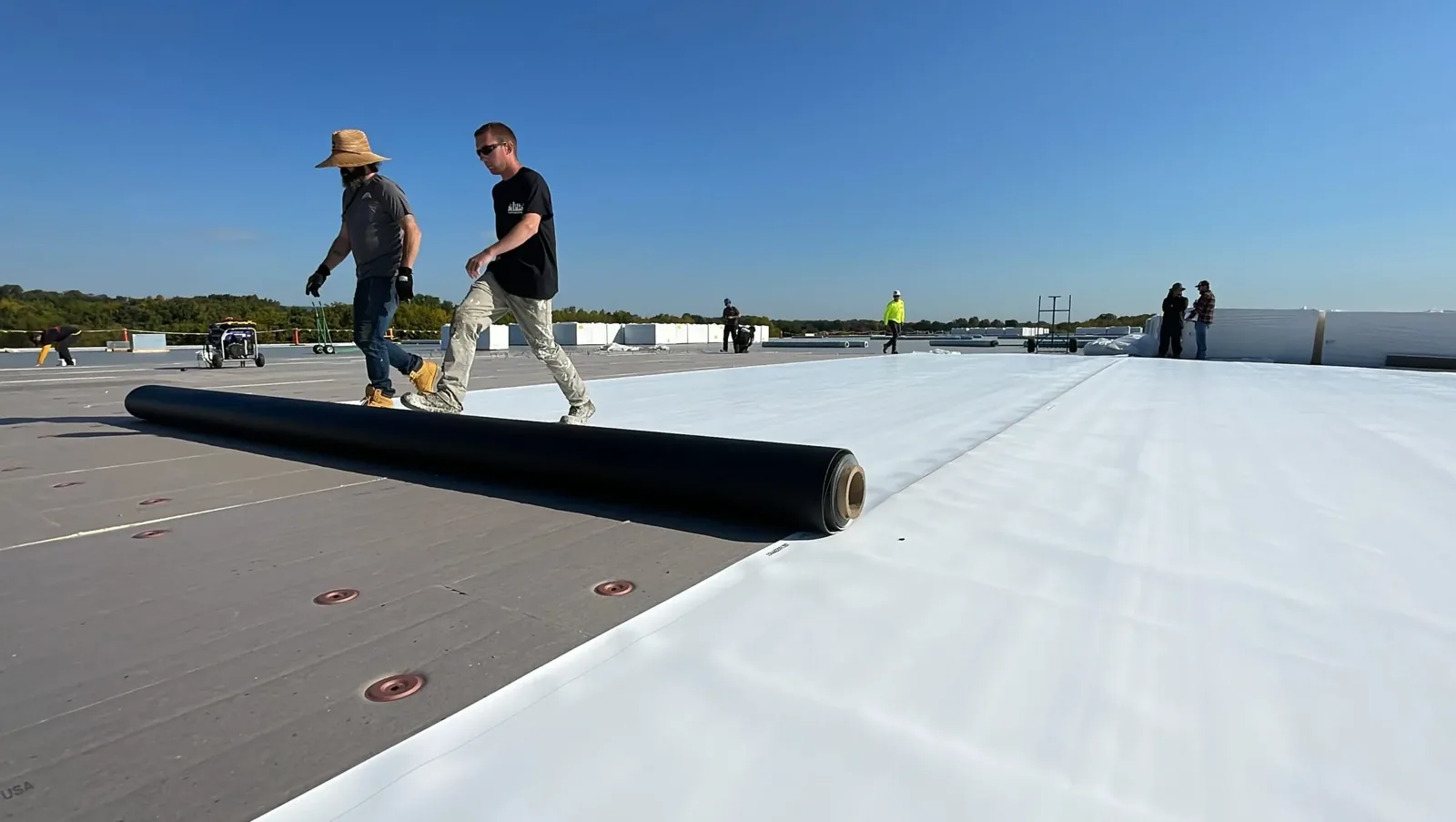
EPDM is a cured rubber sheet joined with tape or adhesive, and it shrinks a little as it ages, which pulls on every corner and pipe boot. TPO is a heat-weldable thermoplastic sheet, usually white, and its welded laps are the part that matters most. PVC is also welded, with added resistance to grease and chemical exhaust, so it turns up over kitchens and plants. A roof under the same manufacturer name can be any of the three, and the repair that suits one will fail on another.
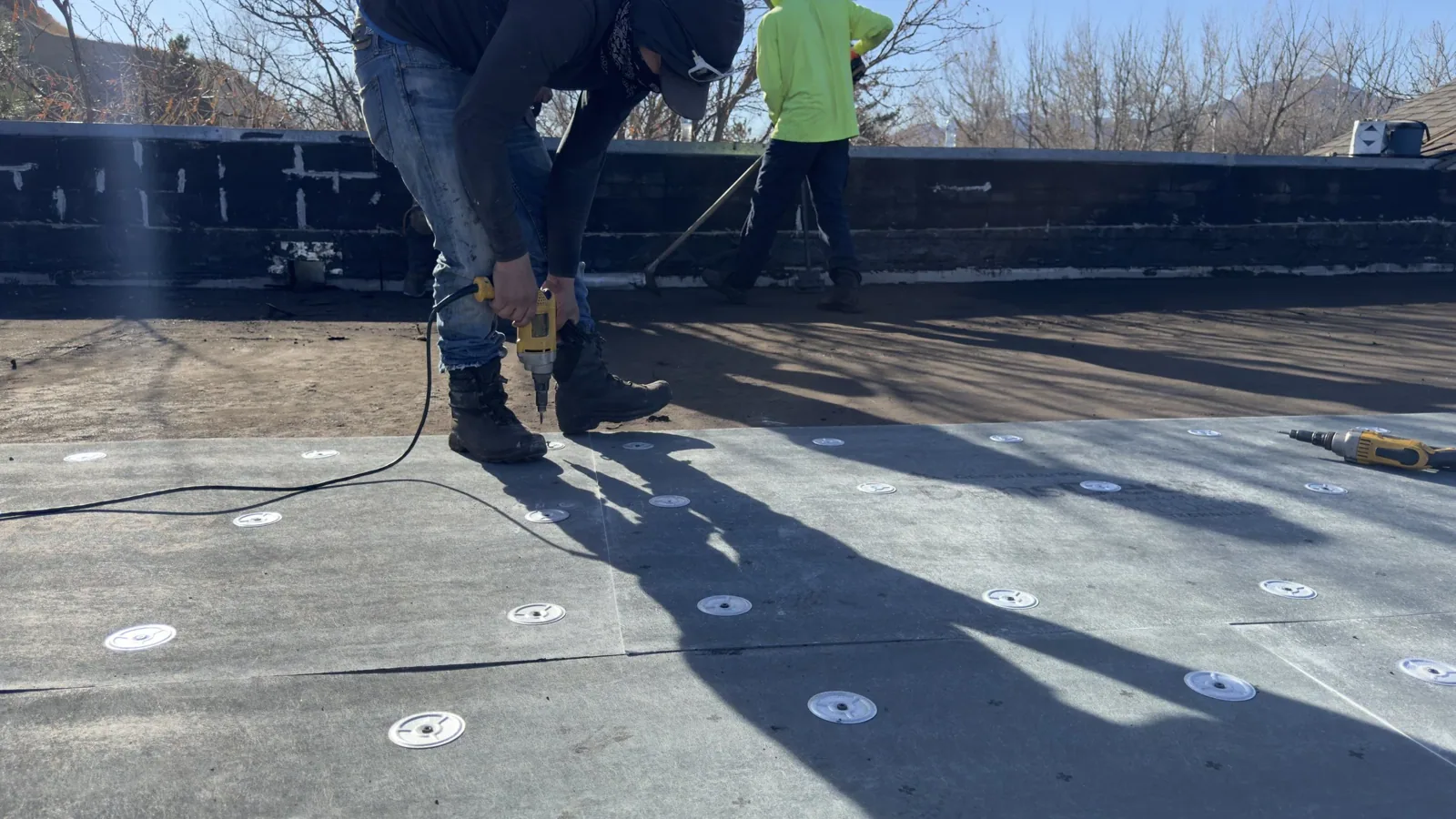
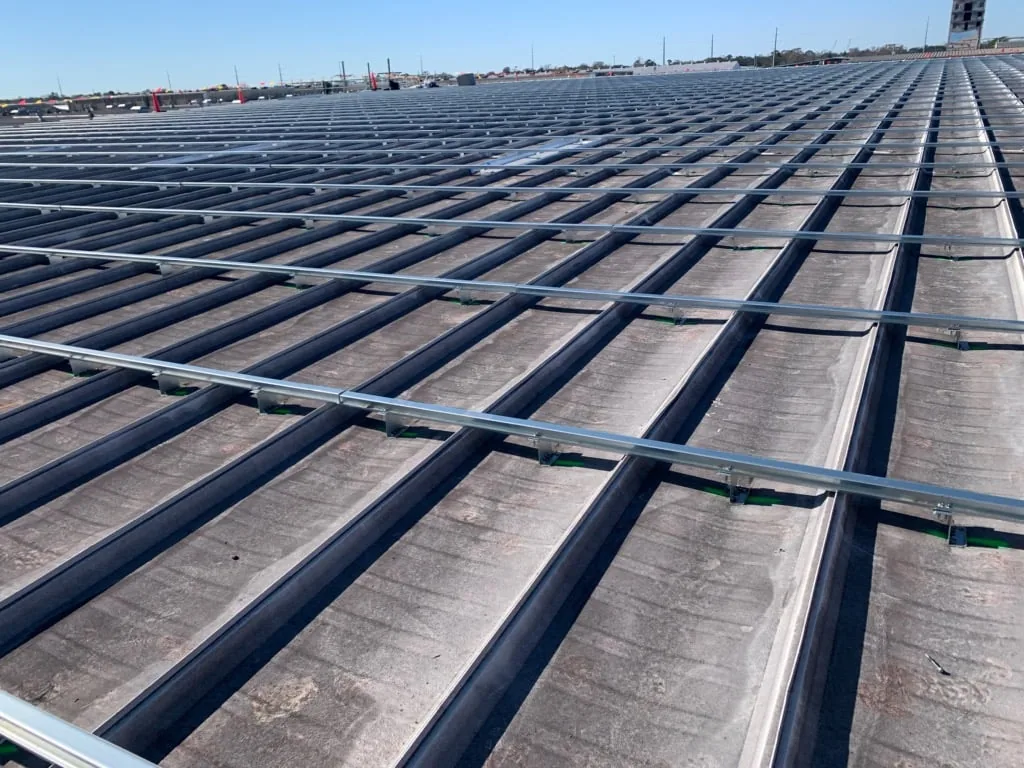
The attachment matters as much as the sheet. A fully adhered membrane is glued to the board below and stays quiet in wind. A mechanically attached one is fastened through plates and can flutter at the edges. A ballasted one rests under stone and depends on the structure to carry the weight. We identify which of the three we are standing on before we quote anything, because the failure pattern follows the attachment.
Seams, corners and terminations
Probing is the work. We run a blunt probe along every seam and mark the spots where it slips in, then look at corners, where the sheet has to be cut and formed around a curb or a pipe, and at the terminations where the sheet ends against a wall. A termination bar that has lost two fasteners and a bead of sealant that has dried to powder are small items, yet they are where the roof meets the wall and where the water enters.
On a TPO or PVC roof a failed weld is cleaned, re-welded and checked with the probe again. On an EPDM roof a lifted splice is cleaned, primed and taped, with the edge sealed. We never smear sealant over a lifting seam and call it repaired. That buys one season and leaves a bigger repair next year. The seam failure repair routine for any single-ply roof begins with finding how far along the seam the problem runs.
Which buildings carry these roofs
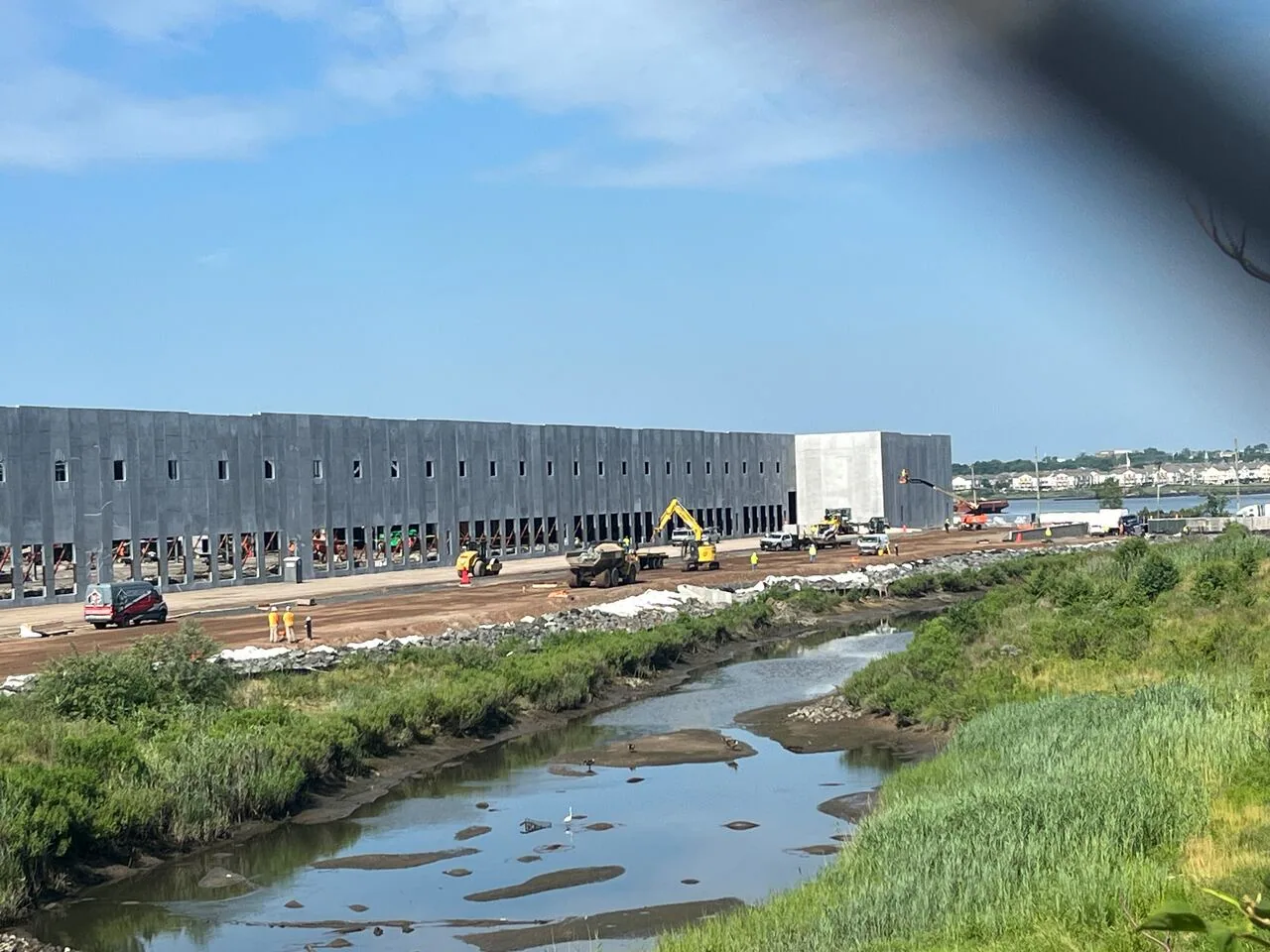
Single-ply is common on the large low-slope buildings of the West Shore, where most of the island's industrial development sits, and on retail roofs along Hylan Boulevard. Hylan Plaza in New Dorp, opened in 1966, was the largest of five supermarket and department-store centers that grew along the boulevard, and the Staten Island Mall in New Springville is the island's largest retail center. What any one of those roofs carries is settled by a core cut and a seam probe.
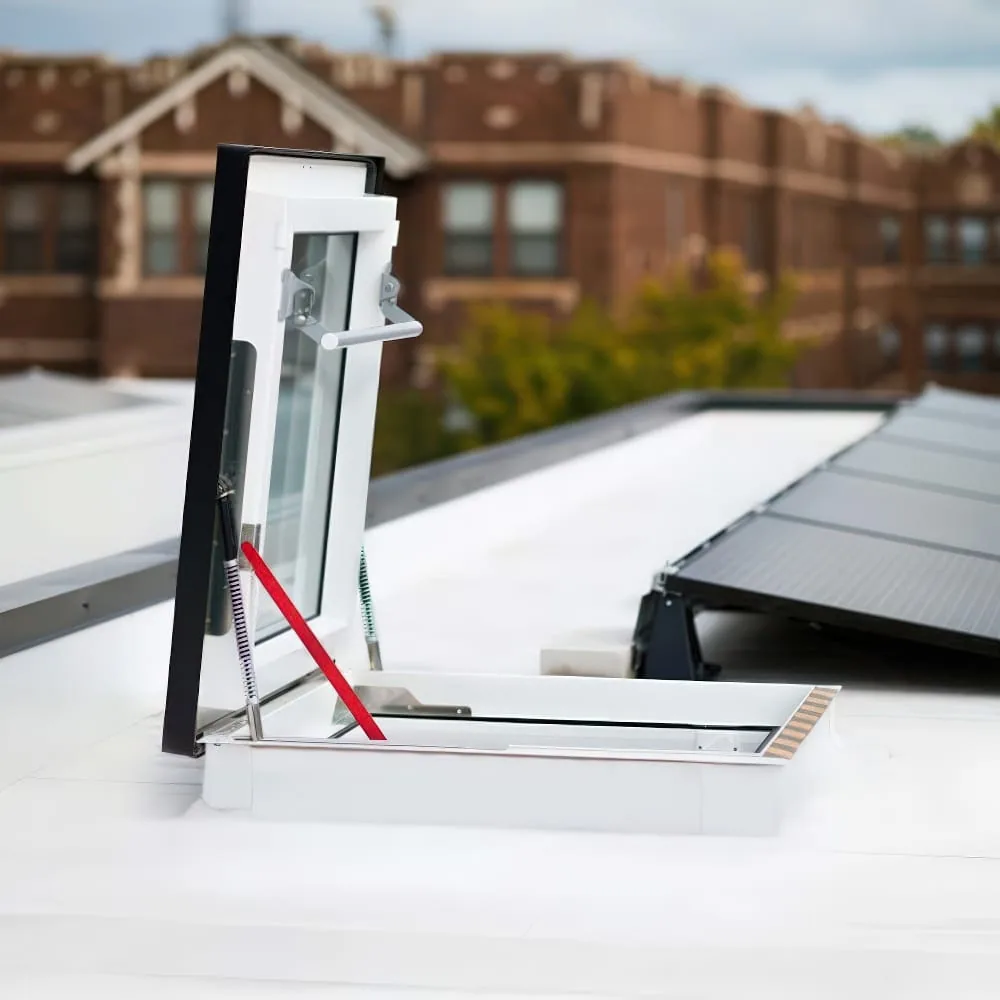
Where a retail roof is crowded with rooftop units, the work shifts to curbs and flashings, covered by our penetration flashing service. Where a warehouse roof is mostly open field, drainage and edge attachment come first, and distribution center roofs add forklift-sized walk-pad wear near doors.
Drains and edges
A ponded seam beside a drain strainer is a finding, not an annoyance. Water that stands on a white sheet leaves a dirt ring, and water standing on the sheet through a freeze lifts the seam edge by a hair every cycle. We measure the depth after rain, clear the strainer, and decide whether a tapered correction is needed.
Edges get the next look. A roof that was marginal at its perimeter showed it in Sandy's 80 mph gusts of October 2012. On a fully adhered Carlisle roof the edge usually fails at the metal, with coping loosened and the sheet beneath exposed, so the coping and edge metal go in the log before the field of the roof does.
Winter and the September 2021 storm
The city can expect around 29.8 inches of snow in a normal year and the 27.3-inch day of January 2016 buried drains and loaded every roof at once. Rubber stays flexible in the cold, while thermoplastic sheets hold their welds as long as the roof has been kept clear of ponding. The thaw is the moment to walk, since ice dams at drains turn a melt into a pond overnight.
Ida in September 2021 brought a flash flood emergency to New York City, and a strainer packed with leaves is how that rain became interior leaks. Drain checks sit at the top of every spring and fall visit.
Repair, recover or replace
A sound Carlisle roof with local damage gets repaired with compatible material. When the sheet is tired across the field, an infrared scan and a handful of core cuts show whether the insulation is dry. Dry insulation and a sound deck may allow a recover; wet insulation means replacement. Compared with Versico or Holcim Elevate roofs, the same three families sit under different names, and the same tests apply.
Cost follows parapet length, curbs, drains and access for hoists far more than the sheet. We price the details one by one.
Closeout walk
After the work we walk the roof again with the facility director, probe the new seams together and photograph each repaired detail. A drain with a fresh strainer, a termination bar reset along the parapet and a welded patch with the probe test beside it each get their own frame, so next year's inspector can compare like with like.
Those photographs, the roof plan and the moisture readings form the inspection log, which also serves owners with buildings in Elizabeth or other points across the Goethals Bridge.
Related Roofing Work
More roofing work that comes up alongside Carlisle SynTec Roofing.
Commercial Roofing Questions
How do you tell whether a failing seam can be repaired or needs a larger fix?
We probe the full length. A short open stretch with a sound sheet on both sides is a repair. A seam that opens again and again along most of its run points to aged sheet or a bad original splice, and the section needs a larger remedy.
Is a white membrane always the better choice on the island?
White reflects heat and keeps a roof cooler in July, when the mean daily high in New York City reaches 84.9 F. It does not change drainage or edge attachment, and those decide most leaks. A dark sheet with good details outlasts a white one with bad details.
What if our roof is ballasted with stone?
Ballast hides the sheet, so we sweep sections aside to inspect seams and flashings, then put the stone back where the structure can carry it. Displaced stone near the edges gets reset first, because loose stone is a hazard in wind.
Can one damaged section be replaced without replacing the whole roof?
Yes, when the neighboring sheet is sound and dry. The new section is tied in with a proper lap or a flashing detail, and we test the transition after the first heavy rain.
How do you handle a roof with crowded rooftop units?
Each curb is flashed and logged on its own. We check the pitch of the sheet around the unit for ponding, since a unit that blocks drainage creates its own pond.