
Commercial Roofing in Bayonne, NJ
Commercial roof inspection, repair and replacement in Bayonne, NJ, across the Bayonne Bridge from Staten Island: retail, port-area and harbor roofs.
Big-box retail on Route 440, port land that still works and a former military terminal turned into a harbor redevelopment give Bayonne, NJ three different kinds of commercial roof within one city, and the span that links it to Staten Island is the same Bayonne Bridge our crews cross to get there. In Bayonne, a first walk by Commercial Roofing Staten Island starts with the edge, since a harbor city gets its weather early, and the commercial roofs there are inspected, repaired and replaced the same way as on the island.
The three roof groups ask for different things. A retail roof wants quick, quiet work around trading hours. A port-side roof wants tough surfaces and clear drains. A redevelopment roof wants a baseline written down while the building is young.
Over the bridge
The Bayonne Bridge opened in 1931 and was raised between 2013 and 2019 so larger ships could pass beneath it. It is one of the island's four road links to Brooklyn and New Jersey, and for a roofer it is a scheduling fact: trucks with rolls of membrane and pallets of board cross it, and a late delivery can leave a section open. We plan material to arrive early and dry in each area before the crew leaves.
Bayonne is a Hudson County city of 71,686 residents at the 2020 census, with commercial buildings of many kinds. For a first walk, a roof plan, the dates of recent leaks and the access arrangements are what we ask the owner to send ahead.
Retail on Route 440
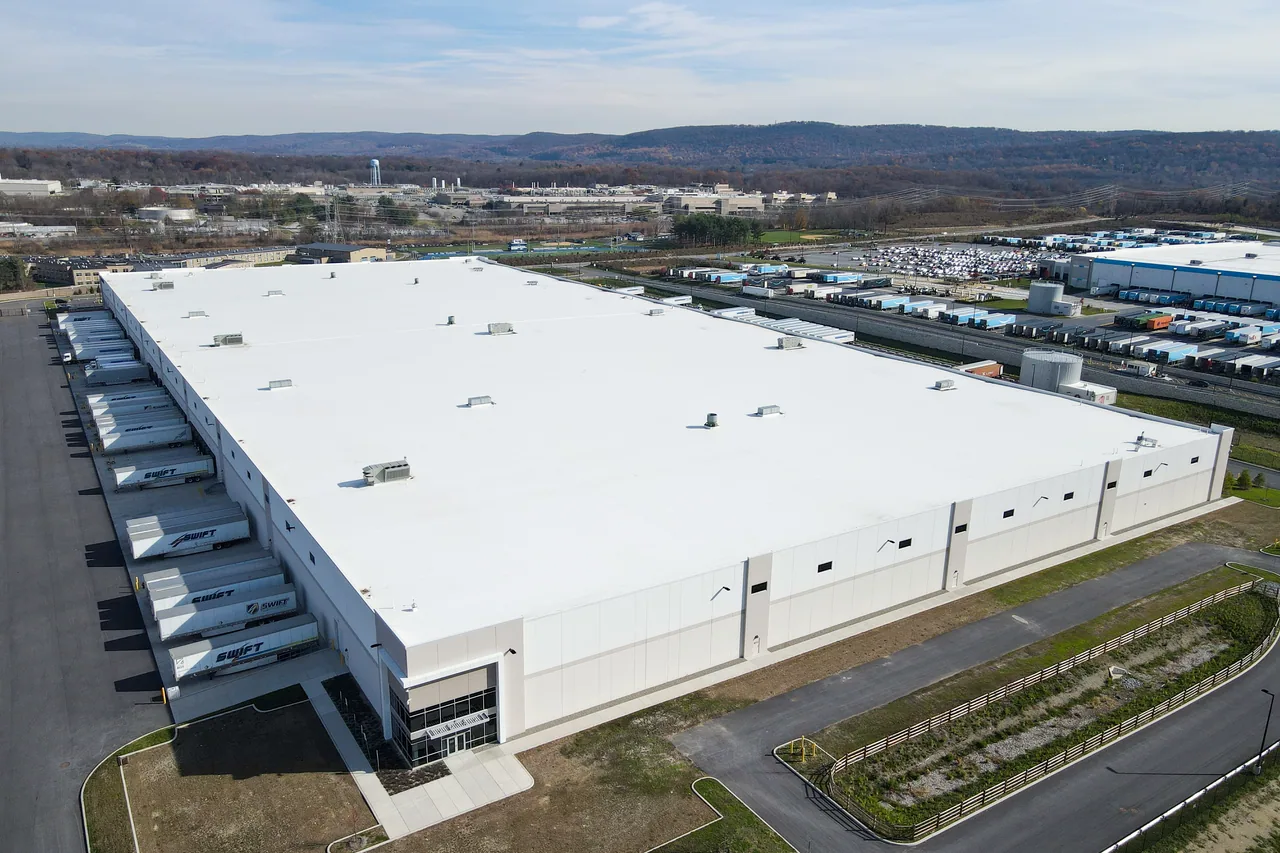
Bayonne Crossing, a retail center on Route 440, includes a Lowe's and a Walmart. What those roofs carry is a question for a core cut. A large retail roof, in general, asks for several things. Those are long runs to the drain, many rooftop units, service routes that wear the sheet and a perimeter that takes wind.
The first walk starts at the drains, since a large low-slope roof has many and some are always partly blocked. Then the seams, probed along their length, then the rooftop units, each on its curb with its flashing checked. Stores open early, so noisy steps move to before opening or after closing, and a clear path to every entrance stays open. Our big box retail roofing work follows that sequence.
The harbor redevelopment
The former Military Ocean Terminal at Bayonne covered 430 acres, closed in 1999 and is now the Peninsula at Bayonne Harbor. Port Jersey remains part of the working port. A redevelopment on a harbor edge brings new construction near the water, and new roofs are where a baseline matters most. The first inspection writes down seam condition, drain function, edge attachment and the state of each equipment curb, and each later walk is measured against it. Port-side buildings are different. They see wind off the water, grit and sometimes exhaust, and their roofs need walk pads, clear drains and edges that hold. We check these on every first walk. A preventive roof maintenance program of two visits a year, spring and fall, is how a harbor-side owner keeps a roof's condition written down.
Whatever the roof system, new buildings share a pattern: early leaks come from details, not membranes, and the details are penetrations, curbs and terminations that were rushed in a busy schedule. A baseline walk a year after opening catches them while repair is cheap.
What the inspector sees
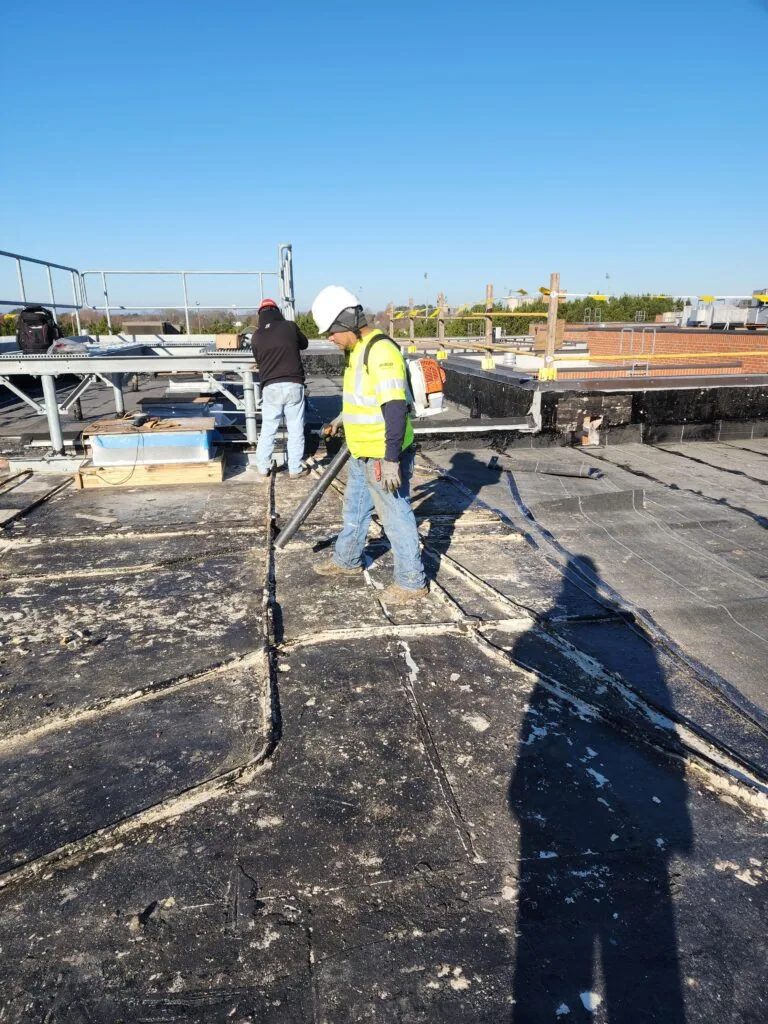
On the first walk the notes are short and specific. A ponded seam beside a drain, a vent pipe with a split boot, a coping cap with an open joint, a walk-pad worn through. Each goes in the log with a photograph and a location, and each gets a rank.
Where the building is occupied and the roof holds equipment, we also check curbs and flashing around every unit. A condenser on a curb with dried sealant is a leak waiting for a heavy rain, and we replace sealant-only details with formed flashings. The penetration flashing work removes the weak point instead of patching it.
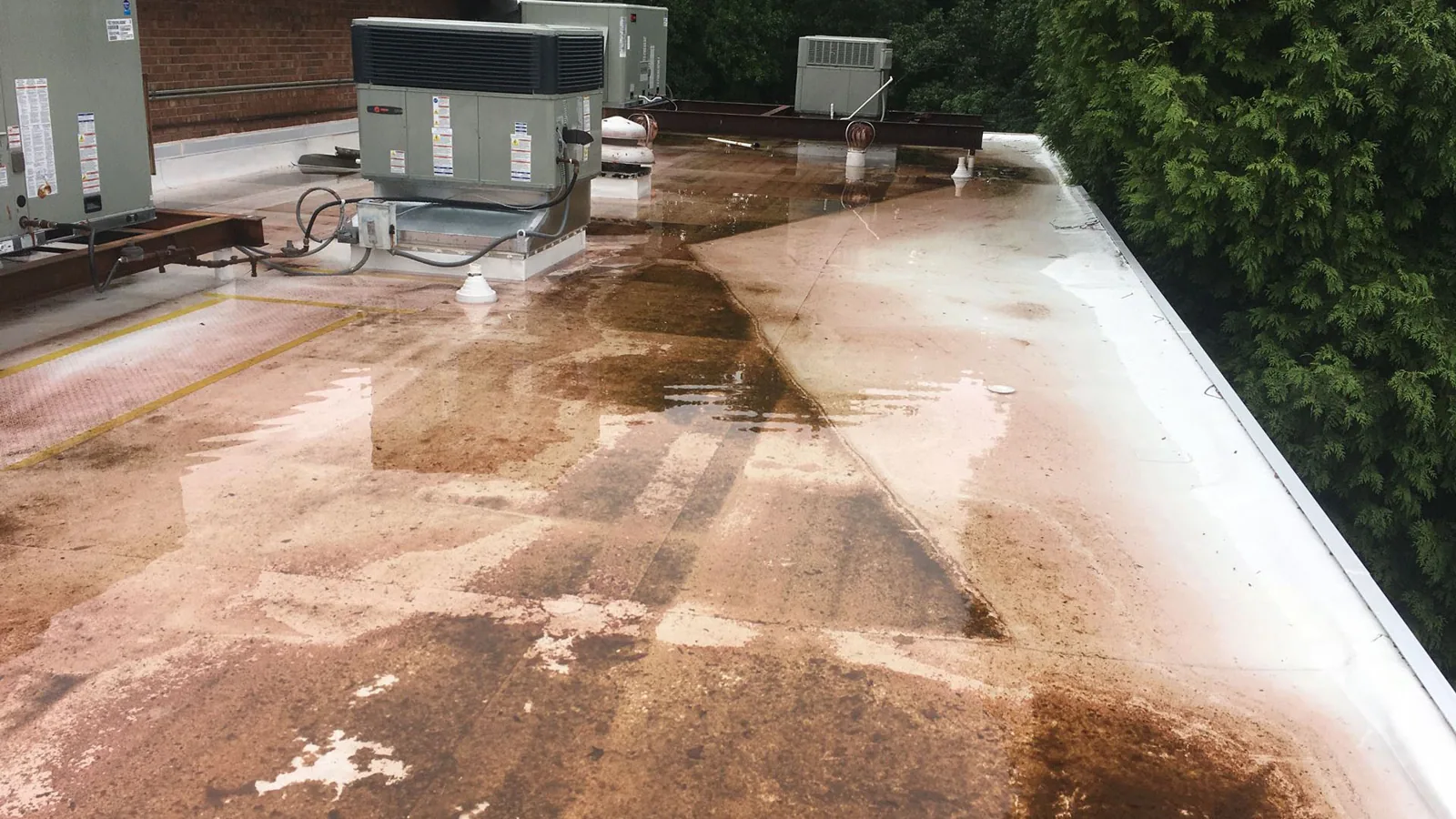
Ponding gets its own entry. Once rain has stopped, the depth of water near each drain and the hours it needs to clear are recorded. A pond that stays for a day or two means a settled deck, a blocked drain or a missing cricket, and standing water wears out a membrane faster at that spot. The ponding water repair that follows addresses the cause first and the surface second.
Weather on a harbor edge
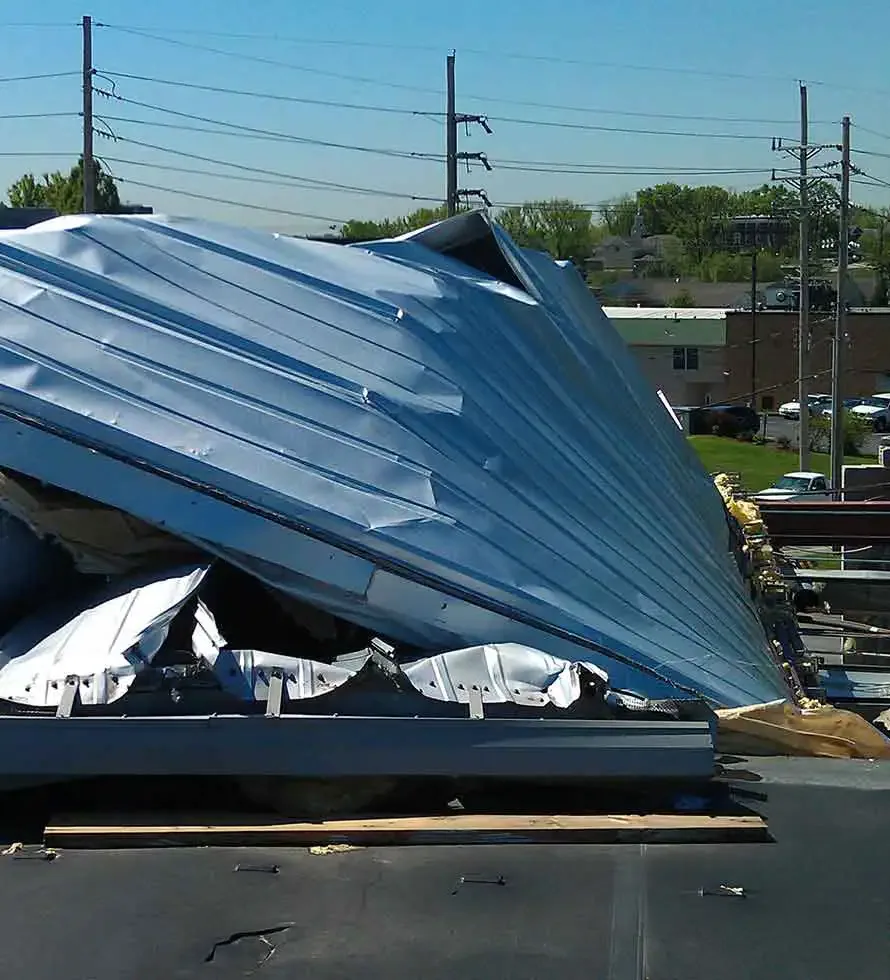
Across the harbor, New York City gets roughly 49.5 inches of precipitation a year, spring being the wettest season, and snow that comes to roughly 29.8 inches in a typical year, with a one-day high of 27.3 inches on January 23, 2016. Sandy's gusts hit 80 mph in October 2012, and Ida's rain set off a flash flood emergency in September 2021. Those storms shape the checklist for a harbor-edge roof: edges and coping first, drains and overflow scuppers second, and the seams after the thaw. The wind damage repair routine starts at the perimeter.
Repair, restore or replace
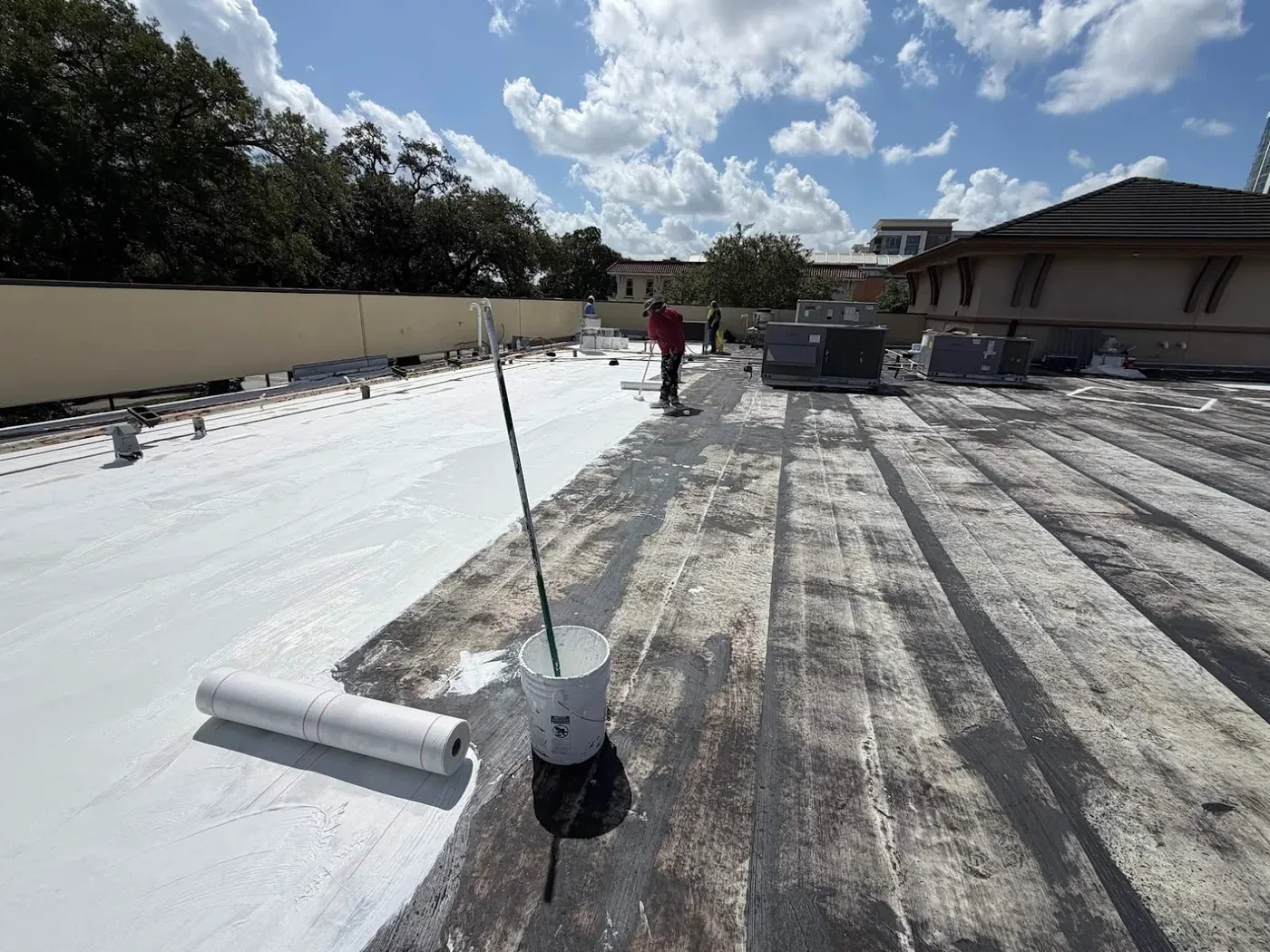
The moisture scan and the cores decide. Isolated damage gets a repair. A dry but weathered membrane may take a coating restoration. Wet insulation over a wide area calls for replacement, with a price for the recover alternative beside it when the deck allows. Cost follows details, access and crane time more than area.
Owners with buildings on both sides of the bridge can keep one log format. The Staten Island districts of Mariners Harbor and Port Richmond use the same one.
Phasing is the usual answer when a building cannot stop. The worst section is replaced first and tied in so it sheds water on its own, and the remaining sections are logged with a date for the next look. If the whole roof cannot be paid for in one year, the leak is still stopped, the building stays dry and the rest of the roof goes into a written plan.
Trucks, crews and tenants
Crossing a bridge with a crew, a hoist and a load of insulation board takes planning. We stage the loads so the first truck carries what the opening work needs, the second follows with the rest and nothing sits on the roof overnight except what is tied down. A forecast with gusts changes the day's plan, and a section that cannot be closed by evening is not opened.
A day before any loud step, tenants receive notice. Retail entrances, loading docks and fire lanes stay clear, and a flagger works the lane when a hoist needs space. For a building with a manager on site, the day starts with a short walk of the work area and ends with a walk of the dried-in section.
Related Roofing Work
More roofing work that comes up alongside Bayonne.
Commercial Roofing Questions
Does the Bayonne Bridge change how a Bayonne job is planned?
It sets the delivery clock. Crews and material cross the bridge, so trucks are booked early and a section never sits open waiting for a late load.
What changes for a roof on a harbor edge?
The order of the checks. Edges and drains come first, since wind and rain arrive off the water with nothing to slow them.
A new roof on a redevelopment site needs an inspection?
It needs a baseline. On the first walk seams, drains, edges and curbs are written down, and later walks are compared with that record.
Can a retail roof be repaired without closing the store?
Yes. Noisy work moves to hours before opening or after closing, entrances stay clear and any open section is dried in before the crew leaves.
What does a harbor-edge roof need most?
Clear drains and secure edges. Wind and rain arrive off the water, so strainers, overflow scuppers and coping get the first attention on every visit.