
GAF Commercial Roofing Systems in Staten Island, NY
Repair, restoration and replacement of GAF-type single-ply, modified bitumen and built-up roofs on Staten Island, NY, from West Shore warehouses to brick.
A sheet edge curled away from its neighbor at a drain sump is usually the first line written down on a GAF roof, and the line after it names the layer underneath. GAF is a large roofing manufacturer whose commercial offerings run across thermoplastic single-ply membranes, modified bitumen sheets, built-up roofing components and liquid-applied coatings, which means roofs carrying its products can differ a great deal from one wing of a building to the next.
Commercial Roofing Staten Island, serving Staten Island, NY, repairs, restores and replaces these systems on low-slope commercial buildings, and the work starts by finding out which kind of GAF roof is actually underfoot before anyone prices a patch.
Reading what is on the roof
A manufacturer name on an invoice is a starting point, nothing more. A thermoplastic sheet shows welded seams and a faintly chalky face. A modified bitumen roof shows granules or a coated cap, with laps that were torched or mopped. A built-up roof shows layers of felt under gravel or a smooth cap. Each reads differently and fails differently.
We take a core cut at the worst spot and a second one where the roof still looks sound, because the comparison between the two says how much of the assembly is still working. A dry core under a stained ceiling tells us the leak is coming through a detail. A wet core tells us the insulation has been carrying water for a long time, and no amount of surface repair will bring that section back.
Where these roofs fail first
On thermoplastic membranes the weak points are the welded laps, the corners where flashing is cut and formed, and the terminations along the parapet. On modified bitumen the trouble starts at laps that opened in the cold, at base flashings that slid down a wall, and at blisters that finally split. On built-up roofs the surface gravel migrates, the felts under it dry out, and ponded areas wear through the top ply long before the rest of the roof is tired.
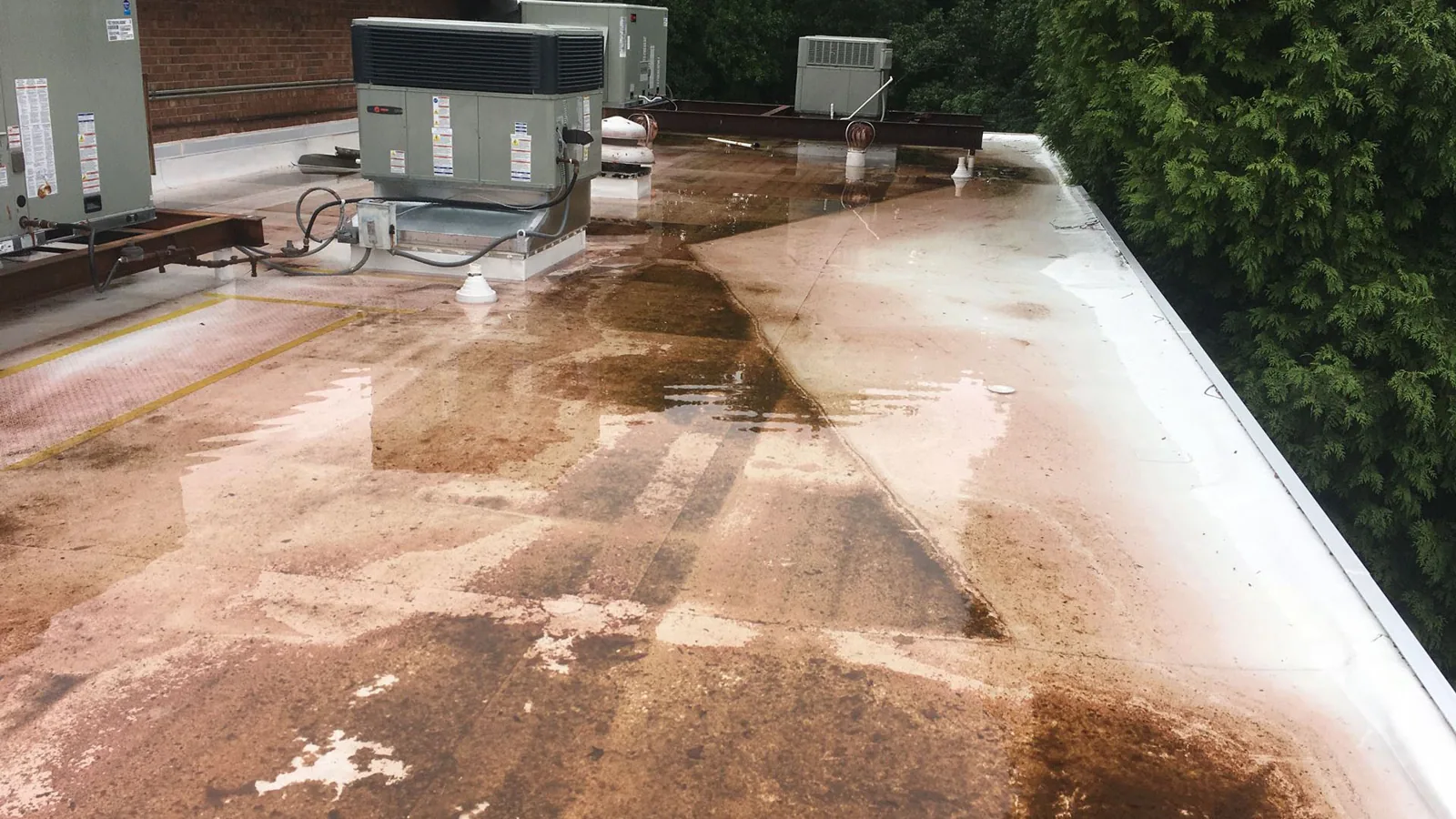
Ponding is the common enemy. A ponded seam near a drain tells us the deck has settled or the drain has been neglected, and a membrane that sits wet for days ages faster at that spot than anywhere else on the roof. The ponding water repair routine we follow begins by measuring how deep the water stands after rain, then deciding whether a cricket, a deeper sump or a tapered insulation correction will fix the cause.
The repair in plain terms
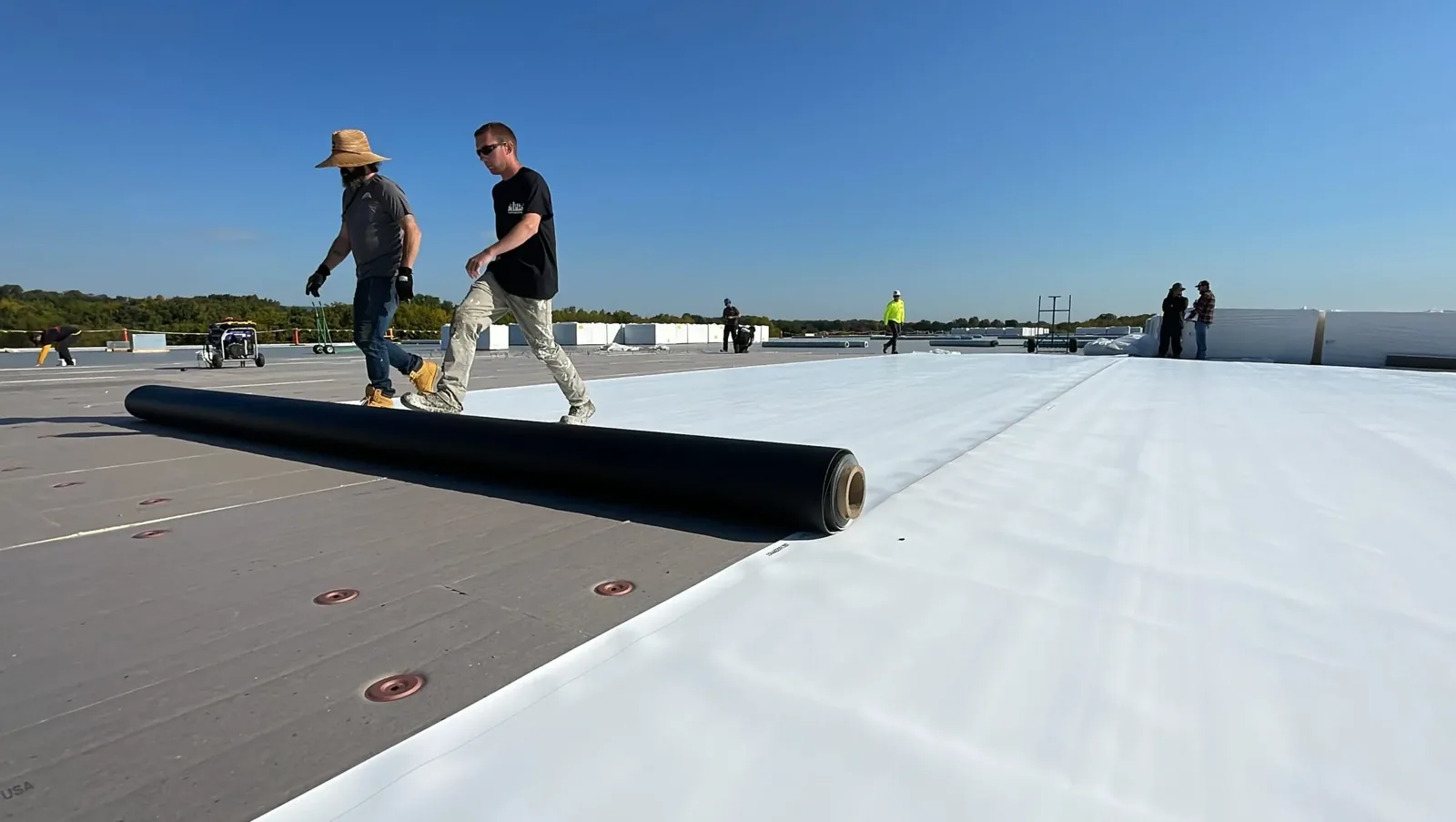
A sound GAF roof with local damage gets repaired with compatible materials, not whatever is in the truck. A thermoplastic patch is heat-welded to a cleaned sheet; a modified bitumen patch is a new cap layer lapped past the damage; a built-up repair replaces felts and flood coat in the affected area. Each repair is matched to the system it joins.
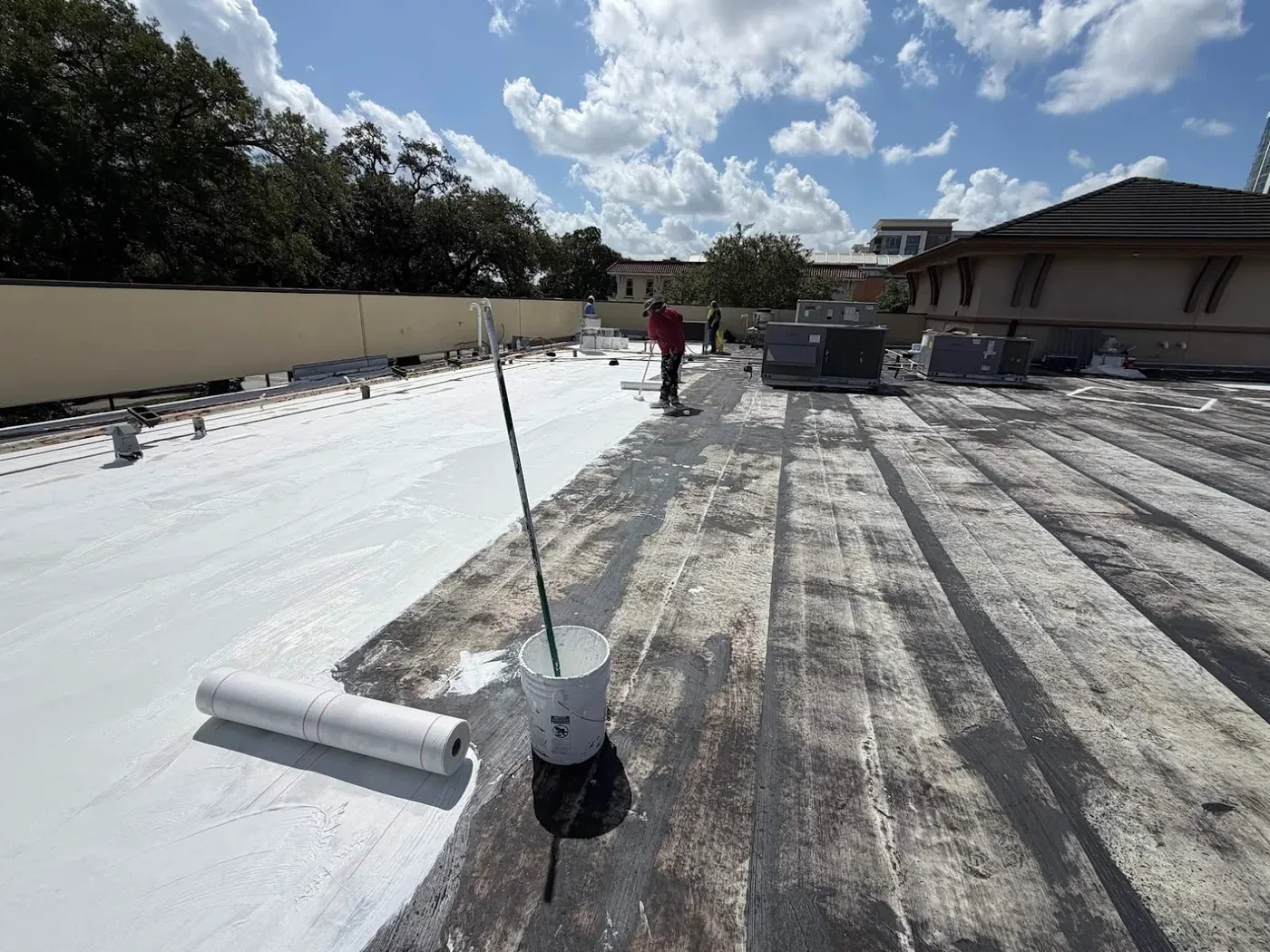
When the roof is past patching, the choices are a coating restoration over a sound, dry membrane, a recover where the insulation below tests dry and the deck is sound, or a full replacement down to the deck. The moisture scan decides which of the three is on the table. Coating a wet roof traps the water, and a recover over wet insulation only hides the problem for a season.
Which buildings carry them
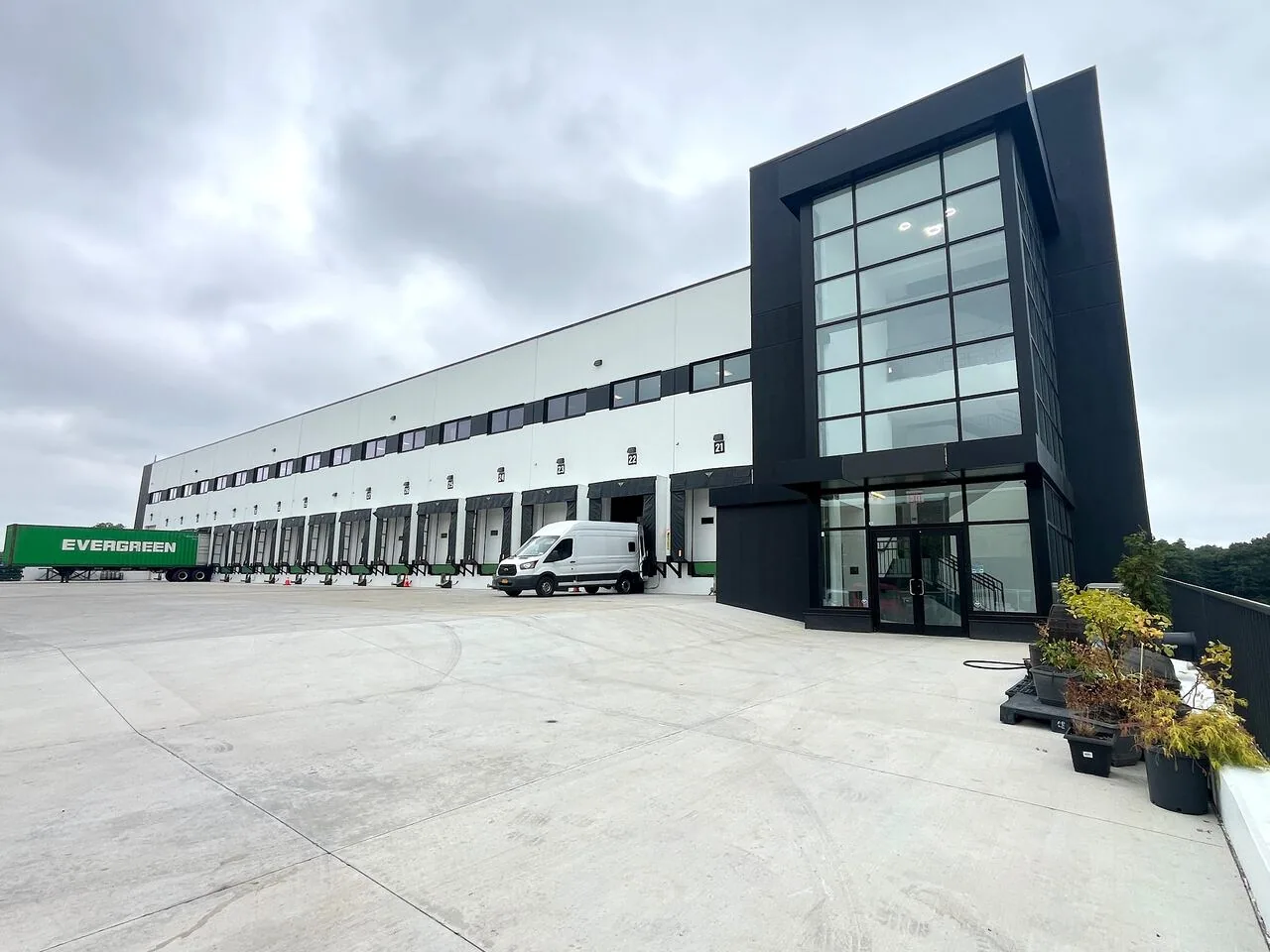
Most of the island's industry sits on the West Shore, and in the warehouse belt around Bloomfield and Travis a large low-slope roof is the normal condition. Bloomfield's Matrix Global Logistics Park, a distribution center that began operating in 2018 for companies such as Amazon and Ikea, is one example, and any large distribution building there has the same questions we ask everywhere: where does the water leave, how much foot traffic crosses the membrane, and what is the roof's wind rating at the edge.
Retail along Hylan Boulevard, which runs about 14 miles from Rosebank to Tottenville, adds a different set of roofs, smaller and more broken up by rooftop units. A warehouse roof and a retail strip ask for the same careful walk, though the findings differ.
Storm and winter checks
Sandy's gusts reached 80 mph in October 2012, and a roof that was marginal at the edges that night was the one showing lifted metal by morning. Any single-ply or bitumen system on the island is only as good as its perimeter attachment, so after a big blow we walk the edge first, checking coping, edge metal and the first few feet of membrane inside it.
Winter is a slower test. Each year brings the city close to 29.8 inches of snow on average and the 27.3 inches that fell on a single day in January 2016 loaded roofs and buried drains in the same afternoon. The thaw that follows is when ponded seams and cracked flashings show their weakness. September 2021 brought Ida and a flash flood emergency, and a drain strainer packed with debris is what turned that rainfall into interior leaks in many buildings.
Access and scheduling
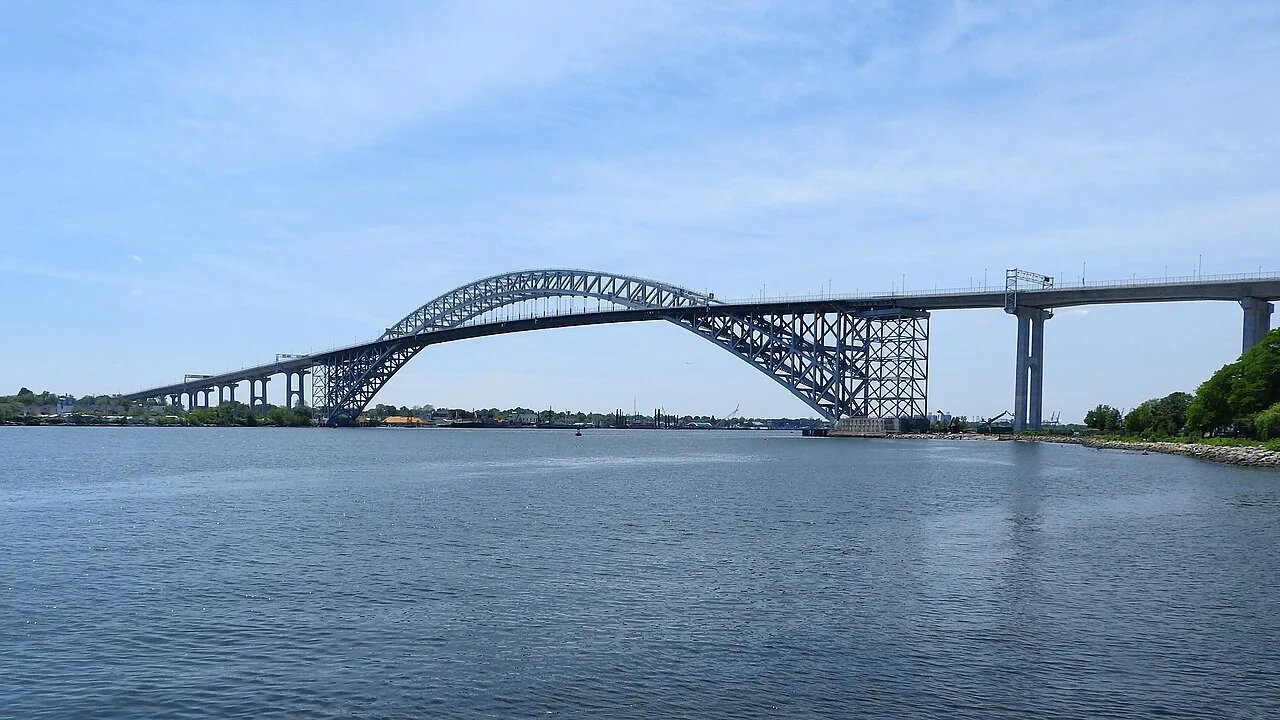
Bridge-day traffic on the Staten Island Expressway can add an hour to a truck delivery, and the Goethals, Verrazzano-Narrows, Outerbridge and Bayonne bridges are the only road links off the island. Rolls are staged early so a late truck never leaves a roof opened up and uncovered, and the same planning covers work for owners across the bridge in Bayonne.
Occupied buildings change the plan. We close the work area by area, tie in each day's section before leaving, and keep a clear path for tenants and deliveries. Our occupied building reroofing planning starts from the loading dock and the customer entrance, because the roof crew shares those spaces.
What goes in the log
A GAF roof walk ends in a written inspection log holding a roof plan with zones marked, a photograph of each finding, core cut results, moisture scan readings and a ranked repair list. A reason sits next to every item, along with a rank that runs from can wait to fix now. A manager who has that log in hand can budget a repair, a restoration or a replacement without waiting for the next leak to force the choice.
The same single-ply families turn up under other names, and the notes on a Versico roof or a Carlisle SynTec roof follow the same log format.
Related Roofing Work
More roofing work that comes up alongside GAF Commercial Roofing Systems.
Commercial Roofing Questions
Can you repair a GAF roof when nobody knows who installed it?
Yes, because the roof itself carries the record. A core cut shows the layers, the seam profile shows the family of membrane, and the fastener pattern shows how it was attached. We write that down, match the repair material to the system, and the installer's name never enters into it.
What happens where two different systems meet on the same roof?
That junction is a detail to be built, with its own flashing and its own termination. A thermoplastic sheet and a bitumen cap do not bond to each other, so we separate them with a flashing detail and a sealed edge, then check the junction on every inspection afterward because it is where the old repair tends to open.
Does a coating make sense over an older GAF membrane?
Only when the roof is dry underneath. We scan first, cut cores at the doubtful spots, and coat only the sections that test sound. A coating over wet insulation seals the moisture in, and the blisters come back within a season or two.
Which roofs are good candidates for a recover instead of a tear-off?
A roof with one layer already on it, a dry assembly and a deck that holds fasteners well. Warehouse roofs along the West Shore often fit, while a building with two layers already, or wet insulation, does not.
How do you handle drains on a flat roof that ponds after rain?
We measure the ponded depth, then look at the strainer, the sump and the slope around it. A clogged drain gets cleared and logged. A settled deck gets a cricket or tapered insulation, priced as its own line.