
Government Building Roofing in Staten Island, NY
Government and municipal building roofing in Staten Island, NY: condition ratings, bid-ready scopes and low-disruption work on public buildings.
A parapet joint photographed in October and again in March, with the gap wider in the second picture, is how a public building's roof starts telling its story before anyone climbs a ladder, and a courthouse clerk moving a file box away from a stain adds the rest. Commercial Roofing Staten Island repairs and replaces roofs on municipal offices, courthouses, libraries, community centers, depots and other government buildings on the island, and our reports are written to be read by a procurement office as well as a facilities director.
Public roofs run on schedules, budgets and records, and the roof plan has to fit all three.
Civic buildings of different ages
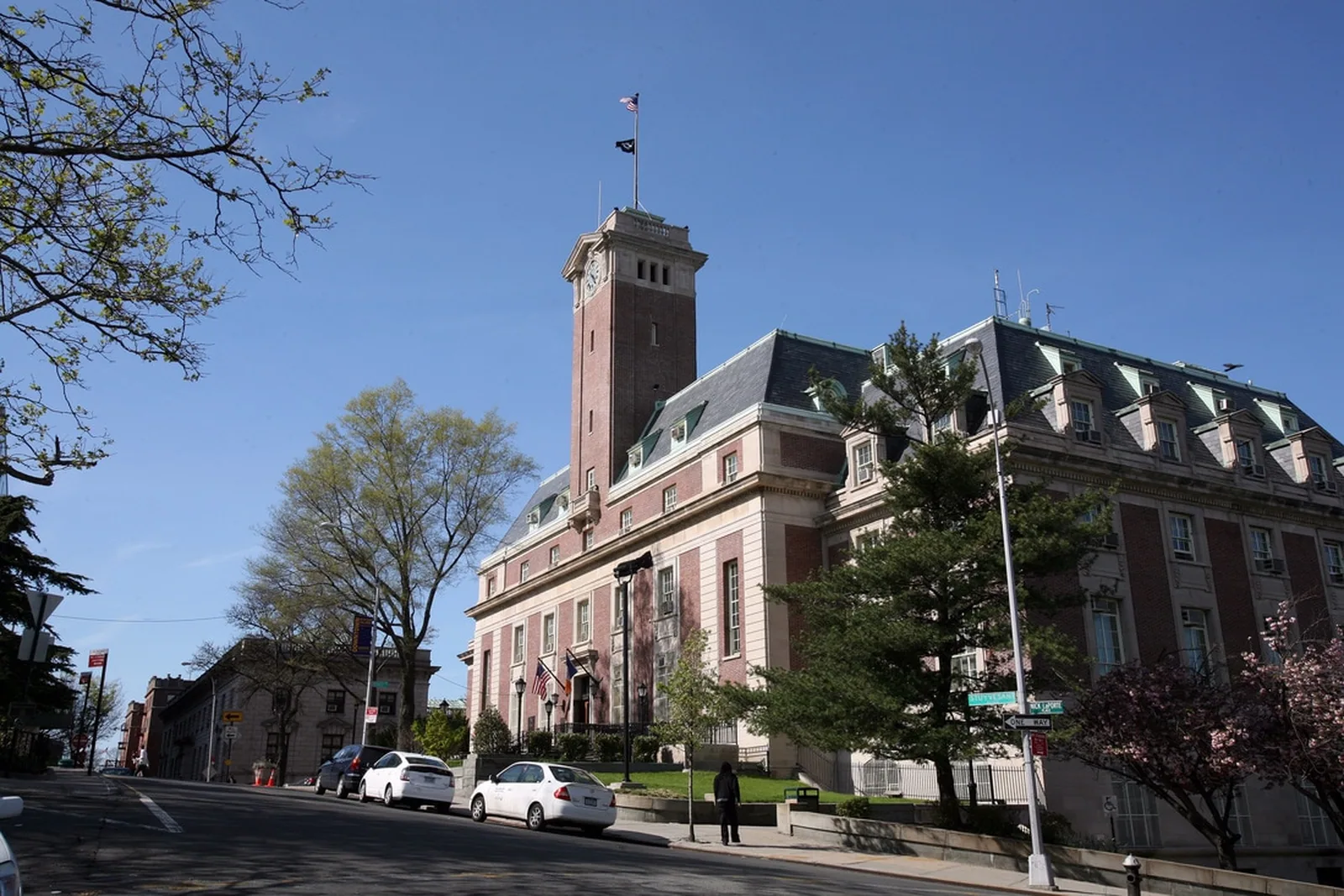
The civic core in St. George shows the range. Borough Hall, a French Renaissance building of 1906, faces Richmond Terrace beside the Neoclassical Richmond County Courthouse of 1919, and the Art Deco Federal Office Building, in limestone, was finished in 1931. Public buildings elsewhere run from mid-century offices to recent depots and community centers. A masonry building of that era may tie its roof conditions to a cornice and a parapet, and the facade alone does not say what is on the roof. The walk records the actual system, the layers under it and the flashing at the walls, and the report gives the owner a roof-by-roof account that can be used for planning.
Records, condition ratings and the capital plan
Public owners need numbers that survive a budget hearing. Each roof is given a condition rating, an estimate of remaining service life and a repair or replacement recommendation, all supported by photographs and core cuts. The report separates emergency items, near-term repairs and long-term replacements, so a capital plan can place each in a fiscal year.
The same record helps the next person. Staff change, contractors change and memories fade, while a dated log with photographs stays. When a leak returns in a room that was repaired two years ago, the log shows what was done, by whom and with what material, and the second repair starts from facts. Roof condition reports in this format serve the facilities office, the comptroller and the oversight board, and they support grant applications and insurance reviews.
Scopes that can be bid and compared
Public work goes out to bid, and a scope that bidders cannot compare causes confusion. We prepare scopes with quantities, details and unit prices, separated into base work and alternates. Repair items, recover options and replacement options appear as distinct lines, and the unit prices make change orders predictable.
We describe materials by type and performance, not by brand, unless the owner's specification names one. Warranty requirements, manufacturer approvals and wind-uplift ratings are written into the scope so every bidder prices the same roof. If a procurement rule requires a specific form, we adapt the document to fit. Public agencies that run several buildings often use the same scope format across all of them.
What the first walk covers
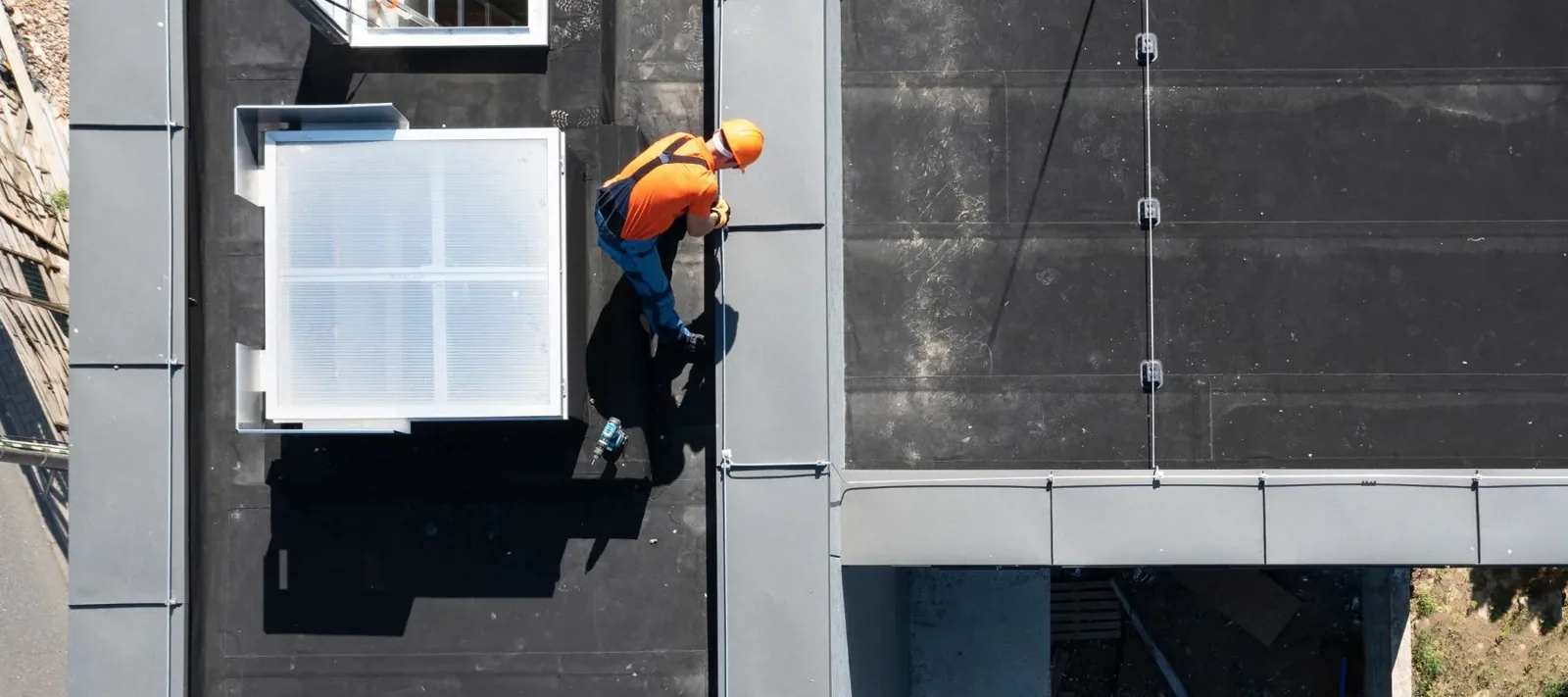
Every roof gets the same sequence, which keeps ratings comparable across a portfolio. We begin at the drains, clearing strainers and photographing what came out, then look at the deck around each sump for low spots. We cross the field in a grid, pressing on blisters, soft areas and open laps. Penetrations, curbs and rooftop units come next, and the walk ends at the perimeter, where flashing, coping and edge metal meet the wall.
A moisture scan follows on roofs with a history of leaks or where the age suggests trouble. Core cuts confirm the scan at a handful of spots and give the number of layers, the insulation type and the condition of the deck. A drone flight can add a quick overview of a large roof without sending a person to every corner. The ratings come from these findings, not from the roof's age alone.
Public hours, security and tenants
A courthouse, a library or a service office cannot close for a roof job, and security rules apply to anyone entering. Badging, escorts, lockdown schedules and metal detectors shape how a crew arrives. We plan material deliveries, hoisting and roof access around those rules, and we ask the facilities manager for the list of restricted areas before the first day.
Work near public entrances needs sidewalk protection and clear signage, and noisy work is kept away from hearing rooms and public counters. Where a building houses several agencies, we meet each tenant's representative, and the schedule names a contact for each floor. Depots and garages have different needs from office buildings: large roofs, heavy equipment traffic and operations that run on shifts. Work on those roofs is sequenced by bay, with the operations supervisor approving each day's area. Occupied building reroofing methods carry over: sections, daily dry-in and a close-out walk.
Rain, wind and winter on civic roofs
Many public buildings serve as meeting points and service centers during and after a storm, which makes storm readiness a roof matter. A government building near the water is a gathering place after a storm like Sandy, whose gusts reached 80 mph in October 2012. The rain behind Ida's flash flood emergency in September 2021 tested drains citywide. Snow adds loads to flat roofs, with the city averaging 29.8 inches a year and the single-day record of 27.3 inches set on January 23, 2016. We check drains, overflow and parapet drainage before storm season and again afterward. A drain failure on a civic roof shows up as ceiling damage in a public room, so drains lead the pre-season walk. Parapet drainage gets the same attention on older stone buildings, where a scupper that has been painted shut can hold water against a masonry wall through a whole winter.
Codes, filings and who signs
A public roof project is checked against the requirements of the 2022 NYC Construction Codes, which the Department of Buildings publishes, and the owner's design and filing team decides the filing type. The roof details, assembly data and photographs they need come from the walk. Public buildings in St. George and in New Springville, which now rivals St. George as a commercial and administrative core, follow the same process, and a school roof under a district uses the same scope format, so a district or agency with both can compare them side by side.
Related Roofing Work
More roofing work that comes up alongside Government Building Roofing.
Commercial Roofing Questions
How do you handle security rules at a courthouse or municipal building?
We follow the building's entry rules: badges, escorts, screening and approved delivery times. The facilities manager gives us the restricted areas, and we plan around them.
Can a public roof project be phased across fiscal years?
Yes. The report separates emergency, near-term and long-term items, and each can be assigned a year. A temporary repair can carry a roof until funding arrives.
What goes into a scope that will be bid?
Quantities, details, unit prices, alternates and the performance requirements. Each bidder prices the same roof.
Do you recommend brands?
We describe systems by type and performance unless the owner's specification names a product. The scope states the warranty and wind rating. Where a specification names a product, we price it as written and flag any compatibility issue with the existing roof in the same document, so the question is answered before award.
What is the first step for an agency with many roofs?
A condition survey of every roof, ranked by risk and remaining life. It becomes the capital plan. Start with the largest and oldest roofs and the ones over public rooms, then fill in the rest. A first pass can be done from the roof with a drone overview, and the cores go to the roofs that the overview flags.