
Roofing for Hospitality Groups in Staten Island, NY
Roofing for hotel owners and hospitality groups in Staten Island, NY: room-ranked leak logs, terrace and pool-deck repairs and guest-friendly scheduling.
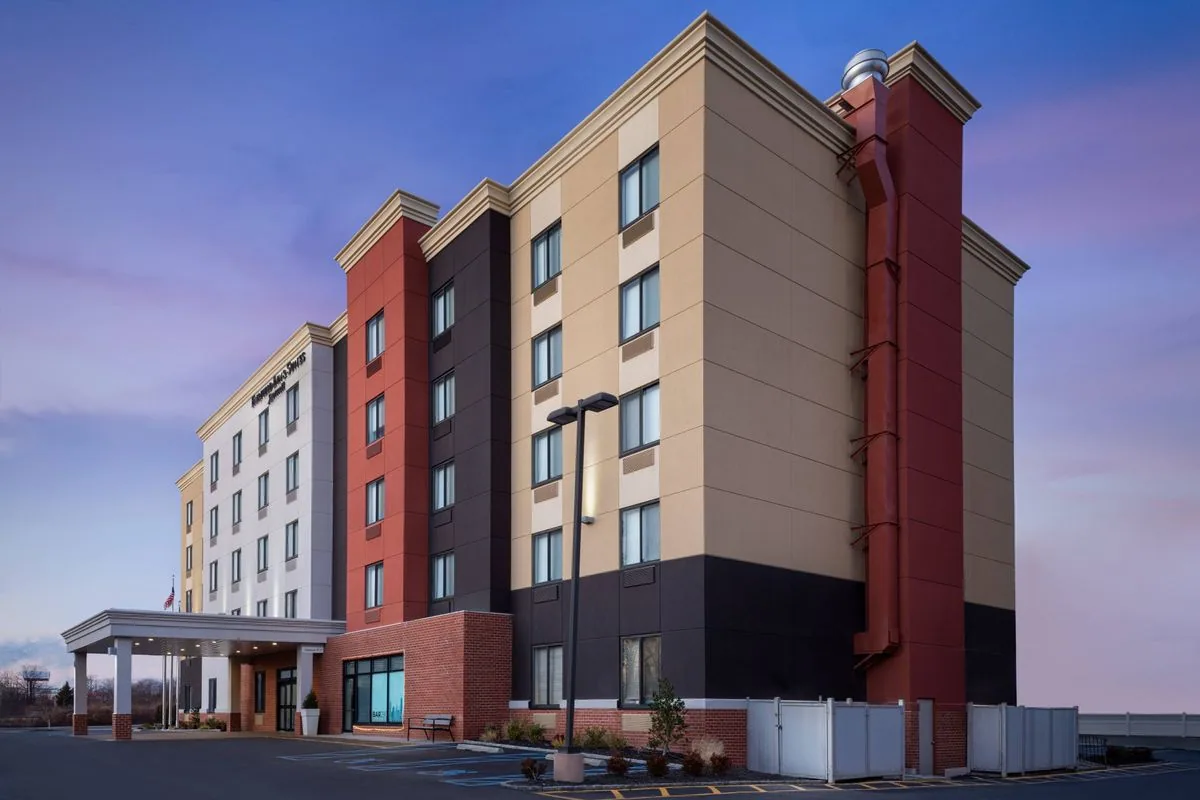
A guest-room ceiling with a brown ring over the bed, a rooftop terrace paver that rocks underfoot, a kitchen exhaust fan whose grease tray has not been emptied since spring: the inspector's first notes in a hotel are about what a guest could see or hear on the floor below. Commercial Roofing Staten Island works with hotel owners and hospitality groups on the island and nearby, and our schedules, protection plans and reports are written for a general manager who runs a building where people sleep and pay by the night.
A guest room out of order is a lost night. The roof plan counts rooms the way an owner does.
Rooms below the leak
A hotel roof sits above rooms that earn revenue each night. A leak that stains a ceiling can take a room out of inventory until it dries and the ceiling is repaired. We tie every roof area to the rooms beneath it, so the log shows which room numbers sit under each finding. A ponded seam over a block of rooms outranks the same seam over a back-of-house corridor.
The general manager sees repair priorities in terms of rooms at risk, not just roof area. An active leak is reported the same day with the affected rooms listed, so housekeeping and the front desk can block them. Repairs follow the same ranking, and each one is closed with a photograph and a note.
The first walk follows one sequence on every hotel roof. The walk opens at the drains, since a stopped-up outlet distorts every other finding. Penetrations and mechanical curbs come next, each photographed and tagged to a room block or a unit number. Then the field, pressing on soft areas and marking blisters, laps and splits, and last the parapets, flashing and edge metal. A moisture scan after sunset maps wet insulation above guest floors, and cores confirm it. The report arrives in days, with a page per roof section, and the general manager can forward it to the owner or the brand without translation.
Terraces, pool decks and event spaces
Many hotels use the roof for guests: terraces, pool decks, bars and event space. Those surfaces sit over a waterproofing layer, and a leak below can come from a paver joint, a drain, a planter or a wall tie-in. Repair means lifting pavers or planters in the area, so the entry has to be traced carefully.
We trace the leak with flood tests and moisture mapping, repair the membrane and reinstall the surface. Drains on amenity decks are checked first, since a clogged drain under a pool deck can cause a leak that looks like a membrane failure. Work is scheduled around events and guest hours, with sections closed off and signs posted. A wedding weekend or a conference block goes on the calendar before the repair date is set, and the deck is returned to service dry, clean and inspected before the first guest steps on it. Hotel roofing includes these decks as their own entries in the log.
Kitchens, laundries and mechanical roofs
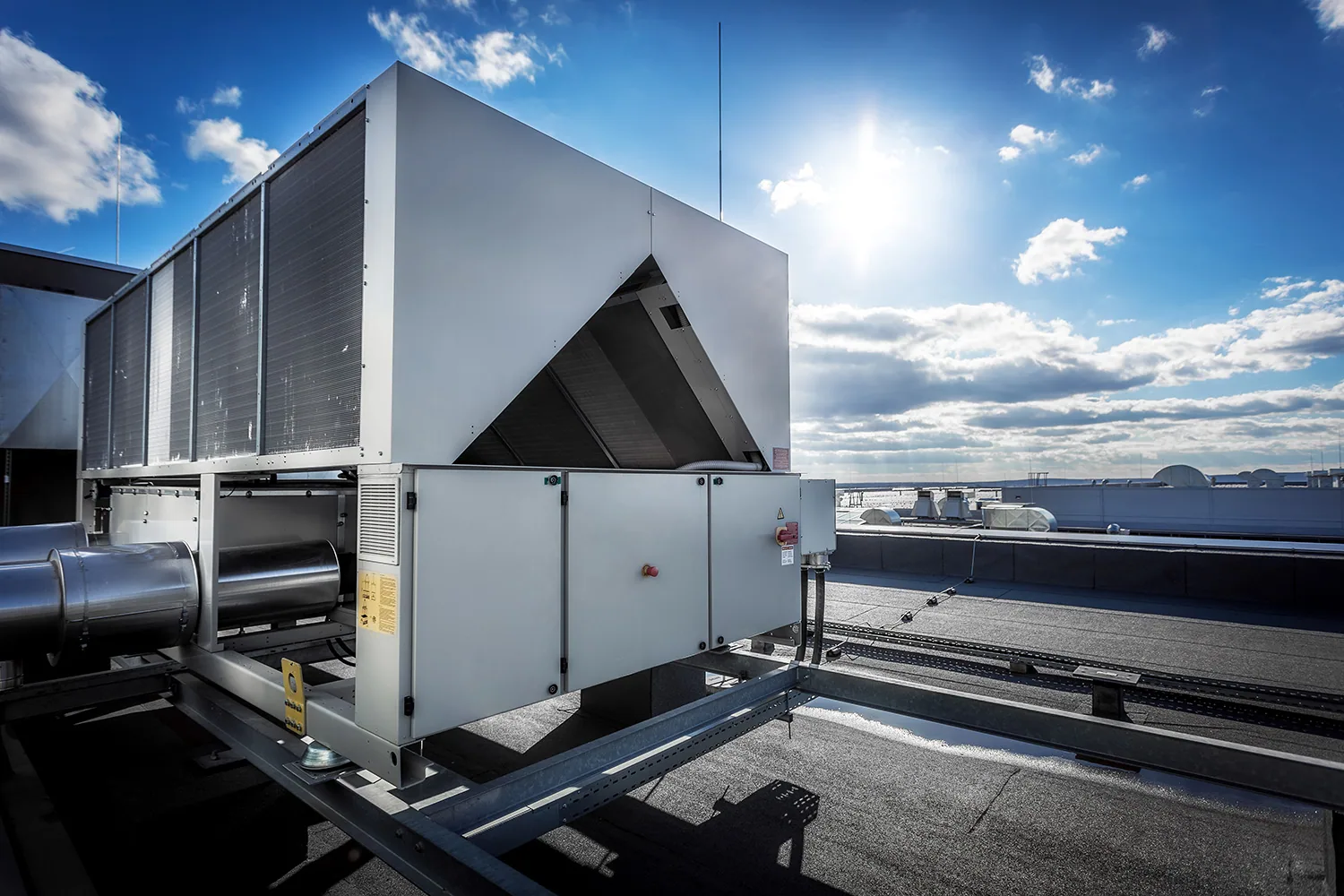
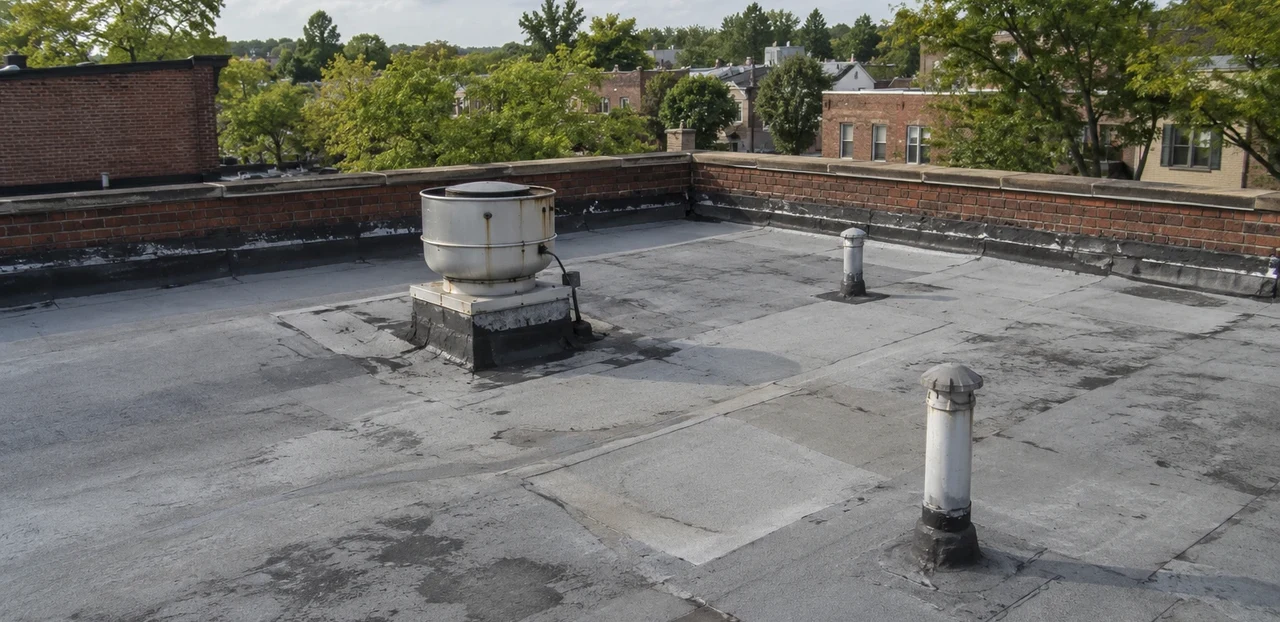
Back-of-house roofs carry the heavy equipment, and a failure there reaches kitchens, laundries and engineering rooms that guests never see but that keep the hotel running: kitchen exhaust, laundry exhaust, boilers, chillers and make-up air. Grease, heat and steam shorten membrane life, and curbs take vibration. The mechanical roof is also where guests do not go and where problems hide. Because engineering staff walk it more often than anyone, we ask them to note any change in the sound of a fan, a new stain on a curb or a drip from a duct, and we add those notes to the log. A hotel with a trained engineer and a good log catches many leaks before a guest does.
We inspect curbs, boots, fans and grease trays, reseal or replace where needed, and add pads along service routes. Roof drains near mechanical equipment get extra attention, since water pooling at a unit is a sign of slope trouble. Equipment curbs and supports are logged by unit number so engineering staff can find them quickly.
Noise, odor and the guest experience
Guests notice noise and odor. We schedule loud steps for late morning to mid-afternoon, when most guests are out, and avoid early mornings and nights. Hot asphalt and strong adhesives are kept away from intakes and open windows, and we favor cold-applied, mechanically fastened and heat-welded systems.
The work area is fenced and signed, material is lifted outside guest entrances and debris leaves by a service route. Rooms directly under work are blocked from sale where noise would be unavoidable, and the front desk gets the list a week ahead so reservations can be placed elsewhere. If a guest complains, the desk has a short script and a contact on the crew. A daily note goes to the general manager and the front desk. Occupied building reroofing methods carry over to an operating hotel.
Seasons, occupancy and renovation cycles
Hotels have slow seasons, and roof work belongs there. We ask for the occupancy calendar and plan large replacements for the weeks with the fewest sold rooms. Property improvement plans and brand renovations set their own deadlines, and a roof replacement may need to finish before the next phase starts.
The log supports those cycles. A clean record helps an owner plan a roof into a renovation, a refinance or a sale. Groups with several properties use one format across all of them, in the same way a restaurant chain runs a program store by store, and owners who hire a management company pass the same log to the manager. Roof capital planning lays the roof against the brand's renovation calendar, so the roof is replaced once and the interiors are not disturbed twice.
Waterfront, storms and visitors
Hospitality on the island follows visitors: the St. George waterfront, where Empire Outlets opened in May 2019, the commercial strips along Hylan Boulevard and the shore at places like Great Kills Park and Tottenville Beach. Sandy destroyed the Coral Bay Cafe at Tottenville Beach in October 2012, a sign of how exposed shoreline buildings are, and the storm's gusts reached 80 mph. Ida's September 2021 rain led to a flash flood emergency across the city, and the winter side adds about 29.8 inches of snow in an average year. We clear drains and check edges before storm season, since a hotel roof that fails in a storm fills rooms with water just when guests have the fewest alternatives, and we have temporary protection ready when a guest-room leak cannot wait. Hotels near St. George and Tottenville use the same checks.
Related Roofing Work
More roofing work that comes up alongside Hospitality Groups.
Commercial Roofing Questions
How do you keep guests from hearing the work?
We schedule loud steps for late morning to mid-afternoon, fence the work area and block rooms directly under the noisiest tasks.
Can a rooftop pool deck leak be fixed without closing the pool for weeks?
Often. We trace the entry by flood test and moisture map, then lift only the pavers over the confirmed area.
What do you do about kitchen exhaust grease on the roof?
We add pads and trays, reseal curbs and recommend a cleaning schedule with the kitchen.
When is the best time for a hotel roof replacement?
During the slow season, in sections, and before the next brand renovation phase.
What does the general manager receive?
A log tying each finding to room numbers, with photographs, ratings and prices.