
Church and House of Worship Roofing in Staten Island, NY
Church and house of worship roofing in Staten Island, NY: sanctuary, steeple, hall and school-wing roofs repaired and planned around services and budgets.
Water staining the plaster beside a sanctuary window, a gutter hung with ice at the eave of the parish hall, a flat roof over the fellowship wing with a soft spot underfoot: the inspector's notebook on a house of worship fills with details that sit at the meeting of old construction and later additions. Commercial Roofing Staten Island repairs and replaces roofs on churches, synagogues, mosques, temples and parish buildings across the island, and the work starts with a count of how many different roofs one congregation owns.
The sanctuary is only the most visible one, and the flat roofs behind it often carry more of the risk.
One property, several roofs
A typical house of worship holds more roofs than its steeple suggests. There is the main sanctuary roof, often pitched or steeply sloped, and there are the lower roofs over a hall, a school wing, an office, a rectory and a kitchen, many of them flat or low-slope and added decades apart. Each has its own age, material and drainage, and each leaks in its own way.
Our log lists every roof on the property as its own entry, with a photograph, a condition note and a ranking. The flat roof over a parish hall is frequently the first to fail, because it carries the equipment, collects the water and is the roof least likely to be cared for. A trustee who reads the log sees where the money should go first.
Pitched roofs, steeples and slow leaks
A steep roof over a sanctuary sheds water well and hides its failures. A slate or shingle slips, a flashing cracks at the base of the steeple, a valley clogs with leaves, and water runs behind the plaster for months before a stain appears. We inspect from the roof or from a lift where it is safe, and we use binoculars and photographs for steep slopes we do not climb.
Repairs include replacing slipped pieces, re-flashing valleys, chimneys and steeple bases, and clearing gutters. Where a roof is nearing the end of its life, replacement is planned around services and funerals, with scaffolding or a lift set to protect entrances. Historic fabric is handled by matching existing materials where possible, and a preservation consultant is brought in when the building is designated.
The flat roof over the hall and the school wing
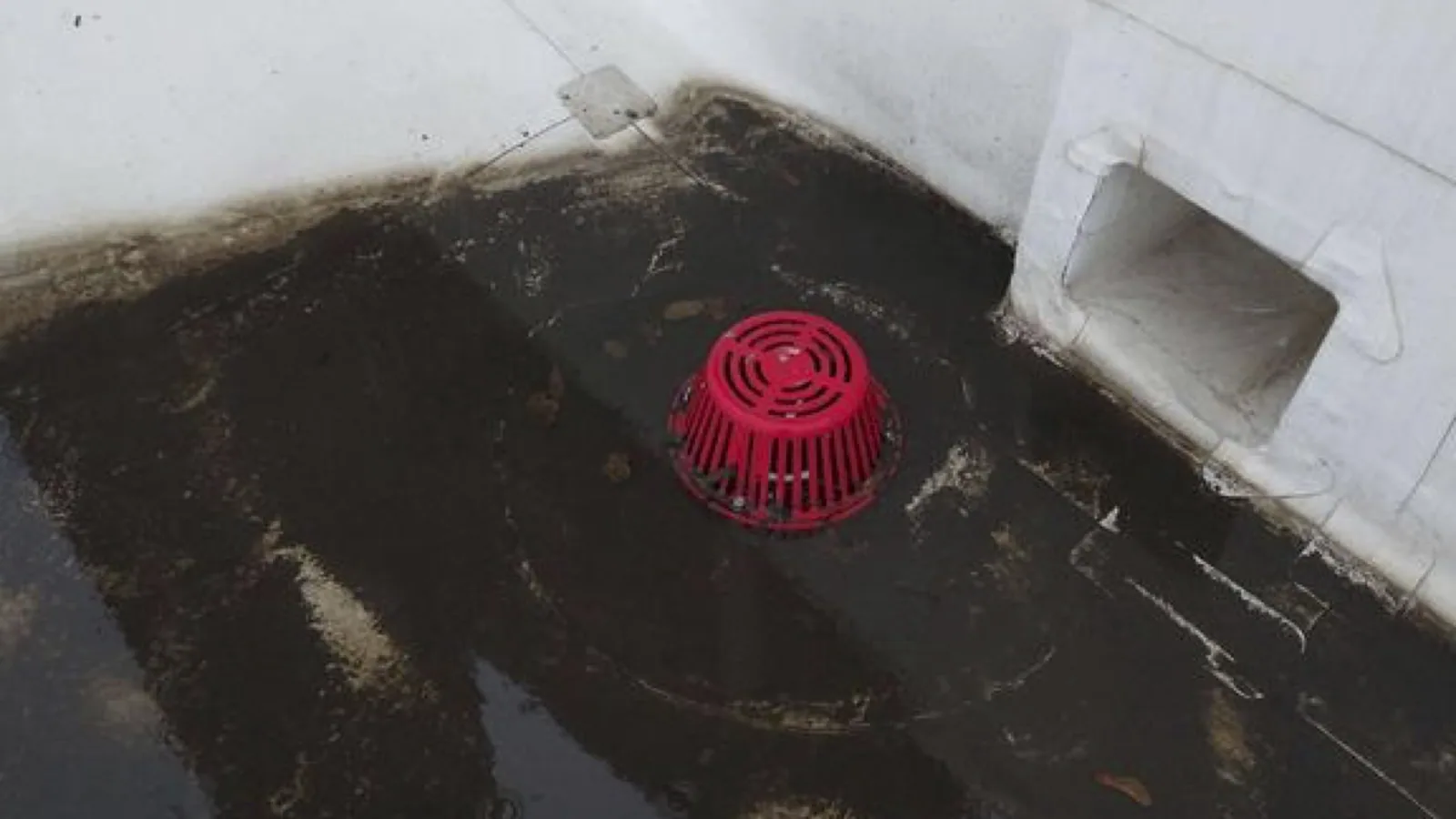
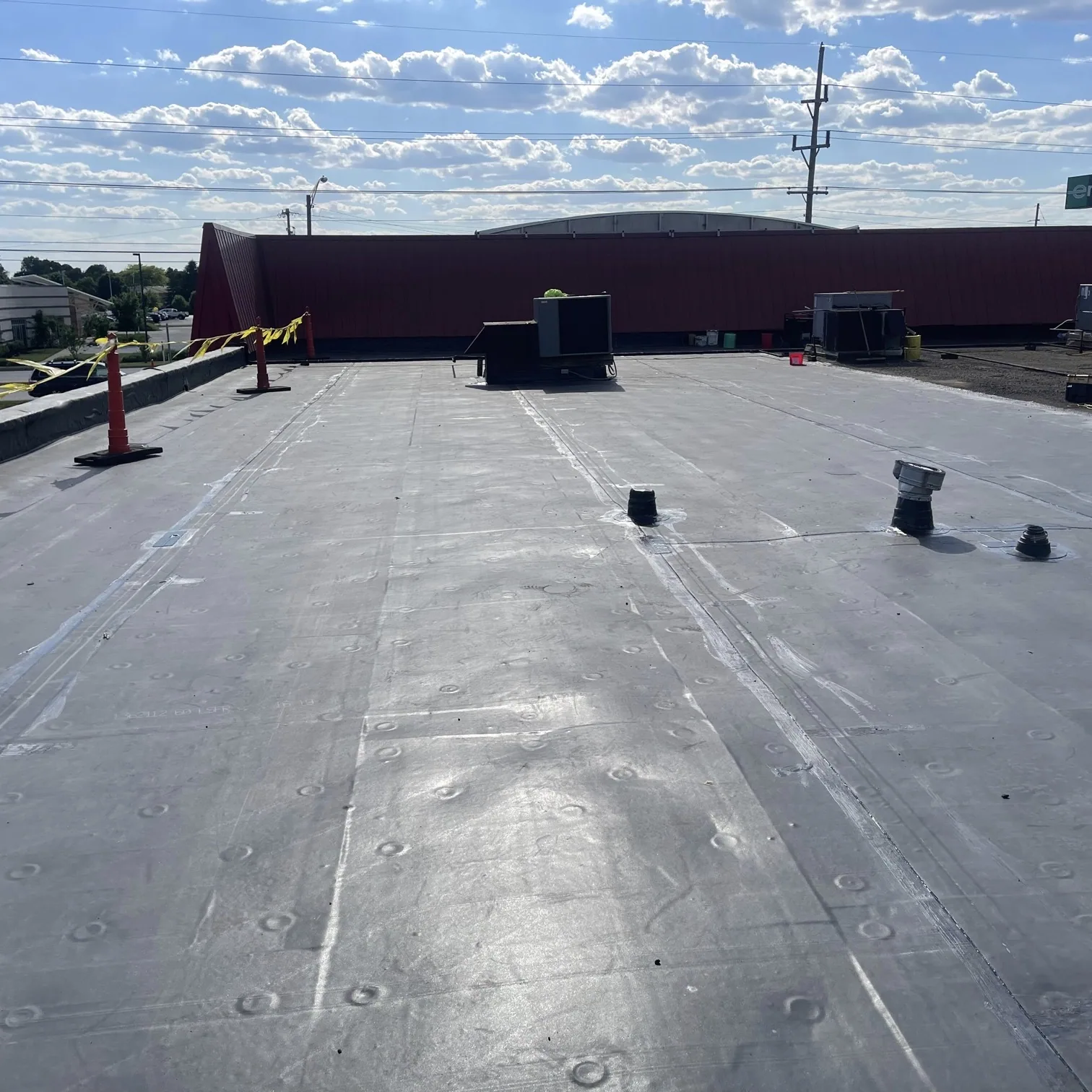
Flat and low-slope roofs on parish halls, kitchens and classrooms are the roofs most often worked on, and they share their needs with school roofs and community buildings. They sit under rooftop units, pass kitchen exhaust, collect snow and rely on a few drains. Drain and scupper work is usually the first repair, followed by seams, curbs and edge metal.
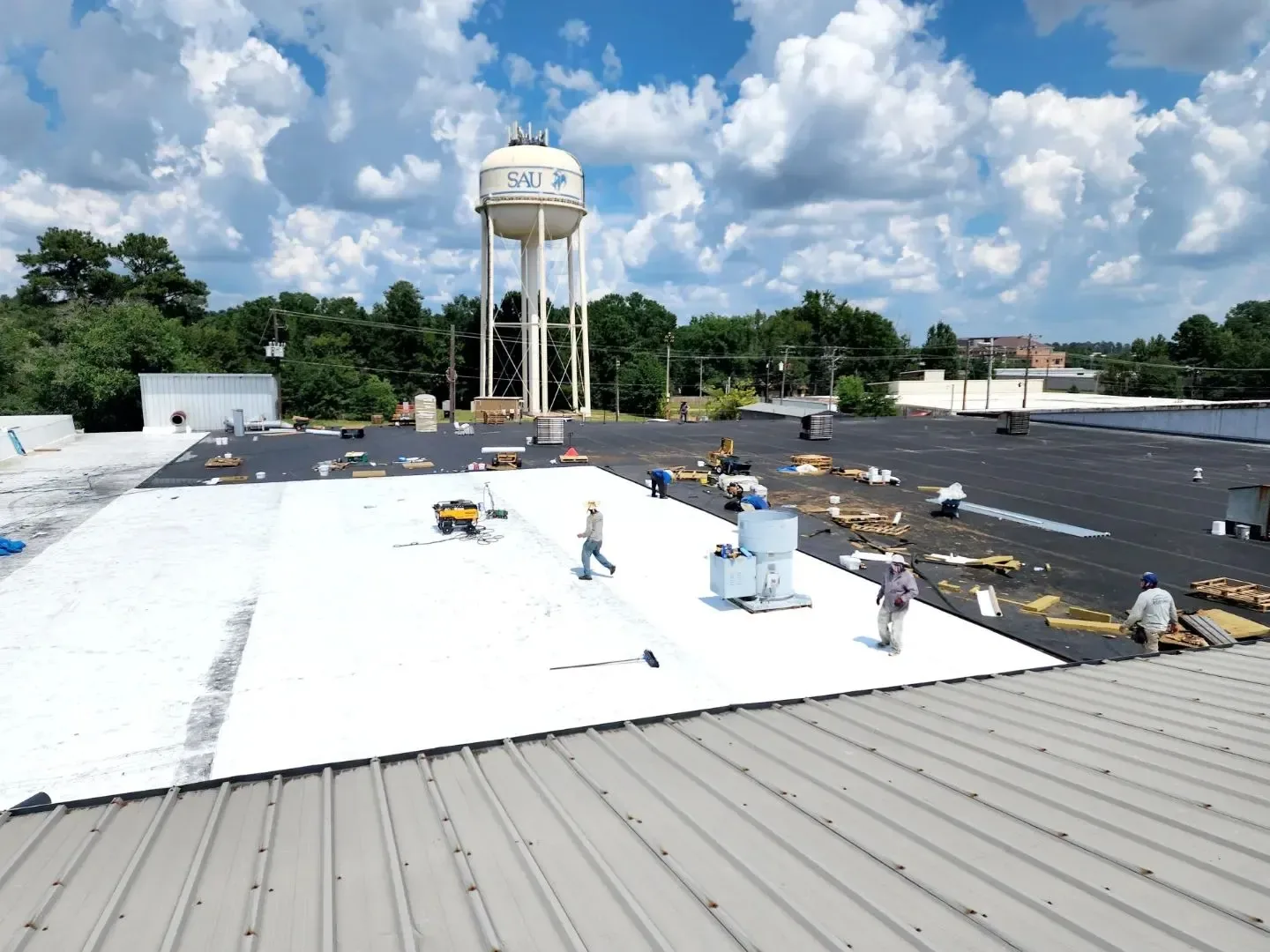
A moisture scan tells whether the insulation is wet, as it does on an office building roof, and the answer decides whether the roof can be coated, recovered or replaced. Single-ply systems such as TPO and EPDM are common on these decks because they install in sections and are straightforward to repair. The congregation's budget and calendar shape the choice as much as the roof does.
What the leak reaches inside
The interior of a house of worship is often the most valuable thing the roof protects. Plaster ceilings, painted surfaces, wood paneling, pews, organ pipes and stained glass all suffer from water, and a slow leak can do years of damage before it shows. A ceiling stain is the end of a long path, and the entry point may be many feet away along a rafter or a plaster lath.
We trace leaks from the attic or the underside of the deck where access allows, and note staining on framing as well as plaster. If the interior has already been damaged, we document it so the congregation can plan restoration separately from the roof repair. Interior protection goes up before work begins on any roof above a sanctuary, and valuable items are covered or moved by the congregation's own volunteers.
Budgets, boards and phased work
Congregations often fund roofs through collections, grants and special appeals, and the timeline is long. A roof that must be replaced in one season may take several years to pay for, so we price repair, recoat and replacement as separate options and phase the work by risk. A temporary repair that buys two years is acceptable when the next two years are mapped out.
The report is written for a board, not an engineer. It lists each roof, its remaining life in plain terms, a range of cost and a recommended order. Photographs go into a short packet that can be shown at a meeting or attached to a grant application. Roof capital planning turns that packet into a multi-year schedule.
Snow, rain and the island
New York City averages 29.8 inches of snow a year, and January 23, 2016 brought 27.3 inches in a single day. Heavy snow sits on a pitched roof until it slides, and on a flat roof until it melts, and ice at an eave pulls gutters loose. A downpour like the one behind Ida's September 2021 flash flood emergency shows quickly which drains cannot keep up. On the South Shore, where Sandy's highest water line was measured at 7.9 feet above ground in Oakwood, a roof that stays sound in wind matters to a congregation that may also open its building as a gathering place after a storm. We check edges, steeple bases and gutters before storm season, and again after any hard blow.
Access, services and neighbors
Work is scheduled around worship. Saturday and Sunday are usually off limits, weekday services and funerals are marked on the calendar, and loud tear-off is kept to hours when the building is empty. Scaffolding stays clear of entrances, and ramps and walkways are protected.
Neighbors matter too. A church on a narrow street near Bay Street or Port Richmond Avenue needs a plan for crane lifts, deliveries and debris that keeps the sidewalk open. Port Richmond and Tompkinsville blocks with older brick buildings often require sidewalk protection. We confirm permits and street needs with the owner before the schedule is set. The Department of Buildings publishes the 2022 NYC Construction Codes, and a replacement is checked against the requirements that apply, so the filing type is settled early and the committee sees the timeline before it votes.
Boards change from year to year, and a clear record helps each new member understand what the roof has needed. The log lists the finding, the photograph, the repair and the cost, so a new trustee can read it in an evening and understand why the board is being asked to approve money.
Related Roofing Work
More roofing work that comes up alongside Church and House of Worship Roofing.
Commercial Roofing Questions
Can a church roof be repaired during the week without disturbing services?
Yes. We schedule around services and funerals, and loud work happens when the building is empty. The calendar is set with the pastor or the building committee.
How do you inspect a steep roof safely?
From a lift, a ladder at the eave or with binoculars and a camera. We do not climb slopes where a fall is possible. We photograph every visible defect.
What is the first sign of a failing flat roof over the hall?
A soft spot underfoot, a pond that lasts two days after rain, or a stain on the ceiling below. Any of these is enough to call for a moisture scan.
Can we phase the work because of limited funds?
Yes. Repairs that stop active leaks come first, and replacements follow by risk. The report shows the order and the cost of each step.
Do you work on historic buildings?
We match existing materials where possible and coordinate with a preservation consultant when the building is designated.