
Fire Damage Roof Repair in Staten Island, NY
Fire and smoke damage roof repair for Staten Island commercial buildings: deck checks, scorched membrane, temporary protection and claim records.
A stripe of membrane bubbled and sagging in the shape of a roof vent, with the deck beneath it dark on the underside, is what an inspector writes down after a fire in the building below, because the heat that came up through the vent did the damage from the inside. The roof looks like it survived. The surface is intact in most places, and the structure under it may have lost far more than the surface shows.
Commercial Roofing Staten Island repairs and protects commercial roofs after fire and smoke damage across the island, and the first thing we tell an owner is that nobody walks the roof until the deck has been checked.
What fire does to a roof
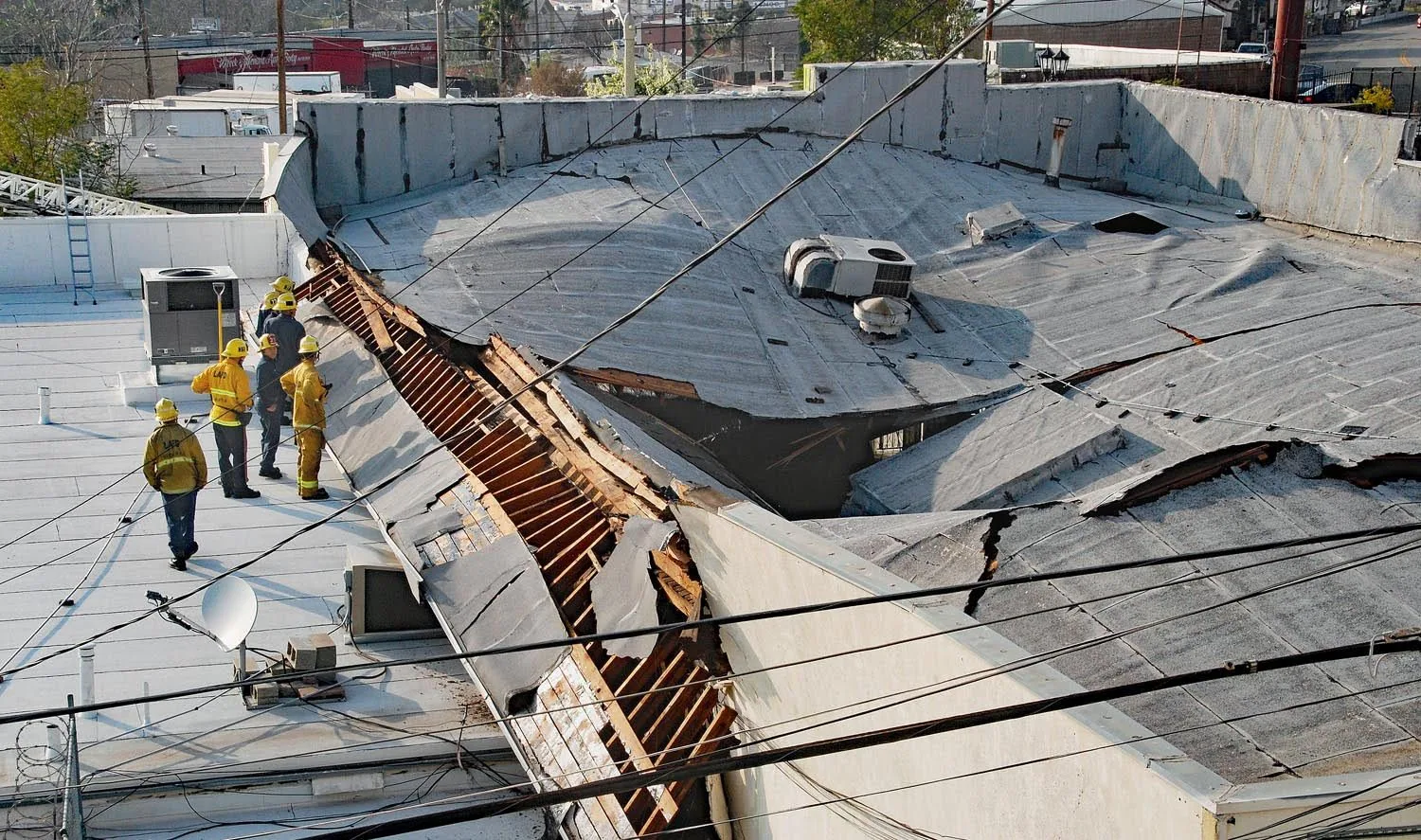
Fire reaches a roof in three ways. Heat rises through the building and cooks the underside of the deck, damaging insulation and bonding. Flame breaks through at penetrations, skylights and hatches and burns the membrane from the top. And firefighting changes everything: water and ventilation cuts through the roof, and the weight of water adds load to a deck already weakened.
Roofing materials respond differently. Insulation such as polyiso chars and releases smoke. Asphalt-based systems can melt and flow. Single-ply sheets shrink, bubble and split. Steel decks warp when heated, and wood decks char below the surface. A roof can carry a normal walk-pad load one day and fail underfoot after a fire, which is why access comes after the structural check.
Smoke does its own harm. Soot and combustion products settle on membrane, flashing and insulation, and they can contaminate materials that look intact. A sheet that survived the flames may carry a film that blocks adhesion or a smell that tenants complain about for months, so smoke-affected areas are cleaned, tested or removed before anything new goes on top.
Where fire damage shows on the island
Staten Island's older industrial districts are a reminder that fire is part of the building record. A fireworks plant explosion on Richmond Avenue in Graniteville in March 1942 marks that area's earlier industrial use, and the Kill Van Kull waterfront in Port Richmond was once a ferry and freight hub with lumber and coal yards and oil plants. Today the risk sits in ordinary commercial buildings: kitchens in restaurants, electrical rooms in retail centers along Hylan Boulevard, warehouses on the West Shore where stored goods burn hot and sprinklers and firefighters open the roof to let smoke out. Wherever the fire began, the roof is the part of the building that was cut and soaked, and the repair starts with what was done to it.
Fire also reveals the history of a roof. Layers of old roofing beneath the top sheet may have burned differently, and a roof that has been recovered several times shows its stack in the cut edge of a burned area. That record helps the engineer judge the load on the damaged deck, and it helps the adjuster separate fire damage from earlier wear.
What the inspector checks
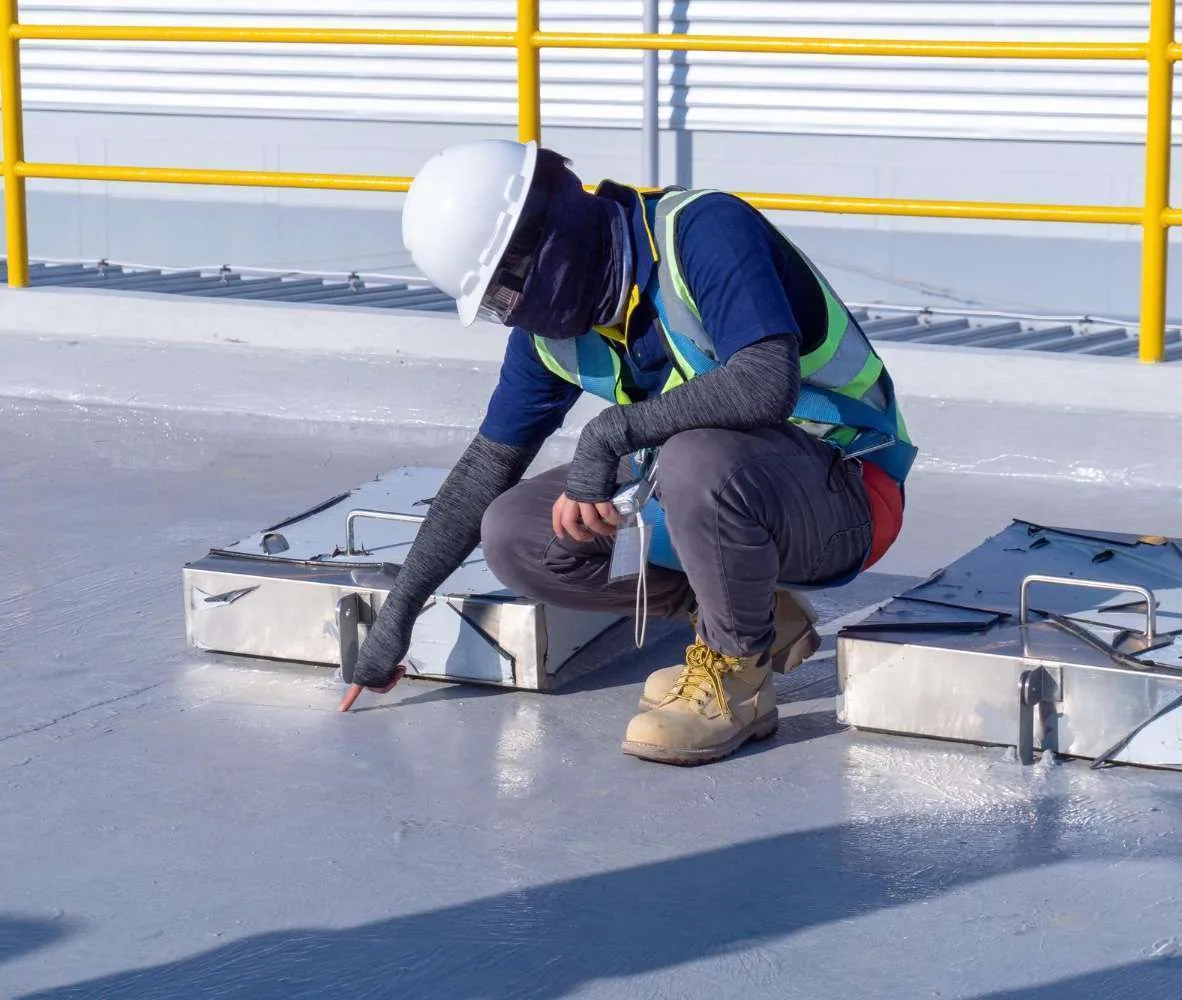
We do not start on the roof. We start with the fire marshal's release, the engineer's opinion and a plan for safe access. Then we inspect the deck from below, looking at char depth, warping and rusted fasteners, and from above, we map scorched, melted and cut areas. We note openings made by firefighters, because they are damage the claim needs to list.
- Deck condition, with char depth and warping recorded.
- Insulation, which may be charred, wet or smoke-contaminated.
- Membrane, where heat shrinks, blisters and splits the sheet.
- Fire department openings and the debris they leave.
A moisture scan after the fire finds water in the insulation that firefighting left behind, and it often finds more than anyone expected to see.
We also record water. Firefighting leaves insulation soaked, and steel decks under wet insulation rust quickly. Cores taken beside the burned area show how far the water traveled, and the answer often exceeds the visible damage by a wide margin.
The repair in plain terms
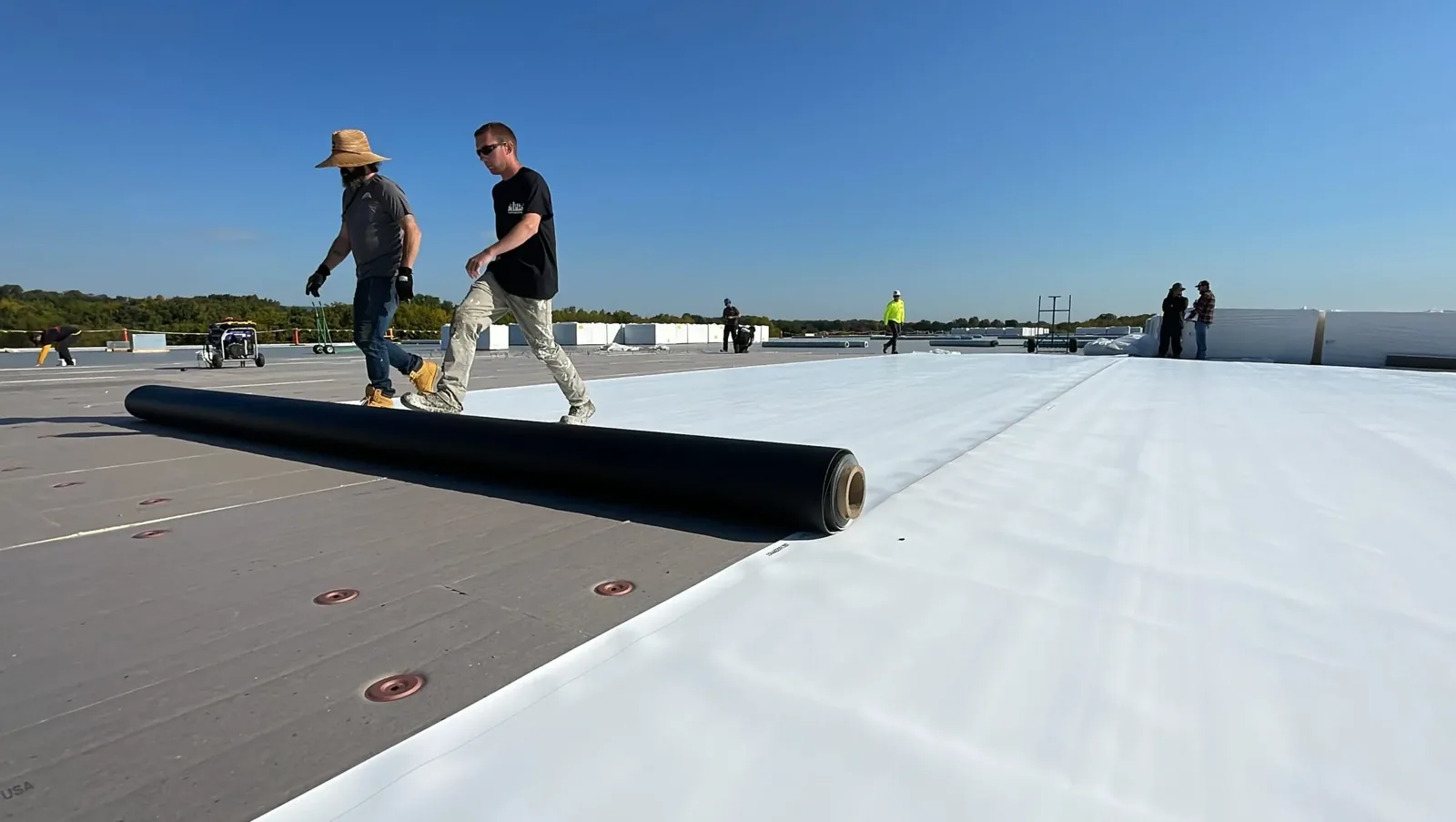
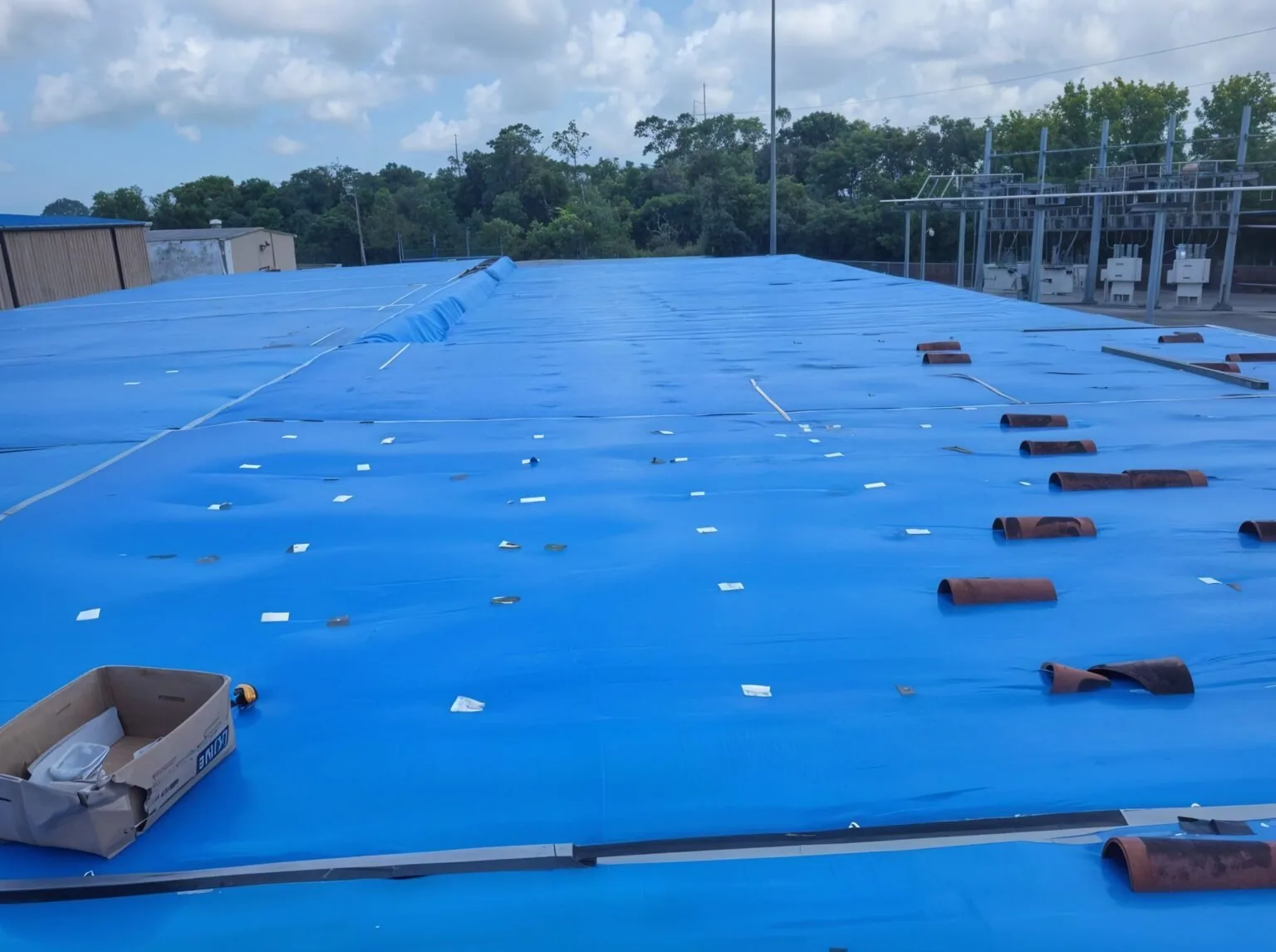
The sequence is fixed. First, temporary protection: tarps, boards and sealed openings so rain does not add a second loss. Second, structural review and any deck repair. Third, removal of damaged insulation and membrane down to sound material. Fourth, new insulation, new membrane and flashings built to the current details. Small fires may need only local repair, and a large one means a commercial roof replacement on the affected area.
Smoke-contaminated insulation is removed, not covered, since it holds odor and moisture. The scope is written for an insurer, with each item priced separately, and our roof insurance claim assistance work keeps the photographs and notes in order. The damaged area is also a chance to fix the failed flashing that was already there.
Where wind or storm contributed to the loss, a wind damage scope is written separately, so the claim keeps each cause in its own line.
Cost drivers are plain: the area of damaged deck, the depth of insulation removal, access for equipment and debris removal, and the temporary protection. The scope lists them as separate items so the adjuster can compare each line with the photographs.
Weather on an opened roof
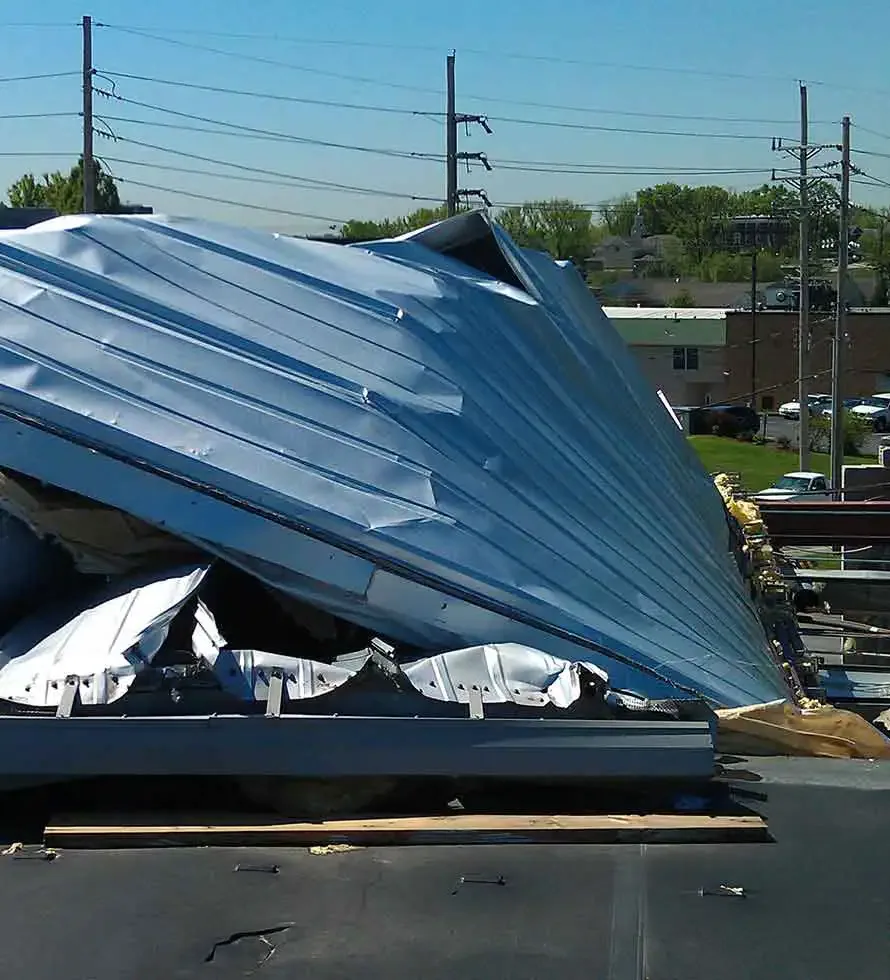
A fire-damaged roof is open to the weather, and the island supplies plenty of it. A burned roof with a tarp over it is only as good as the tarp when rain like Ida's flash flood emergency of September 2021 arrives. The temporary cover is designed for gusts like the 80 mph Sandy brought, with ballast and strapping that does not rely on the damaged deck. Winter adds weight: New York City snow averages about 29.8 inches a year, and a day like January 23, 2016, with 27.3 inches, would load a weakened deck far beyond a normal roof. Snow is cleared from a fire-damaged roof before it is walked.
Rain on an opened roof is the second loss. Tarps are strapped to sound framing, not to burned material, and drains are kept clear so the tarp does not pond.
What goes in the log
The file an insurer reads after a fire holds dated photographs of each damaged area from the first visit, the engineer's notes, the moisture map, a costed list of temporary measures and a priced scope for the permanent work. We keep removed material until the adjuster has seen it.
A fire repair can trigger code upgrades, so the filings are confirmed with the Department of Buildings, publisher of the 2022 NYC Construction Codes. A building in Graniteville or Port Richmond starts with the roof plan and the date of the loss, and an emergency roof repair crew answers any hour.
A year after the repair, a commercial roof inspection checks the new work and the tie-ins between old and new roof, since transitions are where a fire repair is most likely to open.
Related Roofing Work
More roofing work that comes up alongside Fire Damage Roof Repair.
Commercial Roofing Questions
Can we walk the roof right after a fire?
Not until the fire department releases the building and an engineer confirms the deck can carry weight. A weakened deck can fail underfoot.
Does the roof need replacing after a small fire?
Not always. If the deck is sound, local repair of the scorched area may be enough. A moisture scan and a deck check decide.
What happens to smoke-contaminated insulation?
It is removed. Covering it traps odor and moisture, and the new roof would sit on a contaminated layer.
Who covers the temporary protection?
Reasonable temporary protection is usually part of the claim. We document it with photographs, times and costs.
How long does fire repair take?
Temporary protection goes in the same day. Permanent repair follows the engineer's review and the insurer's approval.