Military Installation Roofing in Staten Island, NY
Roof planning for federal sites near Staten Island: Fort Wadsworth, Fort Hamilton, escorted access, UFC roofing criteria and mission schedules.
Two federal sites sit within reach of Staten Island, Fort Wadsworth on the island itself and Fort Hamilton about three miles northeast across the Narrows, and an inspector's first note on either is which building list belongs to which command. The roofing is ordinary low-slope work, and the rules around it decide the schedule.
A roof job on a federal or reserve site is planned around escorted entry, badging, mission schedules and roofing written to the Unified Facilities Criteria, and each of those shapes the proposal before any membrane is ordered.
Two sites near the island
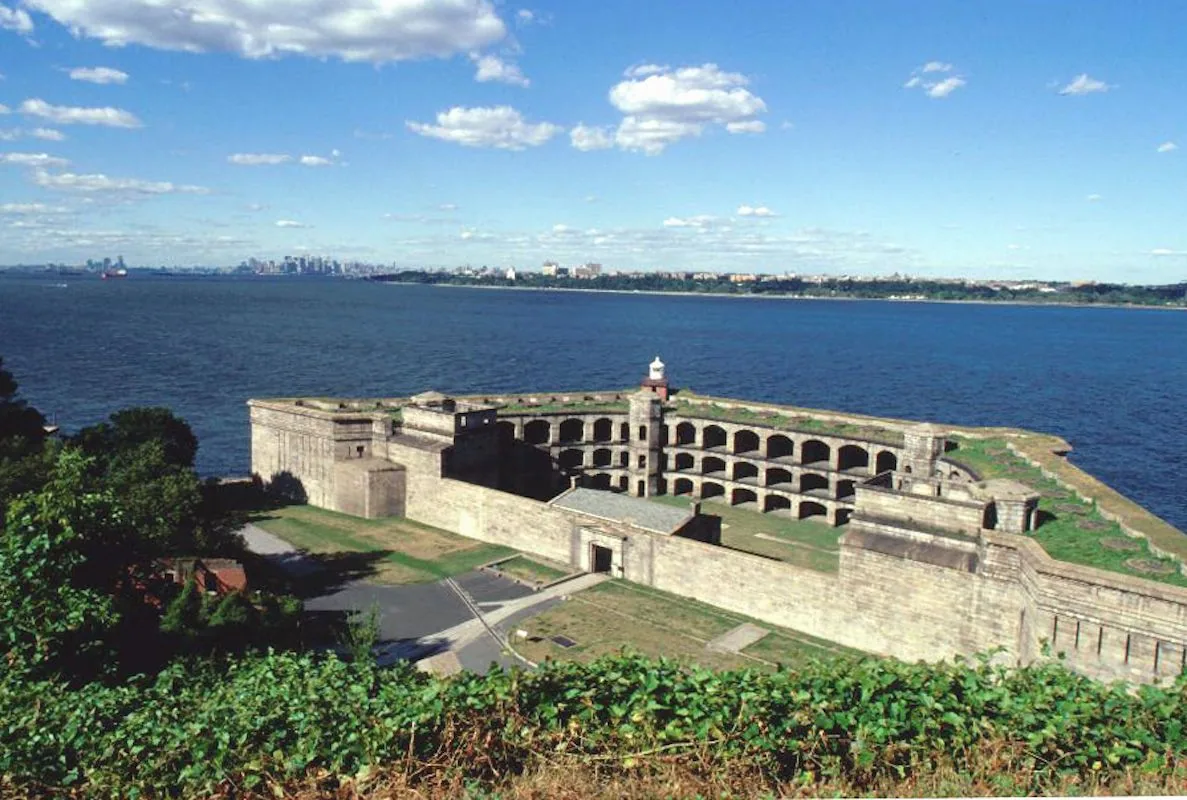
Fort Wadsworth is on Staten Island itself. As of 2007 the buildings there held Coast Guard Sector New York and Maritime Safety and Security Team 91106, along with several used by the 353d Civil Affairs Command, an Army Reserve unit, while the National Park Service looks after the rest of the grounds as part of Gateway National Recreation Area.
Fort Hamilton is across the Narrows in Brooklyn, about three miles northeast. No other active-duty Department of Defense post exists in New York City. Fort Hamilton supports Army National Guard and Army Reserve units, hosts a Military Entrance Processing Station and the Army Corps of Engineers North Atlantic Division headquarters, and dates to 1825 through 1831, next to Bay Ridge and the Verrazzano-Narrows Bridge. Neither is a single roof. Each is a group of buildings.
On a site like these a headquarters building, a training hall and a maintenance shop would each carry different rooftop equipment, different occupancy hours and different tolerance for noise, and a roofer who treats them alike will miss the one that matters. The same logic applies to an Army installation roof anywhere, where the building list is the first thing to settle.
Base access and escorts
Access is the longest lead item on any federal job. The usual steps include submitting names for each worker, presenting identification, completing any required background checks, receiving a badge or a visitor pass and being escorted by site staff while on the grounds, with vehicles, tools and materials subject to inspection at the gate and delivery windows that are fixed in advance.
Plan weeks for this, not days, and expect that a worker who misses a deadline may not enter. Escort availability limits the working day, so we build the schedule around the escort, not the other way round, and keep the crew roster steady so the badge list does not need rewriting.
Materials get the same treatment as people. Delivery windows are fixed, loads may be inspected at the gate and storage on the grounds is limited, so a roofing job on a secured site is planned with smaller, more frequent deliveries and a staging area the site has approved in writing.
Roofing to the UFC
The Unified Facilities Criteria are the Department of Defense design standards for buildings, and they include roofing criteria that cover membrane systems, insulation, wind uplift, fire rating, drainage, flashing details and often quality assurance steps. A federal roof is generally specified to those criteria, so the proposal, the submittals and the installation follow the written spec line by line.
The practical result is more paper and fewer shortcuts: submittals before ordering, mockups and inspections at stages and no substitutions made on the roof. A modified bitumen or TPO system is chosen from the spec and built as drawn, and a written roof condition report supports the scope before a bid is priced.
Substitutions are the common friction point. A contractor who wants to swap a board or a membrane for a cheaper product will find the spec does not allow it, and a roofer who bid the spec as written avoids the argument. We read the criteria before pricing and flag any item that looks unusual for the building, so the question gets raised in the bid and not on the roof.
Mission schedules and weather
Reserve and coast guard buildings run on training calendars, drill weekends and watch rotations, so a roof may be open on a weekday and paused for the weekend, and a site that holds an exercise can close access on short notice. The schedule needs slack for that, as well as for weather.
The weather here is the island's own. Sandy's October 2012 surge stood 9.56 feet above normal tide at the north tip, with gusts to 80 mph, so shoreline roofs get checked for wind-lifted edges and drain backups before anything else. The 27.3-inch single day of snow on January 23, 2016 and about 29.8 inches in an average year make ponding at drains a winter finding, and Ida in 2021 showed how quickly rain can overwhelm a scupper.
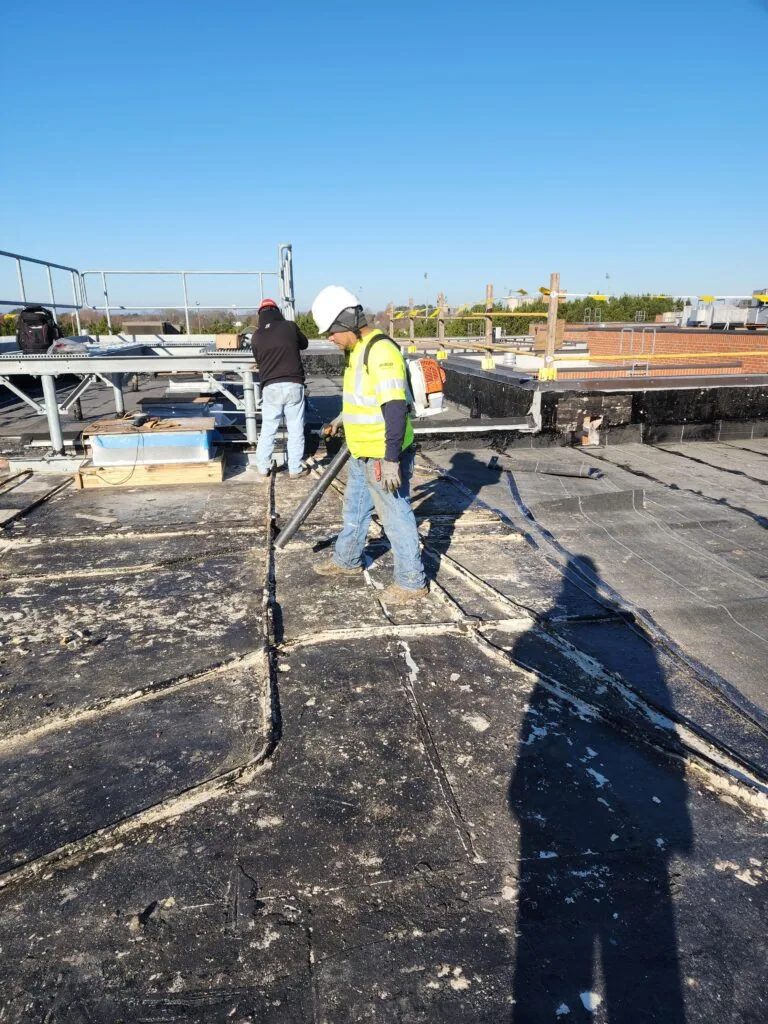
A roof that has been patched many times on a long-held site tells its own story. Where mastic has built up in layers around a single curb, the detail was wrong from the start, and the cure is a proper flashing rather than one more coat. A preventive maintenance plan on a federal roof keeps the work on a calendar that the site can staff with escorts.
What the inspector checks first
On any federal roof the walk covers drains, parapet returns, penetrations, seams and edge metal, with each finding photographed and numbered to a roof plan. On a roof that sees ocean wind, edge metal and ballast come first, and on a flat roof that ponds, the drain strainers do.
- Drain strainers and overflow paths, cleared and tested.
- Parapet returns and coping, probed for lift.
- Walk-pad wear along service routes.
- Wet insulation, mapped by scan and confirmed with cores.
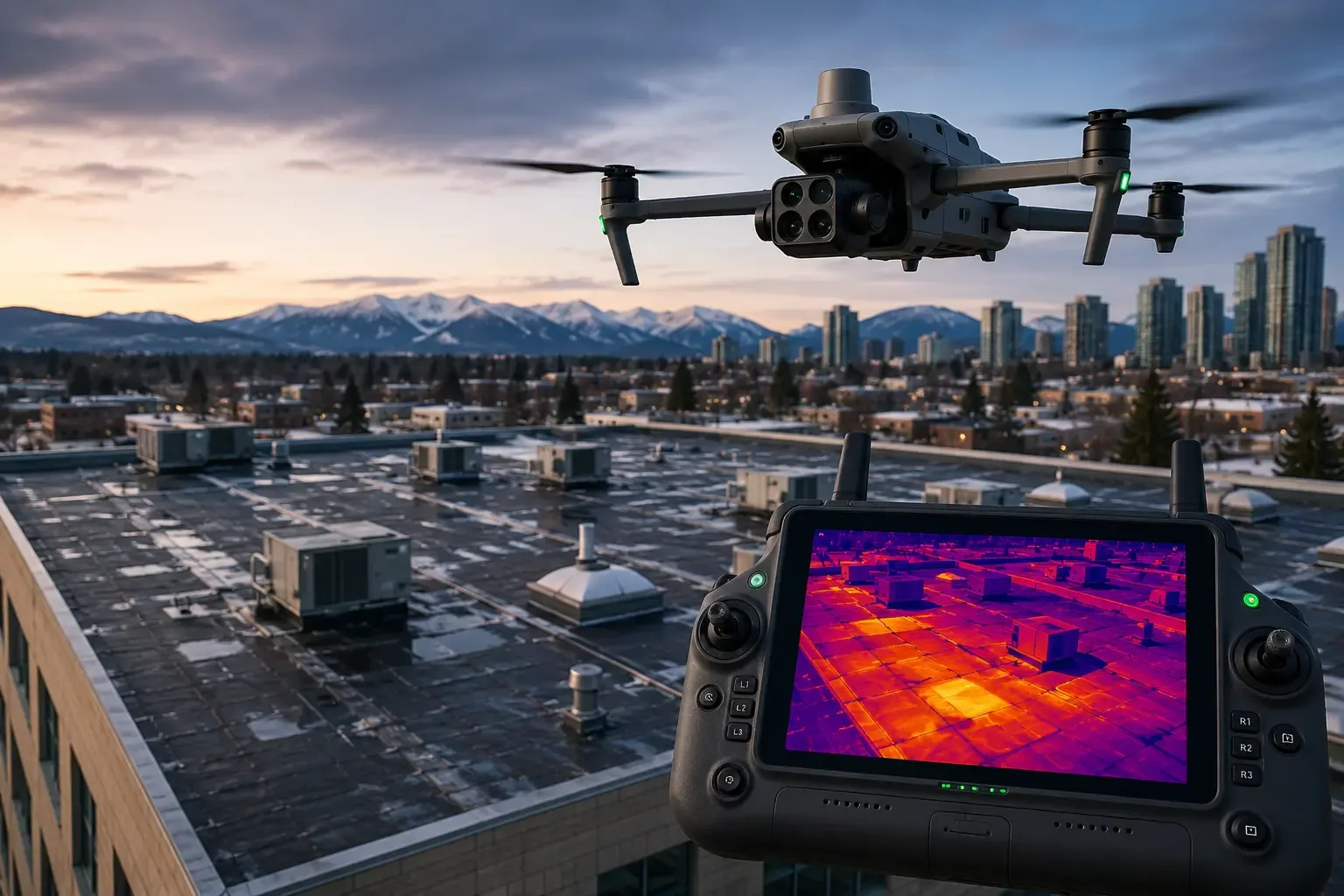
An infrared moisture survey is useful on a secured site, since it is done from the roof surface and needs no cutting until the results call for it.
Paperwork and the log
Federal sites run on documentation: submittals, daily reports, safety plans, inspection records and a closeout package. We keep photographs, material data and installation records in a form a contracting officer can file, and the inspection log carries the same photographs and notes.
For a site inside the New York City limits, the Department of Buildings publishes the 2022 NYC Construction Codes, and whether its filings apply to federal property is something the contracting office settles. Owners and contractors with business near Fort Hamilton, which sits beside Bay Ridge, can start with the Bay Ridge service area and hand us the access rules and the roof history.
Closeout includes a dated photo set, the material data, the inspection results and the warranty, delivered in the format the contracting officer asks for. Keeping the inspection log current means the next roof walk starts from the last one.
Related Roofing Work
More roofing work that comes up alongside Military Installation Roofing.

Commercial Roofing Questions
Can a private roofer work on a federal or reserve property?
Yes, when the site's contracting process allows it and the contractor meets the access and paperwork rules. The facility says what it requires and the proposal follows.
What are the UFC roofing criteria?
They are the Defense Department's design rules for buildings, with sections for roofing systems, insulation, drainage, flashing and wind. The installer builds to the written spec.
How long does access approval take?
Weeks is the safe planning number. Names, identification and background steps all take time, and a late worker can miss the start.
Is Fort Hamilton on Staten Island?
No. It is in Brooklyn, about three miles northeast across the Narrows, while Fort Wadsworth is on Staten Island.
What should I send to begin?
The building use, the roof age, the last leak report and the site's access rules. A roof walk follows once access is approved.