
Johns Manville Roofing in Staten Island, NY
Johns Manville single-ply, insulation and bituminous roof systems in Staten Island, NY: moisture scans, core cuts, repair, recover and replacement.
Orange paint dots marching diagonally across a Staten Island, NY roof are what a moisture scan leaves behind, and on a Johns Manville roof they often tell the story better than any label: the dots cluster over the insulation, not over the membrane. Johns Manville is a roofing manufacturer whose commercial range covers TPO, PVC and EPDM single-ply sheets, roof insulation boards and bituminous products such as modified bitumen and built-up components.
Because one maker supplies the sheet and the board beneath it, the roof is read as a stack of layers that either work together or fail together, and Commercial Roofing Staten Island repairs and replaces those stacks across the island.
Sheet over board over deck
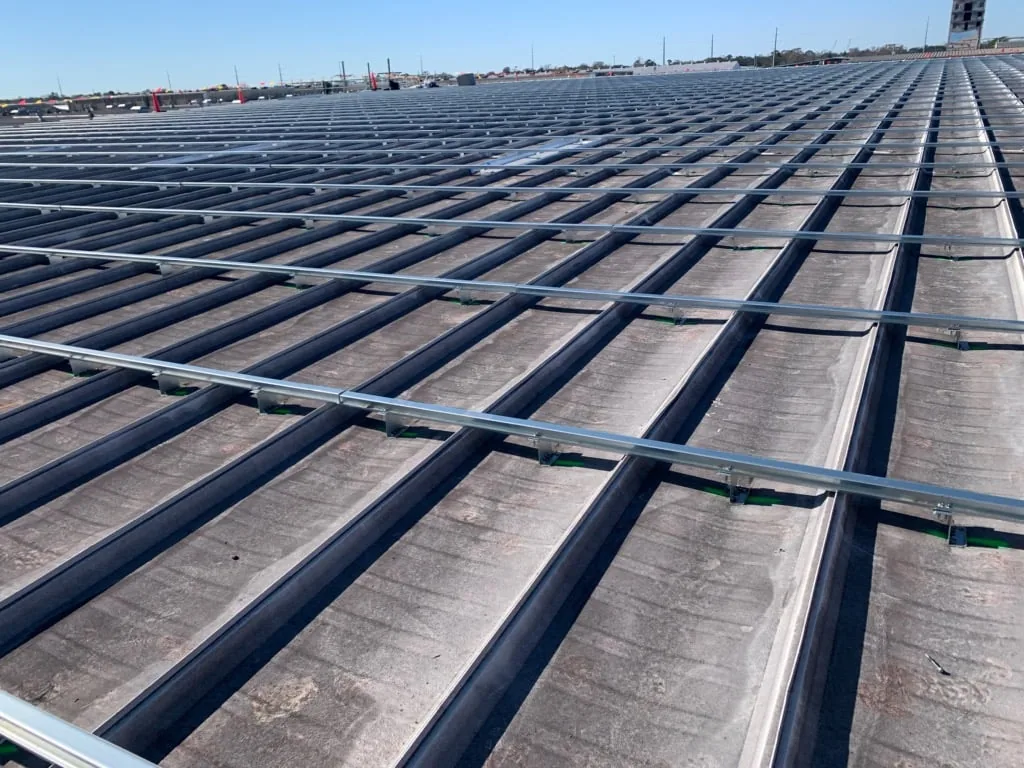
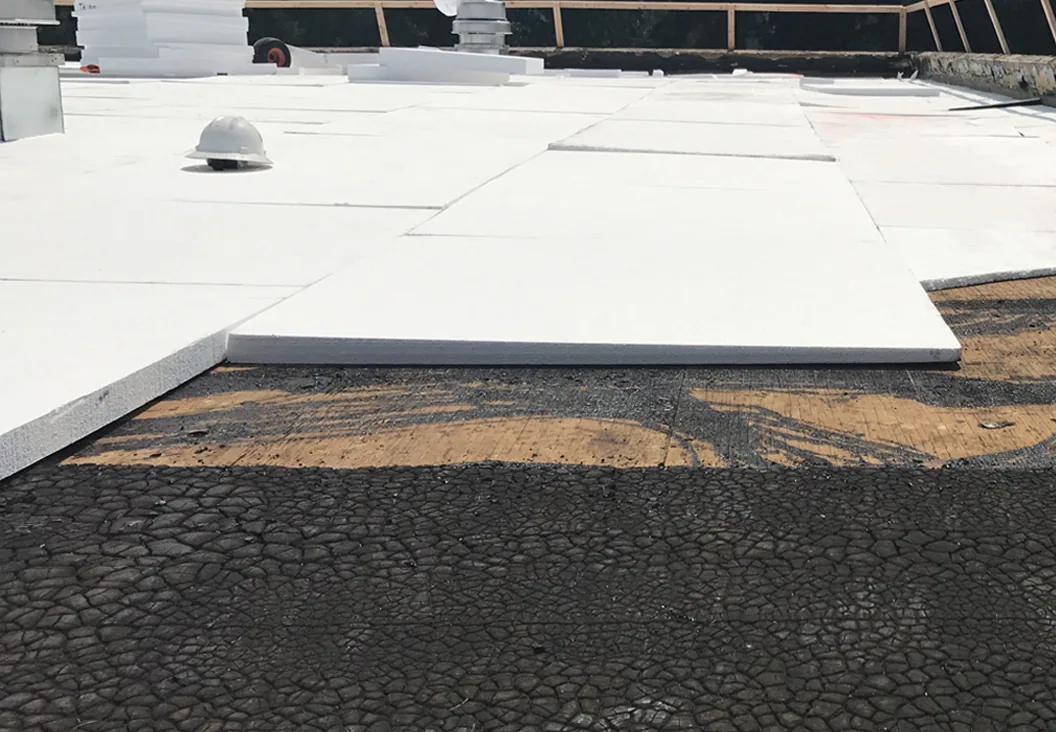
From the top down, a typical low-slope assembly has a membrane, sometimes a cover board, one or more layers of rigid insulation, a vapor retarder in some buildings and the deck. Each layer protects the one below it. The membrane sheds water, the cover board takes foot traffic and hail, the insulation holds heat and is the layer that suffers most when water gets in, and the deck carries it all.
Polyisocyanurate board loses much of its insulating value once it is wet, and it can hold that water for years. A roof can look fine from above while the board below has turned to a sponge, which is why a surface patch on a wet stack feels like progress and then leaks again. We scan first, cut cores where the scan lights up, and only then choose a repair.
Where the stack fails
Water almost always enters at a detail: a curb, a drain, a parapet termination, a seam that opened in the cold. It then travels along the top of the board or between layers, sometimes ten or twenty feet from the entry point, and shows up as a ceiling stain nowhere near the break. A stain tells you a leak exists. It does not tell you where.
On the island, the infrared moisture survey is the tool that closes that gap. We scan after sunset, when wet board holds heat longer than dry board and shows as warm patches, then confirm the map with a meter and a core cut at each doubtful spot. The core tells us the layer, the thickness, the condition of the fasteners and whether the board is merely damp or truly saturated.
Freeze and thaw makes everything worse. Water in the board expands as it freezes and lifts the sheet from underneath, and the next thaw leaves a blister or an open lap.
Buildings where the board matters most
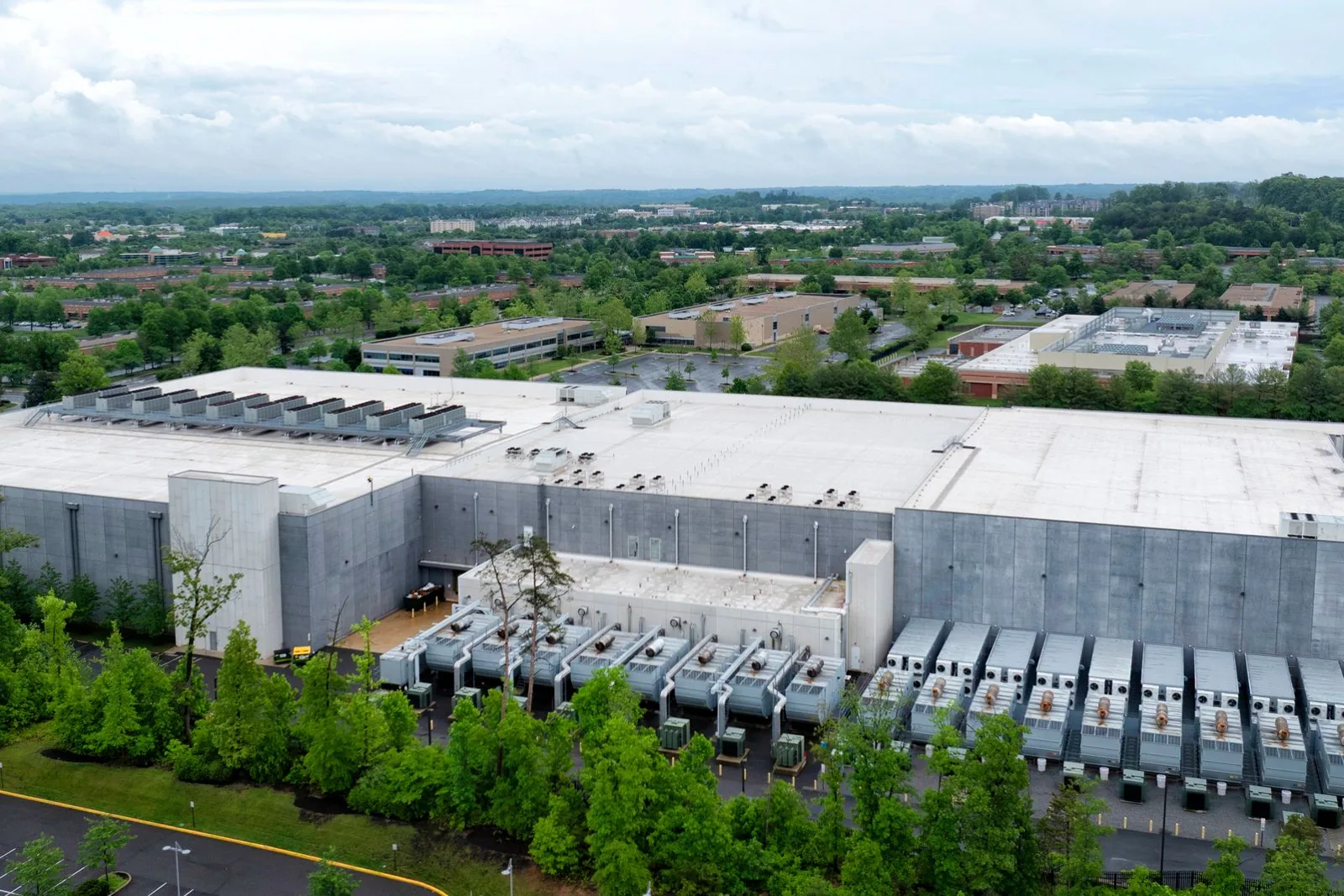
Dry insulation is not optional in a building with sensitive contents below it. In the Teleport industrial park at Travis's eastern edge, home mostly to Internet and telecommunications companies, a wet board over equipment is a risk that grows with every storm. Our data center roofing work leans on exactly this stack reading, and the same attention applies to a cold storage roof, where a vapor layer that fails lets moisture freeze into the board.
Older brick on Bay Street and along Port Richmond Avenue brings a different stack, often a smaller roof with a deck that tells you the age of the building. Tompkinsville's commercial streets are lined with tall brick buildings, and Bay Street was rezoned in 2019 to permit denser mixes of homes, shops and offices. Each of those roofs gets its own core cut.
Recover or tear off
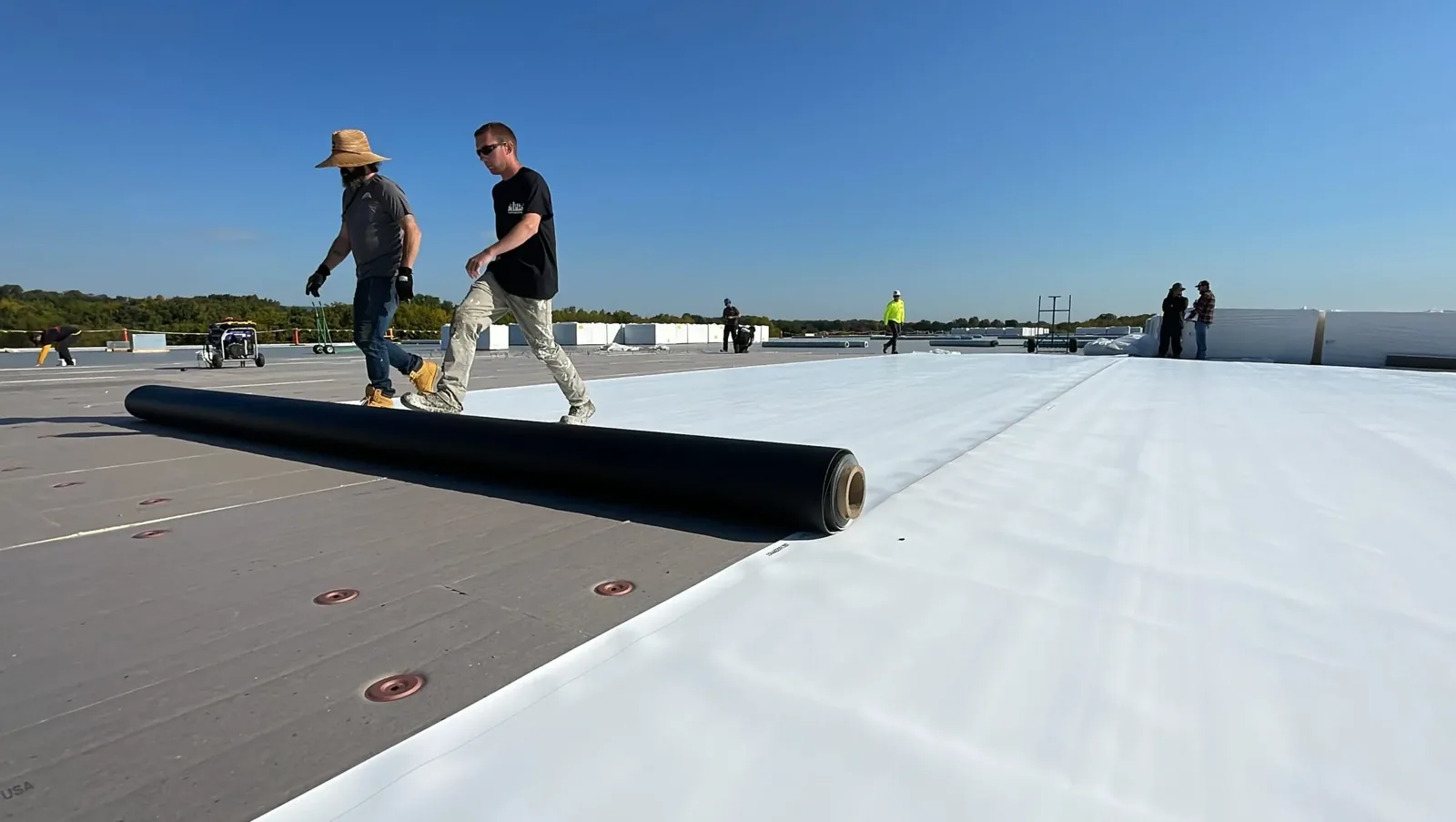
The scan decides. Dry insulation and a sound deck make a recover with a new membrane over a cover board a fair option, one that keeps most of the old roof out of the dumpster. If the board is wet in more than a scattering of spots, wet sections come out, and a partial tear-off to the deck may be the scope that fits. When the stack is wet across most of the field, replacement is the only repair that holds.
New insulation thickness follows the energy code in force. A replacement is checked against the energy provisions of the 2022 NYC Construction Codes that the Department of Buildings publishes, so the proposal states the required R-value layers and how a cover board protects them.
Wind, snow and the first thaw
A mechanically attached sheet over insulation is only as secure as its fasteners, and the 80 mph gusts of Sandy in October 2012 are what perimeters are judged against. After a blow like that we check the fastener rows near the edge, and where board has shifted we reset it before any new sheet goes down.
Snow adds weight and moisture. The city averages about 29.8 inches of snow a year, and after the record 27.3 inches of January 2016, wet snow sat on drains for days. The thaw is when we walk, to catch the lifted lap and the soaked board.
Access and neighbors
Boards are bulky. A tear-off on a tight street means staging in a rear lot or hoisting from the curb, while a large West Shore job, such as one in Bloomfield, is staged around its truck access. Occupied floors beneath get notice before the first board comes off, with a plan for noise and for the overnight dry-in.
Insulation also changes the schedule. Board arrives in bundles that must stay dry, so we set a daily rule: no more board is opened than the membrane crew can cover before the afternoon, and any section left overnight gets a temporary seal with edges tied down for wind.
Closeout walk
When the work is finished, the log holds the scan map, the core results, a photograph of each layer as it was found, and the thickness of each layer installed. If a ceiling stain returns, that record shows within minutes whether the new stack or an old detail is responsible.
Single-ply sheets from this maker share a family resemblance with those from Carlisle SynTec and Holcim Elevate, so a roof with mixed history, one wing under each name, gets one log with one set of core numbers. Facility directors with several roofs find it useful to see the wet board, the dry board and the repaired detail drawn on the same plan, side by side.
Related Roofing Work
More roofing work that comes up alongside Johns Manville Roofing.

Commercial Roofing Questions
Can wet insulation be dried in place?
Sometimes, if the water is a thin film and the roof can breathe. Soaked board does not dry on a roof that is sealed top and bottom, and we say so after the core cut. Where it will not dry, the wet section comes out and new board goes in.
What does a cover board do for a roof that already has a membrane?
It adds a hard, flat layer that spreads foot traffic and shields the insulation from punctures. The board also gives a recover a surface to bond to, so the new sheet does not sit on old, uneven material.
How is the insulation thickness chosen for a replacement?
The energy code sets a floor, and the parapet height, door thresholds and drain sumps set the ceiling. We work out both, then draw the tapered layout so water still reaches the drains.
Will a new roof stop the ceiling stains in our top-floor units?
It will if the leak came through the roof. We also look for condensation from exhaust or ductwork, because a stain from indoor humidity does not leave when the membrane is replaced.
Why does a roof with a new sheet still leak at the same spot?
A new sheet laid over wet board or an unrepaired detail carries the old problem forward. The cure is to find the entry point and the saturated section before anything goes on top.